The 14-Hour War That Wasn't: Reading Trump's Ceasefire Claim Against the Israeli Cost Ledger
Within hours of a presidential announcement of an Israel–Iran ceasefire, Hebrew-language outlets were already running a different headline. The gap is the story.
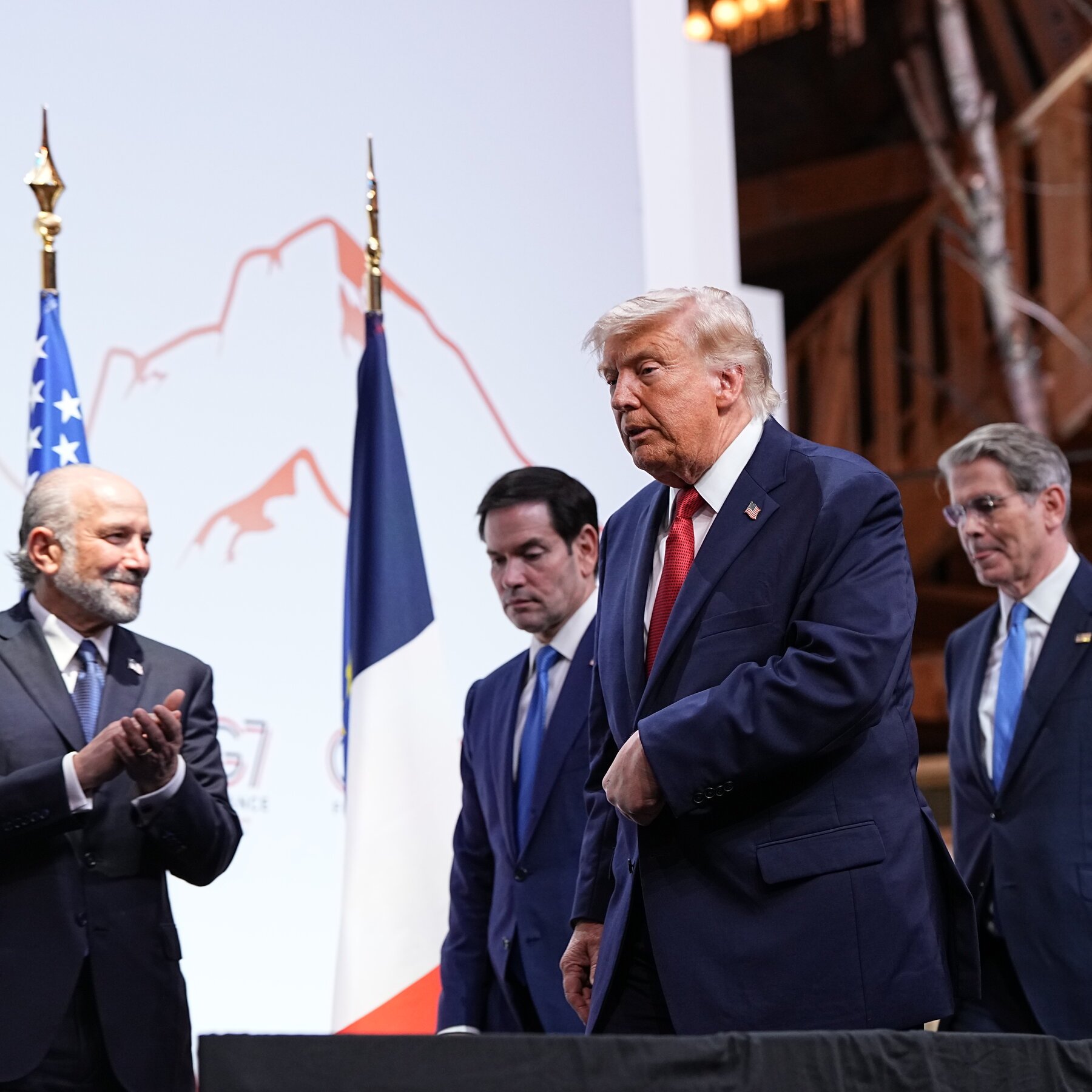
At 14:21 UTC on 14 June 2026, two near-identical market-data wires lit up Telegram with the same sentence — Trump says Israel and Iran are moving toward a ceasefire — followed almost immediately by the observation that such news moves crypto, stocks, oil and gold within minutes. Less than three hours later, at 17:39 UTC, the same platform carried a harder version of the same message, attributed this time to Trump directly: an agreement with Iran would be signed in hours. By 05:22 UTC on 15 June, Hebrew-language press, filtered through Al-Alam Arabic, was already running a different headline: Israel is paying the price for the confrontation with Iran that dragged the United States into it. By 05:24 UTC the framing had hardened: those who promised complete victory over Iran are now collecting the remains of their excessive arrogance and hoping to survive.
The distance between those four messages — roughly fifteen hours and two entirely different stories — is the actual news of the morning. A presidential claim of imminent de-escalation, transmitted through market desks as a tradeable line, collided with a domestic Israeli press that appears to be reading the same week in the opposite direction. Both can be true, and the policy reader's job is to figure out which one ages better.
The American read: a deal, announced, is a deal
The 14 June sequence is a familiar Trump-era choreography. The president names a forthcoming agreement, the wire desks repeat it, the futures complex reacts, and the actual text of the deal — if it ever lands — is treated as a follow-up. Unusual Whales, the markets intelligence account, carried the "agreement will be signed in hours" line in the late American afternoon. The earlier ceasefire claim, also attributed to Trump, was relayed in identical wording by two separate Telegram channels within the same minute — a tell that the line was sourced to a single Trump statement and redistributed at machine speed, with the surrounding commentary ("geopolitical news like this can move crypto, stocks, oil, and gold") doing the work of editorial framing for a retail audience that treats geopolitics as an asset class.
This is the version of events in which the United States, having absorbed an Iranian strike or the credible threat of one, has used the leverage of that moment to extract a face-saving off-ramp. It is the version that expects Brent crude to gap down, the shekel to strengthen, and Tel Aviv's listed defence names to give back their war premium. It is also the version that has produced, on previous cycles, announcements that did not survive contact with the following week's news cycle.
The Hebrew read: a cost ledger, not a victory
The Al-Alam Arabic relay of Hebrew press, dispatched in the small hours of 15 June UTC, is not describing a deal. It is describing an accounting exercise. The first item — that Israel is now paying the price for the confrontation with Iran that dragged Trump into it — frames the week's events as a strategic error with an American co-signer. The second, sharper, item — that the advocates of complete victory over Iran are now "collecting the remains of their excessive arrogance and hoping to survive" — is closer to a verdict than to a bulletin.
The framing is consistent with what would be expected from an Israeli national-security commentariat confronting a war that did not end in a single demonstrable collapse of the Iranian programme, and confronting it at a moment when the American president is publicly claiming credit for stopping it. The implicit argument is that the cost has been internalised in Israel — economically, in casualties, in the exposure of population centres to missile volleys — while the political benefit of the halt is being claimed in Washington. The complaint is not that the war was wrong; it is that the bill arrived first in Tel Aviv and the credit is being booked in Florida.
The counter-narrative worth taking seriously
The strongest counter-read to the Hebrew-press line is also the simplest: the Hebrew media quoted by Al-Alam are, by the nature of the relay, a curated selection, and Al-Alam is an Iranian state-aligned outlet whose editorial interest in a particular Israeli self-criticism is not neutral. Iranian state media has structural reasons to amplify Israeli voices that regret the war and to suppress Israeli voices that defend the outcome. A reader relying only on this relay is reading a single, motivated sample of a much larger Israeli press.
The counter-read to the Trump deal-announcement, similarly, is that the line "agreement in hours" has, on previous occasions, functioned less as a forecast than as a pressure tactic against a counterpart not yet at the table. If the Iranian side is, in fact, refusing to sign what is being announced, the gap between announcement and signature becomes the live story, and the market reaction of 14 June becomes a position the relevant desks will have to unwind.
Stakes, and what remains genuinely uncertain
The honest answer on the morning of 15 June is that two stories are being told simultaneously and the wire desks are pricing the American one while the Israeli domestic press is living the other. Which one prevails depends on a small number of facts the sources available to Monexus do not contain: whether a signed text exists, whether reciprocal guarantees have been exchanged, whether the exchanges of fire that produced the cost-ledger framing have actually paused, and whether Tehran is publicly endorsing the same announcement that the US president is publicly making.
If the deal holds, the Hebrew-press cost ledger becomes the opposition's opening exhibit in the next Israeli budget debate and the next electoral cycle. If it does not, the Al-Alam relay will be remembered as the moment the warning was on the wire and the markets were not yet listening. Either way, the gap between a presidential announcement of peace and a domestic press describing the cost of war is the most useful thing a reader can carry into the rest of the week.
Desk note: Monexus is reading Trump's 14 June announcement against Hebrew-press coverage as relayed by the Iranian-aligned Al-Alam Arabic channel, and flagging the asymmetry rather than resolving it. Where Iranian state media curate Israeli self-criticism, the editorial line is to name that curation and weight it accordingly.
Wire provenance
This editorial synthesis draws on the following public wire/social posts:
- https://t.me/s/alalamarabic
- https://t.me/s/alalamarabic
- https://t.me/s/producthunt
- https://t.me/s/AngelList
Follow the event.
These dated source records provide context. They do not retrospectively verify this archive article.
Separate what the nuclear watchdog reported from what it could not determine after the June 2025 strikes.