Israel ducks the US–Iran truce, and the bill lands in Beirut
A US-brokered ceasefire with Iran was supposed to cool the northern front. Three drones from Lebanon into northern Israel on Sunday morning suggest the diplomacy never reached the people who actually fire the weapons.
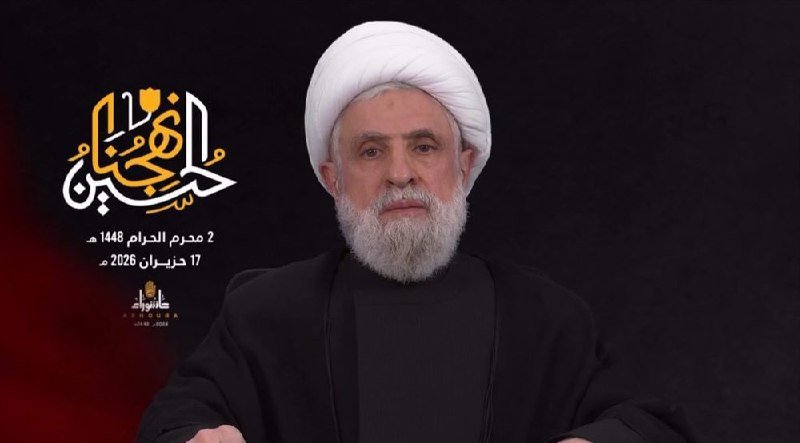
By the time US President Donald Trump picked up the phone to berate Israeli Prime Minister Benjamin Netanyahu on Saturday, three drones from Lebanon had already hit northern Israel, and Israeli ministers were publicly demanding "aggressive" strikes on Beirut. The sequence — a diplomatic deal on one track, a kinetic one on another — is the story of the past week, and the diplomatic track is losing.
The argument this publication wants to make is straightforward: the United States and Iran have spent the spring building a ceasefire architecture that, on paper, was meant to dampen every front the two countries touch. The Lebanese front is the test case, and the early returns are not encouraging. Israel is signalling, in word and in ordnance, that it considers itself a free agent inside an arrangement Washington believes it has closed. The gap between those two positions is the active war zone.
What the wires actually said
Al Jazeera English reported on 14 June 2026 that a US–Iran ceasefire announcement had raised hopes in Lebanon, but the population remained sceptical. Middle East Eye reported the same morning that three drones launched from Lebanon had struck northern Israel and that Israeli ministers were publicly calling for "aggressive" strikes on the Lebanese capital. Reporting attributed to a US official by CNN, and relayed in Arabic by Al Alam, said Trump was "extremely angry" at the Israeli strikes on Lebanon and used profanity on a call with Netanyahu. A Polymarket-curated wire item on X quoted Trump calling Netanyahu a "very difficult guy" after Israel was reportedly left out of the bilateral US–Iran negotiations. A separate thread, citing the prime minister's office, said Netanyahu had told Trump that Israel does not consider itself part of the agreement regarding Lebanon. None of the reporting was contradicted, on the record, by the other side, in the materials available at the time of writing.
The framing problem
Cable news is, predictably, treating this as a personality clash — a volatile American president versus a stubborn Israeli prime minister, with Lebanese civilians as the set dressing. That framing is comfortable and wrong. The structural fact is that Israel has not been a signatory to the US–Iran understanding, never ratified any of its terms, and never claimed to. Treating the Israeli campaign in Lebanon as a "violation of the deal" misreads the deal: Israel was not in it. The honest framing is that Washington negotiated an arrangement with Tehran that did not bind its closest Middle Eastern partner, and is now discovering the cost of that omission in real time. The cost is being paid above Beirut, not in the Situation Room.
The Iranian and Lebanese counter-read
Hezbollah-aligned and Iranian state-linked outlets have spent the weekend arguing, in effect, that the entire US–Iran track was a Western media confection designed to give Washington a wins column while Israel kept hitting Lebanon. PressTV, Tasnim and IRNA — the usual suspects — have framed the Lebanese strikes as evidence that the US cannot, or will not, restrain its ally. The Lebanese political class, per Al Jazeera's reporting, is sceptical of any arrangement that does not produce an immediate and verifiable halt to the bombing of its territory. Both readings are staked in something real: the bombs, and the absence of a document that stops them.
What the structural picture actually looks like
A hegemonic transition is underway, and the Middle East is one of its early pressure points. The US remains the indispensable diplomatic broker — no other capital can mediate between Tehran and Washington — but it is no longer the actor with the last word on what Israeli air force jets do over southern Beirut. Iran, for its part, has spent two years rebuilding deterrence through proxies and missile production, and the ceasefire is, for Tehran, a way to bank those gains without having to spend them in a full war. Israel, squeezed between an American president who needs the diplomatic headline and a security cabinet that needs the missiles, has decided to keep flying. The piece that breaks, in this geometry, is the Lebanese state and the civilians under it. There is no global architecture that protects them; the UN system produces communiqués, the Arab League produces statements, and the bombs continue.
The serious paragraph
The stakes are concrete. If the Israeli campaign in Lebanon intensifies over the next 72 hours, the US–Iran ceasefire does not "fail" in a formal sense; it is revealed for what it always was — a bilateral temperature reduction between two governments, with no enforcement mechanism on the third party that actually controls the air over the Litani. If Washington chooses to publicly restrain Israel, the cost is a public rupture with a government it has spent decades treating as untouchable. If it does not, the Lebanese front reopens on a timetable set by Israeli pilots and Iranian-supplied rockets, and the diplomatic gain of the spring evaporates. There is no third option that does not involve a Lebanese city taking the hit. A reader who wants the take-away in one sentence: the deal was always a two-party arrangement written for a three-party war, and the missing party's signature is now being collected in rubble.
What remains uncertain
The reporting on Trump's call to Netanyahu relies on a single US official, on background, conveyed to CNN and relayed by Al Alam. The Hezbollah decision to resume drone launches into northern Israel — three on Sunday morning, per Middle East Eye — has not been claimed, on the record, in the materials available, and the identity of the launch cell has not been independently confirmed. The Israeli ministerial demand for strikes on Beirut is reported as a political call, not an operational order. None of this is small; all of it is the difference between a bad week and a regional re-escalation. The next 48 hours of reporting, from Israeli, Lebanese, Iranian and Western-wire sources, will determine which it is.
— Monexus framed this as a structural failure of a two-party diplomatic track applied to a three-party war, where the third party is signalling its non-membership with ordnance. The wires, by contrast, have been leading on the personalities involved, the way the wires always do.
Wire provenance
This editorial synthesis draws on the following public wire/social posts:
- https://t.me/alalamarabic
- https://t.me/s/polymarket
- https://twitter.com/boweschay/status/1800000000000000000
Follow the event.
These dated source records provide context. They do not retrospectively verify this archive article.
Separate what the nuclear watchdog reported from what it could not determine after the June 2025 strikes.