Twelve days, no knockout: what the Israel-Iran round actually settled
The guns have largely stopped. The war aims have not been met. And the architecture of the next round is being written in the contradictions of this one.
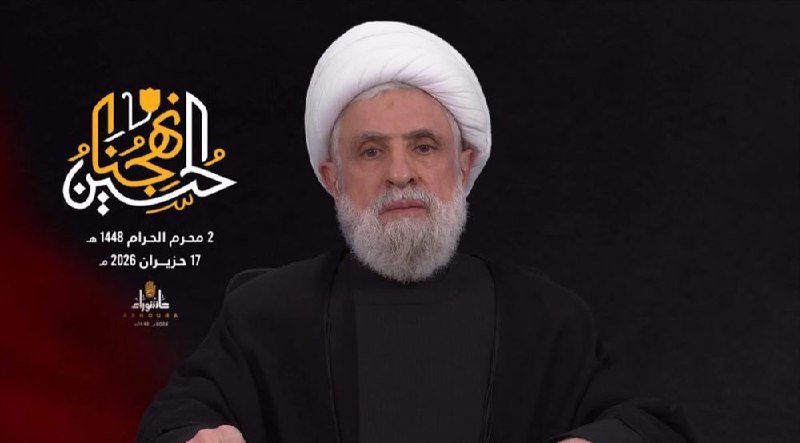
The ceasefire announced this week between Israel and the Islamic Republic was barely 36 hours old when the recriminations started. By 17:15 UTC on 15 June 2026, i24NEWS was carrying a remarkable line from a senior Israeli official: had Tel Aviv known the operation against Iran would end where it has ended, the official said, there is "serious doubt" it would have been launched in the first place. The Israeli Defense Forces, the same source added, still view Iran as an existential threat. The two statements can be true at the same time. That is precisely the problem.
What the twelve days of open war settled is less than either principal claim suggests. The United States extracted a pause, not a disarmament. Israel demonstrated reach but not removal. And Iran, by the straightest reading of the available evidence, comes out of the round with its deterrent logic intact and its regional position arguably stronger than when the bombing started. The question is no longer whether a war happened. It is what the war was for.
The gap between the announcement and the ground
The deal, as briefed to Reuters by a U.S. official and aggregated across Telegram channels including BellumActaNews and osintlive, has a striking feature: Israeli withdrawal from southern Lebanon is not a condition of the U.S.–Iran understanding. Israel retains what the same official described as the right to respond to any attack. That formulation sounds like sovereignty and reads like a loophole. It is also, in functional terms, an acknowledgement that the framework does not bind Israel at all on its northern front — only on the question of whether its actions trigger an Iranian response.
WarMonitor's reporting on 15 June was more pointed. The ceasefire, the channel wrote, is "already beginning to fray, with both sides making claims that would violate what the other considers a core condition of the agreement." Within hours, Israeli officials were accusing Tehran of using the pause to reposition; Iranian-aligned channels were accusing Israel of strikes inside Lebanon that the framework was supposed to foreclose. A ceasefire is a piece of paper. The behaviour of forces in the field is what gives it content. By that test, this one is thin.
The counter-read: Iran didn't win, but it didn't lose either
The dominant Western framing since the pause has been that Iran absorbed a serious blow and that the cost will compound. The dominant Iranian framing — carried by state media and amplified across resistance-axis channels — is the opposite: that the regime absorbed a direct Israeli-American strike and emerged, that its missile programme still functions, and that the so-called "ring of fire" around Israel remains a usable deterrent. Scroll.in's analysis on 15 June was unusually blunt about the strategic ledger. The United States and Israel, the outlet argued, have "nothing to show for" a war that has, on the available evidence, left Iran in a stronger position than it occupied when the round began.
This is the read that deserves more oxygen than it usually gets in the English-language press. Deterrence is a state of mind, not a balance sheet. A regime that absorbs a direct strike, fails to collapse, and emerges into a ceasefire that does not demand the dismantling of its missile or proxy architecture has, by the standards of the genre, done better than survive. It has set the price of the next round.
What the operation was actually for
If the senior Israeli quoted by i24NEWS is right that the operation would not have been launched with foreknowledge of this outcome, then the operation was launched on a different theory of the case than the one the evidence has vindicated. The theory was familiar: a sharp, demonstrative use of force degrades the adversary's decision-making, fractures its deterrent posture, and creates a window for a longer settlement. It is the theory that has underwritten a great deal of Israeli doctrine since 1982, and it has a respectable historical record against state actors with finite blood budgets.
It works less well against a theocratic state with a delegitimised cost calculus, a regional proxy network, and a leadership for which public endurance is itself a form of rule. The Iranian system is not optimised to lose gracefully in a televised exchange. It is optimised to convert damage into legitimacy, and to stretch a conflict across a time horizon on which a democratic Israel has to keep producing consent. The result, written in the gap between the i24NEWS quote and the Reuters briefing, is the war we are now reading about: demonstrative, expensive, and not decisive.
Stakes for the next round
The forward view is not hard to sketch. A Lebanon clause that is not a clause. A deterrent logic on the Iranian side that has been stress-tested in public. A U.S. administration that has spent political capital on a pause and now has an interest in selling the pause as a settlement. An Israeli public that will be told, accurately, that the threat has not been removed. None of these are stable resting points. The conditions for a second round are being assembled, not dissolved, by the diplomacy meant to prevent one.
What remains genuinely uncertain is narrower and more concrete. The sources do not agree on whether southern Lebanon has in fact been quiet in the 36 hours since the announcement, only that each side is accusing the other of ceasefire violations. They do not agree on the operational state of Iran's missile production lines, only that Israeli and American officials describe them as degraded and Iranian sources describe them as functional. And they do not agree on whether the U.S. understands its own role in the next round as guarantor, broker, or bystander. The next twelve days of reporting will be written inside those three disagreements.
Desk note: Monexus treats Israeli, Iranian, and Western wire sources as legitimate primary inputs, weighted by evidential track record rather than by alignment. The dominant wire framing of the past week has been that Israel blunted an acute threat; this article reads the available evidence as showing a more ambiguous ledger, in line with the Scroll.in analysis cited above.
Wire provenance
This editorial synthesis draws on the following public wire/social posts:
- https://t.me/osintlive
- https://t.me/wfwitness
- https://t.me/BellumActaNews
Follow the event.
These dated source records provide context. They do not retrospectively verify this archive article.
Separate what the nuclear watchdog reported from what it could not determine after the June 2025 strikes.