Israel's defense minister says IDF will hold security zones in Lebanon, Syria and Gaza indefinitely, defying US-Iran ceasefire framing
Defense Minister Israel Katz says Israeli troops will stay in buffer zones across three fronts regardless of any US-brokered deal, exposing a public split with Washington's diplomacy.
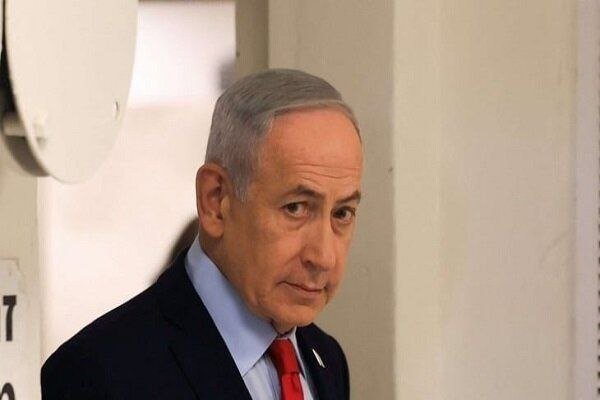
Israeli Defense Minister Israel Katz declared on the morning of 15 June 2026 that the Israel Defense Forces would remain deployed inside security zones in Lebanon, Syria and Gaza for the foreseeable future, and that Prime Minister Benjamin Netanyahu's government was directing the policy. The remarks, carried by Israeli and regional outlets, cut directly against a US-brokered framework with Iran that Israeli officials had previously been cited as supporting, and they turned a quiet diplomatic back-channel into an open public dispute between Jerusalem and Washington over who gets to define "indefinite" on three of Israel's borders at once.
The hard fact of the morning is that Israel's defense minister is signalling permanent forward operating positions on three fronts while a separate diplomatic track — the one Washington has been selling to Tehran — presumes those positions are temporary buffers tied to a ceasefire. The gap between the two readings is not a margin note; it is the story.
What Katz actually said, and when
According to reporting carried by the Intelslava wire at 08:58 UTC on 15 June 2026, Katz stated that the IDF would stay inside designated security zones in southern Lebanon, on Syrian territory and inside Gaza "indefinitely," framed as protection of borders and of Israeli settlements adjacent to those zones. The minister said Netanyahu was personally leading the policy, a phrasing that ties the position to the prime minister's office rather than to the general staff. The Indian Express, picking up the line at 08:52 UTC, headlined the story as an explicit rebuff of the US-Iran agreement: "'Trump's agreement doesn't bind us': Israel Minister defies US-Iran deal, vows no withdrawal from captured Lebanon territory." The framing matters — the minister is not merely declining to commit to a timeline; he is publicly disclaiming the authority of the deal itself.
Katz's portfolio gives the statement institutional weight. As defense minister, he oversees the IDF's operational deployments and the military's relationship with the cabinet. A statement of this kind, attributed to him on the record and echoed by the prime minister's office, is the standard mechanism by which Israeli governments convert a tactical posture into a declared policy. Future negotiations over those zones — whether they happen in Beirut, Damascus, Doha, or Washington — will now have to engage with the language Katz used on 15 June, not the more elastic formulations that preceded the US-Iran track.
The counter-narrative: what the ceasefire track is supposed to mean
The reading Katz is pushing against is the one US mediators have been constructing since the framework with Iran began to take shape. Under that framework, the fighting along Israel's northern border with Lebanon and the wider regional escalation that drew in Iran were treated as interlocking: an end to the Iranian-front confrontation was supposed to be paid for, in part, by the eventual drawdown of IDF positions in southern Lebanon. The headline out of the Fotros Resistance channel at 08:30 UTC is essentially a mirror image of the Israeli framing — an alert that Katz is holding southern Lebanon even if the US-Iran ceasefire includes an end to fighting with Lebanon, and that Israel will retain a "security zone" there.
The structural tension is plain. Washington wants a single, clean deliverable it can point to: a regional de-escalation in which Iranian-proxy fire stops and Israeli forward deployments thin out on a published schedule. Israeli ministers are now telling any reader willing to look that the schedule does not exist and that the deployments are the point. Both can be true at once. The honest reading is that the US-Iran track was always thinner than the communiqués suggested — a set of mutual de-escalation commitments with a public-facing architecture, not a binding document that names troop levels or buffer-zone depths. The Indian Express headline captures the Israeli position bluntly: Trump's agreement, in the Israeli telling, does not bind the Israeli cabinet.
A plausible counter-reading, the one a reader in Washington or Doha might offer, is that Katz is posturing ahead of internal Israeli debate over the deal, and that the real position will be set by Netanyahu in private with US counterparts. Israeli governments have historically used ministerial language of this kind to harden a negotiating floor before walking it back in closed talks. That is a fair observation. It does not, however, erase the fact that the language is on the record and is being read in Beirut, Damascus, Gaza City, Tehran and the Gulf as policy rather than tactics.
Three fronts, one doctrine
The notable editorial fact is the bundling. Katz did not pick one buffer zone and leave the others for later. He named Lebanon, Syria and Gaza together, and described the posture as a single doctrine of "security zones" protecting borders and settlements. That formulation does two things at once: it treats the three theatres as parts of one continuous security problem, and it elevates the protection of settlements — Israeli civilian communities near the lines — to the same legal-political standing as the protection of the border itself.
In southern Lebanon, the reference is to the strip north of the border that the IDF has occupied in varying depths since operations escalated in late 2024 and that UN ceasefire monitors have continued to track. In Syria, the security zone language reaches back to the long-standing Israeli position on the Golan and to the more contested post-2024 positions inside Syrian territory that Israel has not formally annexed but has also not committed to vacate. In Gaza, the same vocabulary describes the corridors and interior zones the IDF has held since the start of the ground operation. Lumping them together is itself a policy choice. It tells any future interlocutor — and any future Israeli government — that the three deployments are a package, and that the package is not negotiable as three separate files.
What this changes in practice
Three things follow in the near term. First, the US-Iran track now has an Israeli minister on the record disclaiming it. The deal is not dead, but its political value to the White House is reduced: a framework that the principal US partner in the region is publicly declining to honour is harder to sell to Tehran as a binding exchange. Second, the Lebanese, Syrian and Palestinian tracks harden. Beirut's red lines on sovereignty, Damascus's insistence on full withdrawal, and the Palestinian negotiating position on Gaza all become more difficult to finesse when an Israeli defense minister is on the wire at 09:00 UTC saying the zones are indefinite. Third, the question of who speaks for Israel on ceasefire terms becomes a domestic political story rather than a diplomatic one — Katz, the defense minister, is publicly out in front of the prime minister's office on a question that touches sovereignty on three borders.
The structural read is that Israel is converting what was sold as a temporary, ceasefire-conditional posture into a declared permanent one, and is doing so on a day when the diplomatic architecture designed to make that conversion costly is supposed to be active. That is the news, and it is the news regardless of whether the language is read as policy or as a negotiating floor.
This article distils reporting carried on the Intelslava, Indian Express and Fotros Resistance wires on the morning of 15 June 2026 and presents the Israeli ministerial position alongside the Iranian-aligned reading of the US-Iran ceasefire framework. The sources do not specify a US response to Katz's statement as of the article's filing.
Wire provenance
This editorial synthesis draws on the following public wire/social posts:
- https://t.me/intelslava
- https://t.me/FotrosResistancee
Follow the event.
These dated source records provide context. They do not retrospectively verify this archive article.
Separate what the nuclear watchdog reported from what it could not determine after the June 2025 strikes.