Live Wire
13:22ZDDGEOPOLITTrump already woke up, but that makes sense since he slept over most of the UFC event yesterday.Anyway... the…13:21ZCLASHREPORJD Vance on Iran:We are seeing both Iranian hardliners and political leaders saying, “Our relationship with t…13:20ZENGLISHABUVance tells CNBC some in Israel accept proposed agreement, expects Iran representation13:20ZCLASHREPORMacron opposes France's plan to ban social media for under-15s, saying it harms young people13:18ZCLASHREPORVance tells Iran to negotiate in good faith, commit to not developing nuclear weapon13:17ZCLASHREPORMacron says he will not declare the regime has won13:16ZFARSNEWSINFrance criticizes Iran's missile program hours after US-Iran understanding13:16ZMYLORDBEBOMarine Corps F/A-18D Jet Crashes in Washington Forest During Training Flight, Pilot Ejects Safely
Markets
S&P 500751.66 1.34%Nasdaq25,889 0.31%Nasdaq 10029,636 0.64%Dow519.1 1.18%Nikkei94.2 2.16%China 5035.19 0.47%Europe90.77 1.28%DAX42.4 2.22%BTC$66,795 3.89%ETH$1,813 8.83%BNB$629.89 3.06%XRP$1.24 9.37%SOL$74.04 9.36%TRX$0.3211 1.27%HYPE$68.04 11.89%DOGE$0.0907 4.96%LEO$9.8 0.65%ZEC$532.66 27.54%QQQ$737.42 2.23%VOO$691.19 1.35%VTI$371.83 1.49%IWM$297.39 1.76%ARKK$78.05 3.17%HYG$80.13 0.24%Gold$399.58 3.37%Silver$64.31 4.93%WTI Crude$119.99 4.34%Brent$45.81 4.20%Nat Gas$11.21 1.23%Copper$39.68 0.33%EUR/USD1.1567 0.00%GBP/USD1.3402 0.00%USD/JPY160.20 0.00%USD/CNY6.7623 0.00%
CLOSEDNYSEopens in 6m 15s
The Monexus
Vol. I · No. 166
Monday, 15 June 2026
Saturday Ed.
Updated 13:23 UTC
  • UTC13:23
  • EDT09:23
  • GMT14:23
  • CET15:23
  • JST22:23
  • HKT21:23
← The MonexusTech

Israeli artillery and drone activity escalate along the Lebanese border on 15 June 2026

Israeli artillery struck Ali al-Taher Hill in south Lebanon and a drone was reported over Beirut on the morning of 15 June 2026, the latest in a rolling pattern of cross-border fire that has defined the post-ceasefire period.
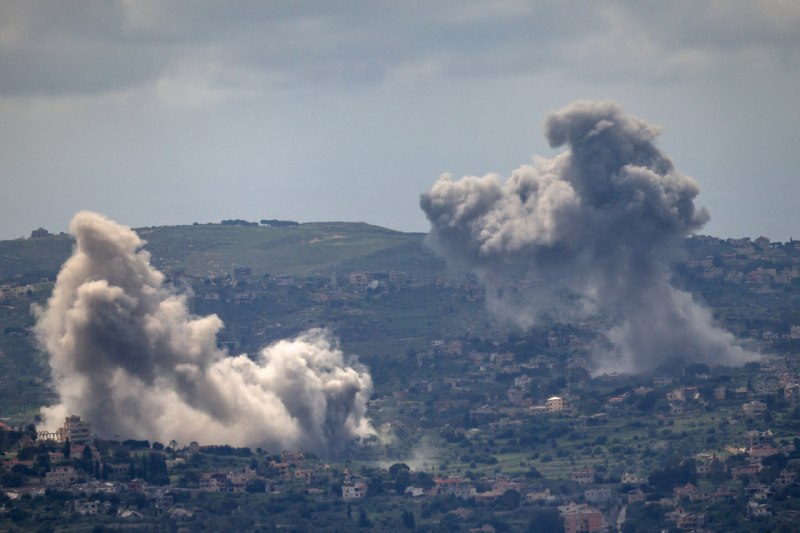
Israeli artillery struck Ali al-Taher Hill in south Lebanon and a drone was reported over Beirut on the morning of 15 June 2026, the latest in a rolling pattern of cross-border fire that has defined the post-ceasefire period. @FarsNewsInt · Telegram

On the morning of 15 June 2026, two near-simultaneous flashpoints reframed the daily rhythm of Israel–Lebanon frontier reporting. At 09:32 UTC, an Israeli artillery barrage hit Ali al-Taher Hill in the Nabatieh district of southern Lebanon, according to a Telegram channel that aggregates regional military communiqués. Four minutes earlier, at 09:26 UTC, the same outlet — and a parallel feed carrying the same headline — reported an Israeli drone overflying Beirut and its southern suburbs. The pairing matters: kinetic fire on a southern Lebanese ridge and overhead surveillance over a capital city are not the same instrument, but they share a signalling function, and they are arriving in the same hour.

The events sit inside a deeper contest. Israel and Hezbollah have traded strikes along the Blue Line in an almost metronomic cadence since the November 2024 ceasefire arrangement, and the southern suburbs of Beirut — Dahieh — have remained the predictable target for any Israeli demonstration of reach. Drone overflights above the capital are, in this context, less a tactical measure than a reminder of persistent intelligence penetration. Nabatieh district, the rural and hill-heavy terrain south of the Litani, is the geography where any re-escalation has historically been measured first. On 15 June, both gauges moved at once.

What the wire shows

Two Telegram channels with overlapping sourcing reported the same two items in a four-minute window. The first, which has built a following by republishing translated Israeli Arabic-language military radio traffic, posted the Ali al-Taher Hill strike at 09:32 UTC under a flag-marked breaking-news banner, then almost immediately appended a second line: an Israeli drone over Beirut and its southern suburbs. The second, a Beirut-based outlet with explicit alignment to the Axis-of-Resistance information ecosystem, ran an identically worded drone report at 09:26 UTC, six minutes before the artillery item. The duplication is itself a fact about the information environment — the same event was carried in parallel by a military-monitoring account and by a politically aligned regional outlet, a pattern that lets a single strike be amplified into two separate stories depending on the audience reached.

Israeli official channels — the IDF Spokesperson's unit, the Prime Minister's Office, and the Hebrew-language press — had not, as of the time of writing, issued a public statement attributing, denying, or contextualising either action. That silence is consistent with Israeli practice during routine post-ceasefire operations: confirmed action is rarely broadcast in real time when the government wants to preserve operational ambiguity, and unconfirmed reports are left to circulate without correction. Lebanese state media, including the National News Agency, had not been observed by these channels to dispute the geography of the strike, which is a softer form of corroboration than an explicit confirmation but a meaningful one given how often the two sides contest the location of individual incidents.

The counter-narrative, and why it cuts

The Israeli framing, when Israeli officials do speak, is that operations inside Lebanese airspace and along the ridge systems above Nabatieh are defensive — that Hezbollah's reconstruction of its southern infrastructure and its continued cadre-level presence in villages north of the Litani obliges the IDF to maintain a posture of pre-emption. That framing is contestable. The villages of the Nabatieh governorate, including the hill features of the type struck on 15 June, are populated; an artillery round landing in that terrain is a round landing on ground where civilians live, work, and harvest olives. The Lebanese government's standing position, articulated in UNIFIL reports and in Beirut's submissions to the Security Council, is that Israeli fire inside Lebanese territory is a violation of sovereignty regardless of the target's military characterisation.

The harder counter-narrative, carried most loudly by outlets in the Axis-of-Resistance ecosystem but echoed in parts of the European left press, is that the metronomic drip of strikes and overflights is itself the policy — that Israel is managing, rather than solving, the Hezbollah question, and that the civilian cost of that management is being absorbed on the Lebanese side. There is a real evidentiary basis for that read: UNIFIL's quarterly reports have consistently recorded violations of Lebanese airspace and what the mission terms "ceasefire breaches" in the south, and the UN Special Coordinator for Lebanon has repeatedly noted that civilian disruption in the south is sustained rather than episodic. The dominant framing — that each individual strike is a discrete defensive act — is not necessarily wrong, but it is incomplete when set against the cumulative pattern.

The structural pattern underneath

Strip the day's events of their headline packaging and a familiar shape emerges. Israel retains the ability to put artillery on a named hill feature in south Lebanon inside minutes, and to put an intelligence-collection drone over a capital of more than two million people, in the same operational morning. The capability is not new. What is new, in 2026, is the routinisation. The November 2024 arrangement was sold, in capitals from Washington to Paris, as the architecture that would end the active front and allow a return to the 2006 status quo of calibrated deterrence. Eighteen months on, the architecture is in place but the underlying contest is not suspended. Strikes, overflights, and the diplomatic theatre around them are the substance of the relationship, not a residual of it.

The information layer is part of the structure. Telegram channels that aggregate, translate, and timestamp military radio traffic have become the de facto wire service for the Israel–Lebanon frontier. The outlets carrying the 15 June reports are not major newsrooms; they are networks of contributors with translation capacity and access to open-source radio intercepts, and they set the terms on which the day's events are narrated to audiences who no longer wait for the evening bulletin. The wire is now the channel, and the channel is now the wire.

What remains contested

Three things are unsettled on this evidence. First, the precise target of the Ali al-Taher Hill strike is not described in the reporting that has surfaced; "Ali al-Taher" refers to a geographic feature rather than a named installation, and without an Israeli, UNIFIL, or Lebanese military statement the operational intent is a matter of inference. Second, the drone overflight is reported as ongoing but the platform type, mission profile, and arming status are not specified; the gap between a surveillance pass and a strike sortie is the entire gap between signalling and escalation, and the available reporting does not close it. Third, casualty and damage figures — the metric that most reliably determines whether a given day is treated as a routine incident or a crisis — had not been published in the channels carrying the 15 June items. The day's significance is therefore provisional, and the desk will update as more specific reporting lands.

This article will be updated as Israeli, Lebanese, UNIFIL, or wire-service reporting provides confirmation, casualty figures, or an official characterisation of the 15 June 2026 events.


Sources consulted

  • Telegram (intelslava) — "Israeli artillery fire targets Ali al-Taher Hill in the Nabatieh district, southern Lebanon / Israeli drone flying over Beirut and its southern suburbs" — 2026-06-15 09:32 UTC — https://t.me/intelslava
  • Telegram (thecradlemedia) — "Israeli drone flying over Beirut and its southern suburbs" — 2026-06-15 09:26 UTC — https://t.me/thecradlemedia
  • Telegram (TheCradleMedia) — "Israeli drone flying over Beirut and its southern suburbs" — 2026-06-15 09:26 UTC — https://t.me/TheCradleMedia
  • United Nations Interim Force in Lebanon (UNIFIL) — background page on the UNIFIL mandate, area of operations, and the Blue Line — https://en.wikipedia.org/wiki/United_Nations_Interim_Force_in_Lebanon
  • Nabatieh Governorate — geographic reference for the district referenced in the 15 June reporting — https://en.wikipedia.org/wiki/Nabatieh_Governorate
  • Dahieh — background on the southern suburbs of Beirut referenced in the drone overflight report — https://en.wikipedia.org/wiki/Dahieh
  • November 2024 Israel–Hezbollah ceasefire arrangement — context for the post-arrangement strike pattern on which the 15 June events sit — https://en.wikipedia.org/wiki/2024_Israel%E2%80%93Hezbollah_ceasefire

Wire provenance

This editorial synthesis draws on the following public wire/social posts:

  • https://t.me/intelslava
  • https://t.me/thecradlemedia
  • https://t.me/TheCradleMedia
  • https://en.wikipedia.org/wiki/United_Nations_Interim_Force_in_Lebanon
  • https://en.wikipedia.org/wiki/Nabatieh_Governorate
  • https://en.wikipedia.org/wiki/Dahieh
  • https://en.wikipedia.org/wiki/2024_Israel%E2%80%93Hezbollah_ceasefire
© 2026 Monexus Media · reported from the wire