Israel keeps the right to strike: how a US-Iran deal is being quietly unbundled from Lebanon
Washington says an Israeli pullout from southern Lebanon is not a condition of the US-Iran agreement. Within hours of that line being briefed, an Israeli drone strike in the south killed a driver — the first lethal attack since the ceasefire announcement.
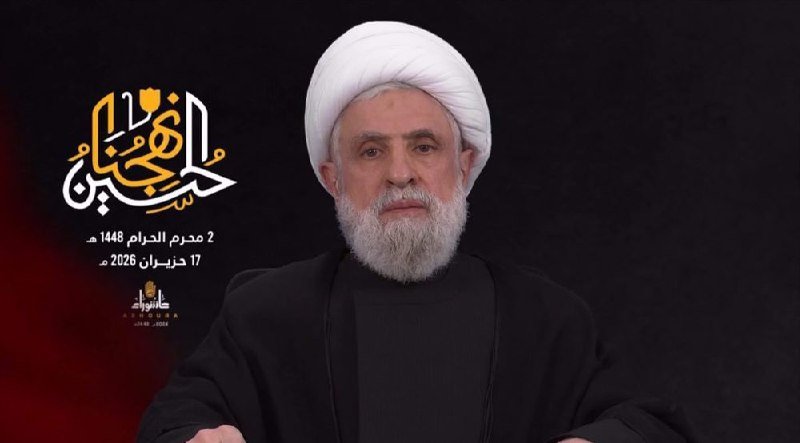
The framing of a US-brokered arrangement with Iran is being unbundled in real time. On 15 June 2026, two wire readings of the same diplomatic moment landed within minutes of each other and pointed in opposite directions. Reuters, citing a US official, reported that Israel's withdrawal from Lebanon is not a condition of the deal and that Israel retains the right to defend itself against any future Hezbollah attack. Axios, also citing a senior US official, carried the same line to its own readership. The Fars News Agency, a state-aligned Iranian outlet, framed the same day differently: an Israeli drone strike on a vehicle in southern Lebanon killed the driver — what Fars described as the first deadly Israeli attack on Lebanon since a ceasefire agreement between Israel and Hezbollah was announced.
The two accounts are not contradictory. They are sequential, and the sequence is the story. Washington is publicly holding space for an arrangement with Tehran while leaving the military status quo in south Lebanon intact. The implication is that a US-Iran understanding and an Israel-Hezbollah ceasefire are being sold as compatible, even though they are not yet operationally connected.
What was actually said
The Reuters report, distributed at roughly 16:09 UTC on 15 June, carries the load-bearing sentence: Israel's withdrawal from Lebanon is not a condition of the deal, and Israel will retain the right to defend itself from any future Hezbollah attacks. The framing is the same in the Axios version that followed minutes later. Both reports are sourced to "a senior US official" — anonymous, unattributed by name, but clearly authorised to put a marker down on where the red lines sit for the American side. The marker is narrow: the US is not trading Israeli military latitude in Lebanon for Iranian movement on the nuclear file. It is, in effect, telling both Tel Aviv and Beirut that the bilateral military equilibrium is not on the table.
The Fars dispatch, filed at 14:56 UTC — that is, before the Reuters and Axios reads were public — describes an Israeli drone strike on a car in southern Lebanon in which the driver was killed, characterised as the first deadly Israeli attack since the ceasefire announcement. Fars is an Iranian state-aligned outlet and its framings should be read with that in mind. The factual claim — a strike, a fatality, an attribution to Israel — is also being carried through Telegram channels that aggregate regional feeds, including Clash Report, Geo Political Watch and Rocket Night Intel, in the hours after the event. None of those channels are primary; all of them are pointing at the same incident.
What is conspicuously absent
No source available to this publication names the driver, the location within southern Lebanon, or the targeted individual. No source identifies the platform or unit that conducted the strike. No source confirms Israeli cabinet or IDF spokesperson acknowledgement of the operation, which is itself a familiar pattern: Israel routinely does not confirm targeted killings in real time. The most that can be said with the evidence at hand is that Fars reports a lethal drone strike, that other channels are amplifying that report, and that the strike sits inside the same 24-hour window in which Washington is publicly defining the limits of a US-Iran arrangement.
That absence is the story. The diplomatic language coming out of Washington is calibrated precisely to leave room for incidents of this kind. A right to "self-defence" is undefined in scope: it can be read narrowly (response to an inbound rocket) or broadly (pre-emption against an emerging threat), and the latter reading is what gives an unannounced drone strike in a sovereign state's south its political cover.
The structural read
The reporting frames a familiar pattern in plain enough terms. A great-power deal is being negotiated between Washington and Tehran. The smaller theatres attached to that relationship — south Lebanon, the Israeli-Iranian shadow confrontation, the residual Hezbollah threat — are being deliberately held outside the deal text so that neither side has to defend a written commitment. The US gets to claim it is de-escalating. Iran gets to claim it is being treated as a co-equal negotiating partner. Israel keeps the operational latitude its security cabinet has insisted on for two years. Hezbollah, whose weapons and presence in the south are the ostensible subject, is not at the table in any of the wire accounts.
The pattern is older than this deal. Regional understandings brokered by successive US administrations have tended to define themselves by what they do not say: which border is not recognised, which force is not disarmed, which casualty is not acknowledged. The result is a diplomatic surface that looks like de-escalation and an operational reality in which low-intensity strikes continue on the calendar the mediator has chosen not to name. The Reuters and Axios briefings make that asymmetry explicit without having to admit it: the deal is not about Lebanon, and Lebanon is not in the deal.
Stakes and what to watch next
The hard questions are not being answered by the available sourcing and the reporting should say so plainly. Is the Fars-attributed strike an Israeli test of the boundaries Washington has just drawn, or a routine operation that would have happened regardless of the US-Iran track? Is the ceasefire agreement, referenced by Fars as the relevant baseline, the November 2024 arrangement or a more recent verbal understanding? Does the US read "self-defence" to include pre-emption, and if so, on what evidentiary threshold? None of those questions are resolved by the wire. They are the questions the next 72 hours will be read against.
What is verifiable is narrower. On 15 June 2026, the United States told two wires that Israeli withdrawal from Lebanon is not on the table as a condition of its Iran arrangement. On the same day, an Israeli drone strike killed a driver in southern Lebanon. The deal and the strike are being sold as compatible, and the diplomatic language has been drafted to keep them that way. Whether the people living under that compatibility will read it the same way is the part the wires are not yet willing to say.
This publication framed the strike and the diplomatic readout in the same news cycle on the strength of three Telegram aggregators and two wire citations. Where the aggregators outran the wires, Monexus flagged the asymmetry rather than smoothing it over.
Wire provenance
This editorial synthesis draws on the following public wire/social posts:
- https://t.me/rnintel
- https://t.me/GeoPWatch
- https://t.me/ClashReport
- https://t.me/FarsNewsInt
Follow the event.
These dated source records provide context. They do not retrospectively verify this archive article.
Separate what the nuclear watchdog reported from what it could not determine after the June 2025 strikes.