Israel Rejects US–Iran Ceasefire Memorandum as Vance Claims Quiet Satisfaction
A reported 60-day extension of the US–Iran ceasefire faces a sharp Israeli pushback even as Vice President Vance insists the deal is landing well in the Jewish state. The split exposes how fragile the diplomatic architecture is between Washington and its closest regional partner.
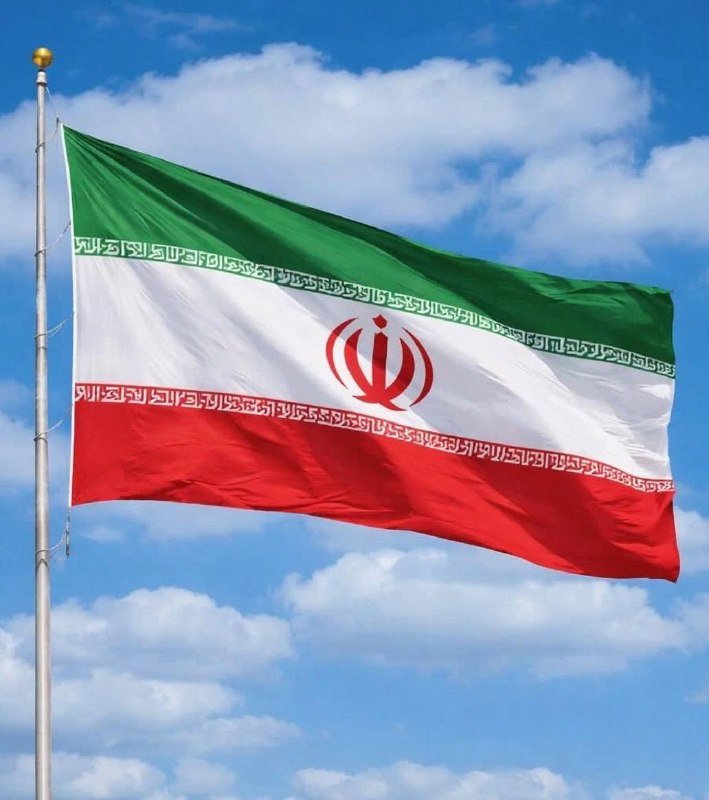
A proposed US–Iran memorandum of understanding that would extend the current ceasefire by 60 days and relaunch negotiations over Iran's nuclear programme has run into a wall of opposition inside Israel, even as the Trump administration's most prominent public salesman — Vice President JD Vance — insisted on 15 June 2026 that the deal was being received favourably inside the Jewish state. The contradiction, captured in a matter of hours on the same afternoon, is the clearest signal yet that the diplomatic track between Washington and Tehran is moving faster than the political coalition that traditionally underwrites it can absorb.
The bottom line: a 60-day extension with talks on nuclear limits, an easing of the US naval blockade and the issuance of fresh oil sanctions authorisations is on the table in some form. Whether it survives the week depends less on Tehran and more on whether the Israeli political mainstream — which has already declared it will not commit to a deal it views as unfavourable — can be brought inside the tent by the White House.
The shape of the deal on the table
According to reporting carried by the OSINTdefender channel on 15 June at 18:50 UTC, the proposed memorandum extends the existing ceasefire by 60 days and opens a new track of talks on Iran's nuclear programme. Two concrete economic levers sit at the centre of the package: a US commitment to lift its naval blockade of Iranian oil shipments, and the issuance of fresh oil sanctions licences that would allow Iranian crude back into formal circulation. The combination is, in effect, a substantial concession on the coercive architecture the United States has built up around the Islamic Republic over the past two decades, in exchange for a procedural window to negotiate limits on enrichment and a pause in any active military track.
Vice President Vance, in remarks carried by OSINTdefender at 18:53 UTC on the same day, said that many in Israel were satisfied with the ceasefire agreement and indicated a positive reception among the Israeli populace despite ongoing challenges. The framing matters: it positions the deal as something that has been socialised with the Israeli public, and implicitly with the Israeli government, in advance of signature. It is the kind of statement designed to defuse the predictable Jerusalem reaction before it lands.
The Israeli rejection
The defusing did not work. Within roughly thirty-six minutes of Vance's remarks going out on the wire, Middle East Eye reported that Israeli figures across the political spectrum had denounced the agreement, seeing it as unfavourable to Israel and pledging not to commit to its terms. The phrasing — "across the political spectrum" — is the operative detail. Opposition figures and coalition partners are not splitting here; they are merging. That is the configuration the White House most fears, because it forecloses the standard Israeli political manoeuvre of letting the opposition carry the cost of saying no while the governing coalition quietly acquiesces.
The Israeli objection, as conveyed through Middle East Eye's reporting, is that a 60-day extension in exchange for a partial lifting of the oil blockade and a fresh sanctions-licensing track hands Tehran something durable — revenue, diplomatic recognition of a negotiating track, and time — in return for commitments that are procedural rather than structural. The same critique is heard inside Israel from both the security-realist wing, which wants the nuclear file closed rather than managed, and from the ideological right, which regards any deal with the Islamic Republic as a strategic error regardless of its terms.
Vance versus Jerusalem — a credibility problem
The Vance framing, that a deal of this kind can be sold to the Israeli public as a positive-sum outcome, runs into a basic problem: the Israeli political class has just publicly contradicted it. The Vice President is not a neutral observer on this question. He speaks for an administration that has staked a meaningful amount of political capital on a Middle East policy that includes an explicit Israeli component, and the gap between what Washington says it has secured and what Jerusalem says it has accepted is now visible to anyone with a feed reader.
The structural pattern is familiar. US negotiating momentum in the Middle East has repeatedly outrun the coalition management required to make deals stick. The White House tends to treat Israel as a managed stakeholder to be consulted and rolled; Jerusalem tends to treat itself as a principal with an effective veto over what an acceptable package looks like. When those two operating models collide, the deal either narrows dramatically or collapses. The 60-day window in the proposed memorandum is, among other things, time for that collision to resolve itself one way or the other.
What the deal changes — and what it does not
If the memorandum is signed and survives the political week, three things change immediately. The ceasefire stops being a stopgap and becomes a rolling arrangement renewable in 60-day tranches. Iranian oil flows back toward formal markets under US-issued licences, which reprices a meaningful slice of global crude supply. And the nuclear file moves from crisis management — the posture that produced the blockade in the first place — into a structured negotiation that, by design, takes the military option off the table for the duration of the talks.
What it does not do is resolve the underlying question. A 60-day extension is a calendar instrument, not an arms-control instrument. It buys time for the kind of negotiation that produced, in earlier eras, the Joint Comprehensive Plan of Action — a framework whose own durability was eventually measured in months once a different administration took the view that the cost of staying inside it exceeded the cost of leaving. Anyone reading the current text as the end-state is reading past the politics on both sides.
The counter-read worth taking seriously
There is a counter-narrative the Vance statement gestures at and that the Israeli rejection could obscure. The deal may be less about its specific terms than about resetting the conflict-management architecture to a posture in which the United States, not Israel, sets the tempo of the nuclear file. In that read, the Israeli pushback is precisely the point: the White House is signalling that this round of decisions will be made in Washington, and that allied acquiescence — not allied veto — is the working assumption. The counter-evidence, of course, is that Israeli figures across the political spectrum have just publicly pledged not to commit. The credibility of the Vance read will be tested the first time an Israeli cabinet minister is asked, on the record, whether the government considers itself bound by the memorandum's terms.
What remains uncertain
The reporting available on 15 June 2026 leaves several questions open. The specific text of the memorandum has not been published in the channels we have read. The status of the US naval blockade — whether lifting is automatic on signature, staged over the 60-day window, or contingent on Iranian compliance milestones — is not specified. The Israeli government's official position, as distinct from denunciations by "figures across the political spectrum" reported by Middle East Eye, has not been confirmed in the source material available. And the Iranian side's posture on the package, including whether the lifting of the blockade is acceptable in the form described, is also not on the record in the items reviewed for this article. A 60-day clock, in other words, is now running on a deal whose full contents are still partly opaque to outside observers.
The next seventy-two hours will be diagnostic. If Jerusalem's denunciation hardens into a formal non-recognition, the memorandum becomes a piece of paper Washington and Tehran signed in front of an empty chair. If the Israeli cabinet stays quiet, the Vance framing holds and the negotiation enters its structured phase. The middle outcome — managed objection followed by quiet acquiescence — is the most likely path, but it is the one that requires the most political work to construct, and the political work is what the next three days are for.
Desk note: Monexus led with the contradiction at the centre of the wire — the simultaneous Vance reassurance and the Israeli cross-spectrum rejection — rather than treating the memorandum as a fait accompli. The structural frame is the recurring gap between US negotiating tempo and Israeli veto expectations; the remaining uncertainty sits in the unpublished text and in the Israeli government's formal, as distinct from reported, position.
Follow the event.
These dated source records provide context. They do not retrospectively verify this archive article.
Separate what the nuclear watchdog reported from what it could not determine after the June 2025 strikes.