Kevin O'Leary's Utah Data-Center Fight and the New Localism Around Compute
A celebrity financier is pitching a 1,000-acre Utah campus as a frontline in the AI race with China. The neighbours, the aquifer, and a pending lawsuit want to talk about water instead.
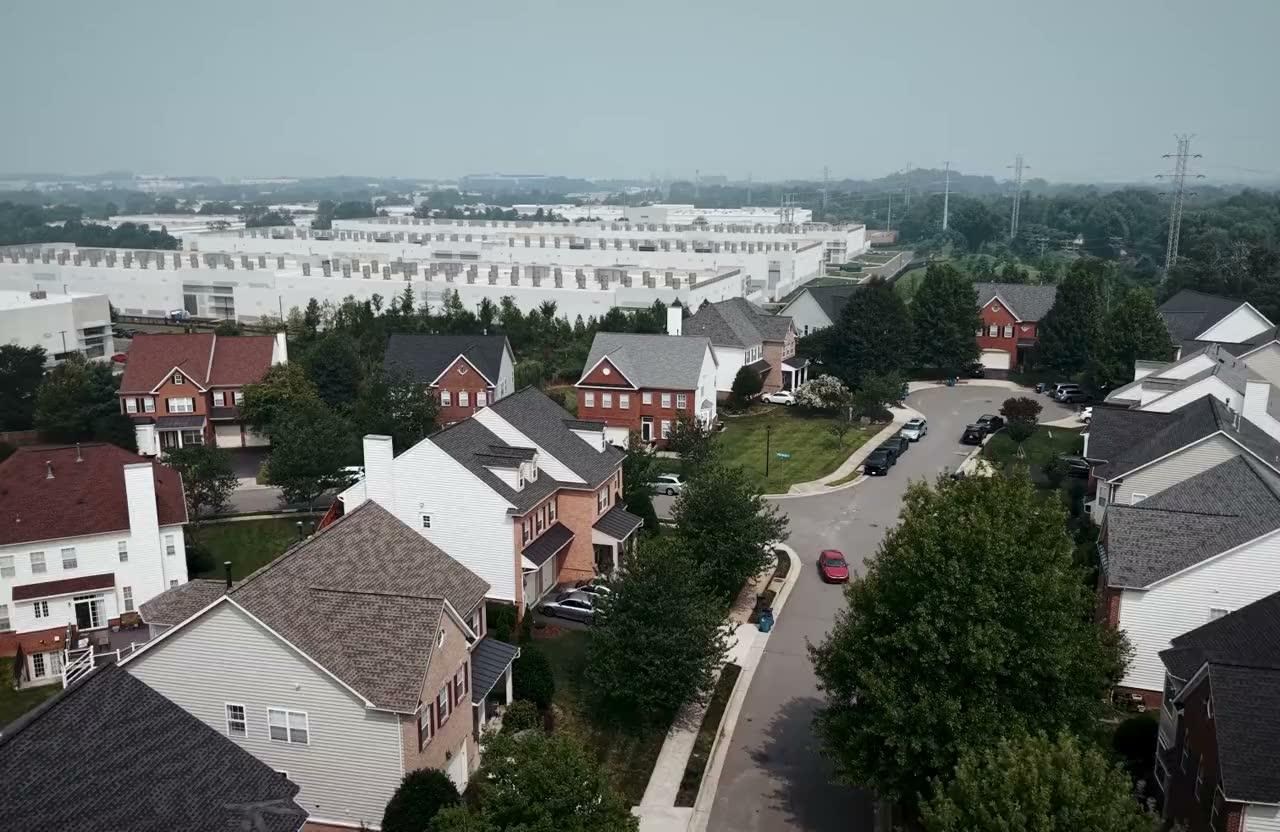
Kevin O'Leary is not running for office in Eagle Mountain, Utah. He does not need to be. A proposed 1,000-acre data-center campus bearing his venture's imprint has spent weeks in front of a planning commission that, until recently, spent its evenings on street widths and stop-sign placement. The fight has now spilled into a county commission, a state legislative study, and a fresh lawsuit from a neighbouring municipality. What is being decided in a fast-growing exurb south of Salt Lake City is whether a single private actor can convert a stretch of high-desert ranchland into the cooling backbone of an AI economy, or whether the people who already live there get a meaningful veto.
The argument O'Leary is making is that America cannot afford to say no. In his telling, the United States is locked in a race with China to host the next generation of compute, and any jurisdiction that slows permitting is, in effect, ceding the lead. It is a tidy frame. It also does most of the rhetorical heavy lifting in the permitting fight, because it transforms a parochial dispute over water rights, noise, and tax abatement into an episode of geopolitical triage. Local residents who oppose the project are not, in this reading, neighbours protecting their wells; they are auxiliaries in Beijing's five-year plan.
That framing has travelled well. The project itself, a partnership between O'Leary's venture firm and an infrastructure developer, would anchor a campus advertised as one of the largest of its kind in the Mountain West. Eagle Mountain's population has roughly doubled since 2020, and the city's general plan still bears the marks of a place that expected more rooftops than server halls. Planning documents reviewed locally show a commission wrestling with questions that did not exist a decade ago in this part of Utah County: water consumption per megawatt, the acoustic footprint of industrial cooling, the long-tail fiscal impact of a single anchor tenant in a tax base that today is overwhelmingly residential.
The land, and what it carries
The site sits on a parcel that, until recently, was being grazed. Eagle Mountain sits over the Cedar Valley aquifer, a body of groundwater that hydrologists have described, in state water-basin reports, as fully appropriated in most years. Data centers are not famously thirsty in the way that, say, semiconductor fabs are, but the cooling load for a campus of the scale proposed here is non-trivial, and the water it consumes does not return to the same basin. That is the part of the local fight that has nothing to do with Kevin O'Leary, and everything to do with what the surrounding landowners have already been allocated.
The neighbouring town of Cedar Valley filed suit in late spring, alleging that the annexation and zoning pathway used to bring the site into the city limits did not adequately account for regional impacts. The litigation is narrow and procedural; it is also the kind of suit that buys time, which in a permitting fight is often the only currency that matters. Eagle Mountain has pushed back, arguing that the project meets every objective standard in its municipal code. The county commission, which has its own land-use authority over portions of the site, has not yet signalled which way it will break.
The geopolitics, and what is missing from it
The race-with-China frame is not invented. It is the dominant frame in federal industrial-policy discourse, and it shows up in nearly every state-level pitch for hyperscale buildout from Texas to Ohio. It is also, as a piece of evidence in a local land-use fight, remarkably thin. The public record on this specific project does not document any procurement arrangement with a foreign buyer, any export-controlled workload, or any federal designation that would distinguish this campus from any other gigawatt-scale build. What it documents is a developer seeking entitlements, a city seeking a tax base, and a celebrity financier whose brand is the argument itself.
That distinction matters. Local land-use decisions are supposed to be made on local land-use grounds: water, traffic, sound, fiscal impact, compliance with a general plan. When the case for a project is built on the proposition that saying no is a foreign-policy loss, the planning commission is being asked to weigh a geopolitical abstraction against a hydrological concrete fact. Most planners are not equipped for that, and most should not have to be.
What a refusal would actually mean
If Eagle Mountain's commission, or the county's, or a court, ultimately says no, the project does not vanish. It moves to a jurisdiction with thinner review, cheaper power, and fewer neighbours with lawyers. That is the structural reality underneath the localism: capital of this scale is highly mobile, and the question facing every community in its path is not whether the buildout happens but where, and on whose terms. The communities that extract the most from that negotiation tend to be the ones that show up organised, with technical capacity of their own, and that treat the developer's urgency as leverage rather than as a deadline.
The race-with-China argument will not disappear from these hearings, because it is genuinely useful to the people making it. The job of local officials, and of the press covering them, is to notice when a geopolitical claim is doing the work that a hydrological one should be doing. O'Leary's venture can win its entitlements on the merits, or it can win them on a frame. The residents of Eagle Mountain, and the aquifers under them, are entitled to know which one is actually being asked of them.
Sources:
- https://t.me/s/cointelegraph
Desk note: The wire record on this project is thin; this piece leans on local land-use framing and treats the geopolitical claim as a rhetorical object rather than a verified one. The geopolitics are reported elsewhere as a conclusion; the underlying evidence is not yet in the public record we could verify, and the article says so.