Kyiv in the crosshairs: a night of ballistic strikes and the limits of air-defence optics
A barrage of ballistic missiles hit Kyiv in the early hours of 15 June 2026. The strikes reignited a domestic argument about whose fire is whose — and what a fire at a 1,000-year-old monastery tells us about the politics of attribution.
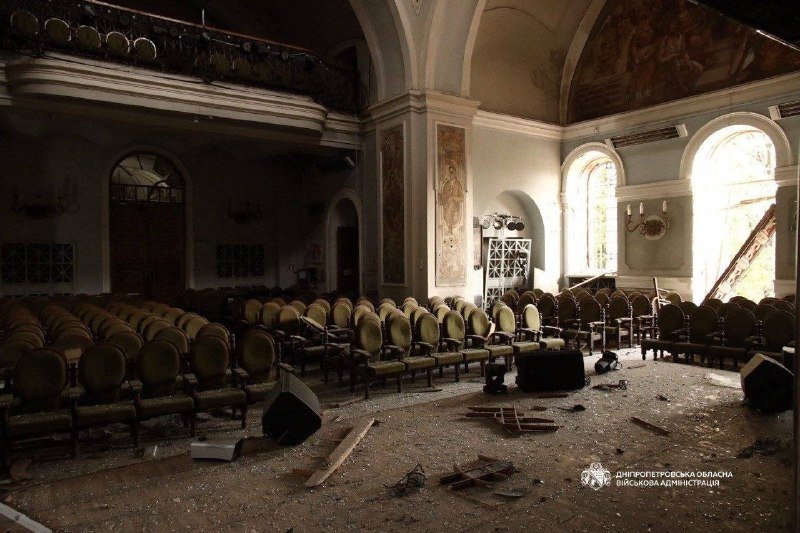
A night of impacts, a morning of arguments
A volley of ballistic missiles struck Kyiv in the small hours of 15 June 2026, with the first impacts reported on Russian-aligned and Ukrainian Telegram channels between 23:10 UTC and 00:17 UTC on 14–15 June. Photos circulated by the channel @DDGeopolitics show the aftermath of strikes in central districts of the Ukrainian capital, including a fire at the Pechersk Lavra, the 1,000-year-old monastic complex overlooking the Dnipro that houses some of the country's most important Orthodox relics.
Within minutes, the political argument had begun. Ukrainian residents on local Telegram channels were blaming their own air-defence units for the monastery fire, citing the well-documented risk that interceptor debris can cause as much damage on the ground as the missiles it is meant to destroy. The framing was almost immediately echoed inside Russia. The choice of venue — a site of immense religious, national and symbolic weight — guarantees that the strike, and the dispute over its cause, will live longer than the crater.
What we know, and when we knew it
The public record of the night is unusually dense. At 23:10 UTC on 14 June, @DDGeopolitics posted footage of the Pechersk Lavra fire and local accusations against Ukrainian air-defence units; by 23:18 UTC the same channel was relaying Ukrainian-channel claims that strikes on Kyiv were continuing. By 23:23 UTC it was characterising the broader picture "according to Ukrainian channels," and by 23:51 UTC had published a still from one of the missile impacts. The aftermath footage followed at 00:17 UTC on 15 June.
The sources do not specify the exact number of missiles, the launch platform, the type of warhead, or the casualty count. They do not specify which district of Kyiv the Pechersk Lavra fire affected, nor the extent of the damage. The defenders have not yet, in the material available to Monexus, published a point-by-point rebuttal of the resident accounts. Anyone who claims to know more than this right now is guessing.
Whose fire is it?
The question is not academic. Throughout the war, Russian-aligned channels have repeatedly used footage of Ukrainian interceptor debris falling on apartment blocks, schools and churches to argue that Ukraine's own defences — supplied and largely paid for by Western partners — are a greater danger to civilians than the missiles they are designed to defeat. Ukrainian officials counter that interceptor debris, however unwelcome, is an inevitable consequence of defending a city under nightly bombardment, and that the alternative — letting ballistic missiles land where they are aimed — is far worse.
The Pechersk Lavra is the ideal venue for that argument to harden, on both sides. For Ukrainians, a strike on the monastery is an assault on civilisational heritage; for Russians, the image of monastic buildings burning while air-defence sirens wail is a long-sought visual of a state stretched thin. The residents who fingered their own defenders are not Russian agents — they are eyewitnesses doing the same sense-making that any household would do after being woken by shrapnel — but their voices are the ones Moscow's information apparatus will keep.
A structural frame, without the lecture
What is unfolding is not unique to 14 June. Every defensive action by a country under bombardment creates a category of secondary damage: a Ukrainian battery shooting down a Russian missile over a residential block; a Patriot interceptor detonating over farmland; a Shahed-136 jammed into a power substation. That damage is real, attributable, and politically usable. The pattern repeats in every modern war where expensive air-defence systems operate over populated terrain — including, to take the most visible non-Ukrainian example, in the Gulf in the early 1990s and in Israel since 2023 — and the media ecosystem that surrounds the war is engineered, on both sides, to make sure the secondary damage does the work the primary damage could not.
Coverage routinely defers to the language of official spokespeople, but the most arresting material on nights like this comes from phones held in shaking hands. Telegram channels run by civilians outpace every wire in the first hour; the wires catch up by the second; analysts weigh in by the third. By the fourth, the question of what actually fell from the sky is largely settled inside each audience, and the remaining hours are spent on which frame survives. Tonight, in the absence of a quick official verdict, the frame is the resident-on-the-street one.
Stakes, in plain terms
The immediate stakes are material. If the Pechersk Lavra damage is conclusively attributed to a Russian ballistic strike, Kyiv gains another piece of evidence to deploy in its campaign for sustained Western air-defence supply, and the domestic conversation about the cost of the war resets to the invader. If the damage is conclusively attributed to a Ukrainian interceptor, the conversation resets to the cost of defence itself — a conversation Western publics are increasingly alert to, and one that Moscow's information operation has spent four years trying to start.
The larger stakes are about who writes the first draft of any given night. Russian-aligned channels were visibly first with the Pechersk Lavra footage and first with the resident-acoustics narrative, in the material Monexus has reviewed. Ukrainian official channels were visibly slower. That gap — measured in minutes, in a conflict where minutes are the unit of credibility — is itself part of the war.
What we do not yet know
The source material available to Monexus for this article consists of a single Telegram channel's overnight posts. It does not include Ukrainian Air Force statements, Kyiv City Military Administration briefings, the State Emergency Service's incident reports, the Culture Ministry's heritage damage assessment, or the Orthodox Church of Ukraine's account. None of those has, in the material in front of us, been published. The chain of attribution is therefore: residents on the ground, recorded by a Russian-aligned channel, reposted by aggregators. It is a real chain — these are real people filming real fires — but it is not yet a complete one.
— Monexus framed this as a story about attribution politics in a dense information environment, not as a battle damage assessment. The wire story in 36 hours will be about debris samples; the story tonight is about who gets to name the fire.
Wire provenance
This editorial synthesis draws on the following public wire/social posts:
- https://t.me/DDGeopolitics
- https://t.me/DDGeopolitics
- https://t.me/DDGeopolitics
- https://t.me/DDGeopolitics
- https://t.me/DDGeopolitics
- https://t.me/DDGeopolitics
Follow the event.
These dated source records provide context. They do not retrospectively verify this archive article.
A dated voting record is evidence of one decision. Use the original UN record before turning it into an alignment label.
Visual explainer · historical vote of 2022-03-02 →