Kyiv under combined strike: what the overnight barrage tells us about the war's next phase
Overnight on 14–15 June 2026, Kyiv absorbed a layered attack mixing ballistic missiles, cruise missiles and drones. The pattern matters more than the count.
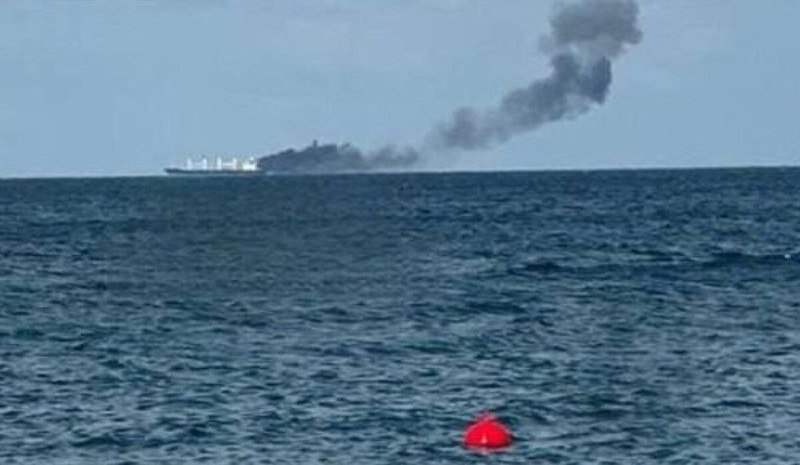
In the early hours of 15 June 2026, Kyiv came under what preliminary reporting describes as a combined strike — ballistic and cruise missiles followed by a drone wave, with air-defence crews engaging targets over the capital. Telegram channels monitoring the attack put the inbound tally at dozens of one-way attack drones and a smaller number of cruise missiles; the sequence — Iskander and Zircon-class missiles first, then Shahed-type drones — was visible in real time on open flight-tracker and channel feeds before sunrise in Europe.
The pattern of the strike is the story. Russia has spent the spring of 2026 shifting from massed cruise-missile salvos, expensive and limited in number, to layered attacks that pair a smaller missile opening with a much larger drone tail. The opening salvo forces Ukrainian Patriot and SAMP/T batteries to expend expensive interceptors on high-value ballistic threats; the drone wave that follows arrives into a partly depleted magazine. It is industrial logic applied to a bombing campaign — conserve the scarce munition, spend the cheap one first — and it has measurably changed the air-defence arithmetic in Ukraine's major cities.
The overnight sequence
Reporting from open-source channels in the hours after midnight UTC on 15 June traces a familiar shape. An initial missile barrage — Iskander-M ballistic and Zircon sea-launched cruise systems, according to Telegram-channel reporting — was followed by air-raid warnings across the capital and, shortly after, by the visible launch of Ukrainian PAC-3 interceptors. Within minutes, residents and monitors reported the first drone tracks inbound. One Kyiv-based channel, citing air-force signalling, put the drone count at 28 and the cruise-missile count at 11; neither figure has been independently confirmed by the Ukrainian Air Force in a public statement as of 06:00 UTC on 15 June. Telegram is not a wire service, and the channel in question is a partisan observer rather than an official spokesperson — the numbers should be treated as indicative, not authoritative.
What is verifiable is the type of attack. Ukraine's defenders have been bracing for exactly this combined profile since spring 2025, and the June 15 strike follows the template almost beat for beat: high-end missiles to fix the air-defence posture, cheap drones to do the saturation work, and a long, noisy night in between for the capital's roughly three million residents.
What the counter-narrative says
Russian-language military channels, when they comment on strikes inside Kyiv, frame the campaign as a deliberate degradation of Ukraine's air-defence stockpile, with the secondary goal of striking decision-making infrastructure. That framing is consistent with the observable shift toward cheaper, more numerous drones. It is also consistent with what the open-source community has documented for over a year: interceptor stocks are finite, each PAC-3 round costs more than a Russian drone does, and the ratio is unsustainable if Moscow can keep the production lines warm.
The counter-narrative, voiced by Russian milbloggers and amplified on Telegram, casts the strikes as retaliation for Ukrainian long-range attacks on Russian territory — a framing that recasts a defending country as the aggressor and an invading one as a responder. The sequence on the ground is the opposite: Ukraine was invaded in February 2022, and Ukrainian strikes into Russian territory, where they occur, are responses to a campaign of bombardment that has now run for more than four years. That distinction is not a rhetorical quibble. It is the basis on which Western military aid is justified, and it is the framing the wire services — Reuters, the BBC, the Associated Press, the Guardian — have held to throughout.
The structural picture
Two structural facts sit underneath this particular night. First, the air-defence economy: Patriot interceptors are produced in finite quantities in the United States, and Ukraine's partners have been working since at least 2024 to ramp up both the missiles and the launchers, with mixed results. Each successful Russian combined strike burns a small but non-zero share of that stockpile. Second, the production economy on the other side: Russian cruise-missile and drone output recovered through 2025 after the sanctions-driven disruptions of 2022–23, and Shahed-type one-way attack drones — produced with foreign-sourced components, despite export controls — are now arriving in salvos that would have been impossible at the war's start.
The combined effect is that Moscow can afford to lose drones and still pressure Kyiv, while Kyiv cannot afford to lose interceptors at the same rate. That asymmetry does not decide the war, but it does set the terms of the air campaign: every clear night over the capital is, in a sense, a small Russian victory even when air-defence crews hold the line.
Stakes, and what is still uncertain
If the pattern of the last six months continues, Kyiv's defenders will face a regular cadence of combined strikes through the summer and into the autumn, with the cruise-missile opening getting smaller and the drone tail getting larger. The unresolved questions are operational, not political. Can interceptor production scale fast enough to meet the burn rate? Can Ukrainian electronic-warfare and drone-on-drone capabilities absorb a larger share of the incoming wave before it reaches the city? And can Western partners deliver the promised medium- and long-range air-defence systems in numbers, rather than as symbolic tranches? Each of these has a measurable answer, and the next few months will provide it.
What remains genuinely uncertain is the diplomatic backdrop. The Trump administration's posture toward Ukraine has shifted several times since January 2025, and any renewed pressure for a negotiated settlement would, in practice, interact with the air-defence arithmetic above: a quieter sky over Kyiv is something a settlement can deliver in a way that domestic political will cannot. The structural question — whether the war ends at the negotiating table or in the air over the capital — is the one the next quarter will answer.
Desk note: Monexus frames this strike as part of an ongoing Russian campaign to degrade Ukrainian air-defence stocks, with primary sourcing drawn from open-source Telegram channels monitoring the attack. Casualty and damage figures have not been included because they have not yet been published by the Ukrainian Air Force, the SES, or the Kyiv City Military Administration as of 06:00 UTC on 15 June 2026. We will update when official figures land.
Wire provenance
This editorial synthesis draws on the following public wire/social posts:
- https://t.me/vanek_nikolaev
- https://t.me/DDGeopolitics
- https://t.me/DDGeopolitics
- https://t.me/DDGeopolitics
Follow the event.
These dated source records provide context. They do not retrospectively verify this archive article.
A dated voting record is evidence of one decision. Use the original UN record before turning it into an alignment label.
Visual explainer · historical vote of 2022-03-02 →