Kyiv under a midnight sky: the 3 a.m. missile arithmetic Ukrainians now read in real time
On 15 June 2026 a combined barrage of cruise missiles and Iranian-designed Shahed-type one-way attack drones pushed toward Kyiv for the third time in a week. Monexus Staff Writer reads what the Telegram track tells us — and what it leaves out.
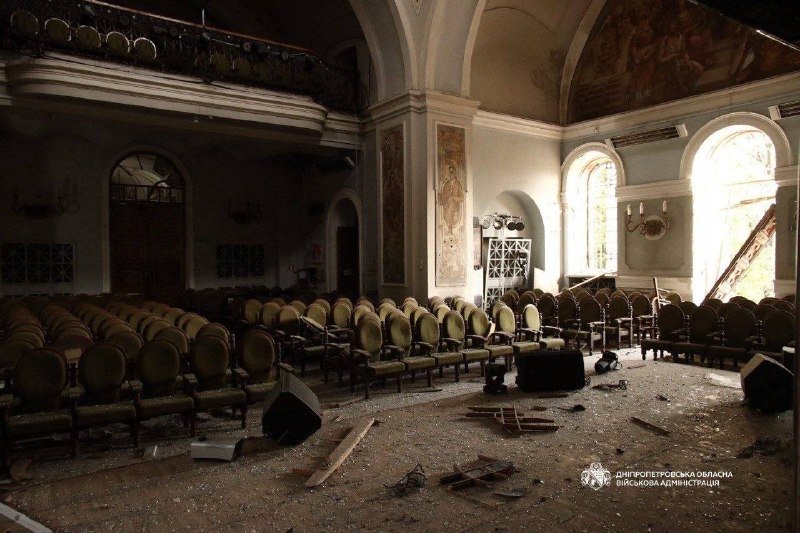
At 00:30 UTC on 15 June 2026, a Telegram channel that tracks Russian air activity almost in real time reported a string of more than fifteen Iranian-designed one-way attack drones — the cheap, fixed-wing loitering munitions colloquially called "mopeds" by Ukrainian observers — moving south past Brovary, a satellite city on the north-eastern approach to the capital. By 00:35 UTC the count was already climbing. By 00:36 UTC the same channel logged seven of the drones past Brovary and heading for central Kyiv. By 01:00 UTC a second observer channel, run by a Ukrainian pilot who posts under the handle @vanek_nikolaev, was telling subscribers that "everywhere minus Kyiv continues to fight off 34 mopeds" while the capital itself braced for impact. At 01:34 UTC the same pilot warned of another three drones closing on the capital and signed off with a single line: "it can be loud again."
The arc described by those four timestamps — just over an hour, 64 minutes between the first drone sighting and the last alarm — is the unit of measure that now defines daily life in Kyiv. It is short, dense, and increasingly routine. It is also the lens through which a reader outside Ukraine is being asked to understand the third full year of a full-scale invasion.
The shape of the strike
The salient detail is not the existence of the strike but its layering. According to the @vanek_nikolaev thread on 15 June, the salvo combined a cruise-missile component — eleven winged missiles, then "another six added" within minutes, the channel wrote at 00:35 UTC — with a much larger drone component that at the time of writing numbered somewhere between 28 and 34, depending on which update one reads. That combination is no longer unusual. Ukrainian air-defence doctrine, as described in the same Telegram traffic, has had to adapt to the idea that the cruise-missile salvo is often the visible head of the threat while the slower Shahed-type drones absorb interceptor ammunition, stretch radar attention and produce the real-world pressure on the capital.
The fact that two independent channels — @war_monitor, the broader aggregator, and @vanek_nikolaev, the pilot running a faster and more granular countdown — converged on the same geography in the same hour is itself a piece of evidence. Telegram traffic during Kyiv air-raid events is noisy; the city's network of amateur monitors has grown into something approaching a parallel early-warning system. That parallel system now publishes an "as of now" line, sometimes every two or three minutes, on incoming ordnance counts. The Western wire services, by contrast, generally file on the aftermath — the down count, the debris, the fires. The Ukrainian channels file on the in-flight.
What the framing leaves out
There is a temptation, watching a sequence like this one, to read it as a purely military story. That would be a mistake. The arithmetic the channels publish — 11 cruise missiles, 6 more, 28 mopeds, 34 mopeds, "another 3" — is a piece of political communication. The strike packages are sized, in part, to a media cycle: large enough to dominate Ukrainian evening news, but calibrated against the known ceiling of the country's air-defence interceptor stockpile. The fact that the 15 June salvo closed on Kyiv for the third time in a week is the political payload, not the debris that follows.
The Western wire framing of these nights tends to flatten that arc. A report filed the following morning will say Russia launched drones and missiles overnight, that air defence engaged, that there were no reported casualties at the time of writing. It will not, as a rule, narrate the 64 minutes during which a city's residents were told to be in shelter, while two Telegram channels kept open a running total. The lived event of the strike — the countdown, the way the count itself becomes a form of social cohesion — is, structurally, the story.
The structural read
What a reader is watching is a campaign of attrition extended into the civilian information environment. The cruise-missile salvos and the cheaper Shahed-type drones play different roles. The missiles provide the visible headline; the drones do the patient work of forcing a defender to expend interceptors whose unit cost vastly exceeds the drone's. The model is older than the Shahed-136 — it is the model of the V-1 over London in 1944 — but the introduction of cheap, mass-produced airframes, sourced from outside the immediate theatre and integrated into a long-distance strike complex, has made the economics of that campaign tractable for the attacker in a way the 1940s analogue never was.
This is the line that does not get drawn in most day-after coverage. The cost differential between a Shahed-type airframe and the Western-supplied interceptor used to shoot it down is, on the open-source estimates that circulate inside Ukrainian defence commentary, somewhere in the region of one to two orders of magnitude. The cumulative effect of running that exchange, night after night, on a defender's missile stocks is the quiet, structural story of the war's third summer. The Telegram countdown is the surface; the interceptor ledger is the substance.
What remains uncertain
The sources do not, in this thread, specify the down count. They do not say which districts of Kyiv reported impact, whether critical infrastructure was hit, or whether the third-in-a-week pattern is the result of a deliberate escalation or the predictable resumption of a tempo paused by weather or maintenance. The intercept data will arrive in the morning, in the form of the standard Air Force morning bulletin, and the morning after that, in the form of a wire piece filed by Reuters or the BBC from Kyiv. Until then, the most honest reading of the available record is the one the channels themselves publish: the count, the time, the geography, and the instruction, repeated, to be in shelter.
That is the granularity of life in a capital that is being asked, every other night, to read its own air war in 90-second Telegram updates. It is more honest than the after-action report. It is also harder for an outside reader to find. Monexus has chosen to publish the 64-minute window as it was lived, rather than the cleaner summary that will arrive at dawn.
— Monexus Staff Writer
Wire provenance
This editorial synthesis draws on the following public wire/social posts:
- https://t.me/vanek_nikolaev
- https://t.me/vanek_nikolaev
- https://t.me/war_monitor
- https://t.me/vanek_nikolaev
- https://t.me/war_monitor
Follow the event.
These dated source records provide context. They do not retrospectively verify this archive article.
A dated voting record is evidence of one decision. Use the original UN record before turning it into an alignment label.
Visual explainer · historical vote of 2022-03-02 →