The Lebanon carve-out: what Netanyahu's quiet pushback on the US-Iran track actually signals
A reported Israeli push to be unbound by the Lebanon clause in a nascent US-Iran understanding exposes the brittle architecture of any regional deal — and the limits of presidential theater.
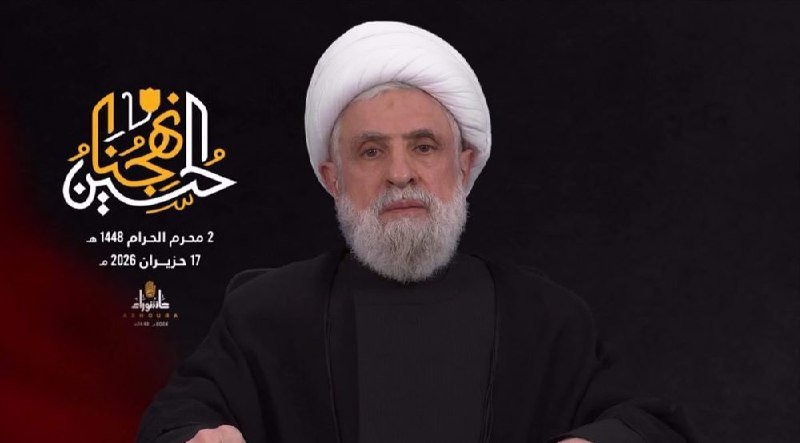
The line that should have stopped every cable ticker on Sunday was buried in the third graf. On 14 June 2026, at 16:07 UTC, Donald Trump declared that there should be "no more strikes by Israel in Lebanon, but no further attacks by any group, including Hezbollah, against Israel." The shape of the statement mattered more than its content. It was a presidential attempt to bundle two distinct conflicts — the slow-burn Israel-Hezbollah exchange and the wider US-Iran track — into a single rhetorical object. Within hours, Israeli media reported, via Unusual Whales, that Prime Minister Benjamin Netanyahu had informed the President that Israel is "not bound by the Lebanon clause" in the framework. The whole architecture wobbled, and most of the headline writers missed it.
What is actually being negotiated
The proximate subject is a US-Iran understanding, the kind of transactional arrangement that, in this White House, lives or dies on a presidential flourish. On 14 June 2026, at 14:21 UTC, Trump told reporters that Israel and Iran were moving toward a ceasefire. Three hours later, at 17:15 UTC, he raised the volume: an agreement with Iran would be signed "within two-three hours," a deadline that came and went in the way these deadlines so often do. By 15 June, at 00:31 UTC, the framing had shifted to a more honest register: Trump called Netanyahu a "very difficult guy," a line that, in real time, did the work of disclosure that the formal communiqués refused to do.
The substantive structure of the putative deal is still opaque. What can be said with the public record in hand: the US has been running a track that sought to defuse the Iran file in isolation, with Israel as a third-party endorser rather than co-negotiator. Israeli media reporting, surfaced on Unusual Whales on 15 June at 05:11 UTC, suggests Netanyahu used a direct line to the President to insist that the Lebanon front remain Israeli, not American. Trump, for his part, had publicly tried to put a symmetric obligation on Hezbollah.
Why the Lebanon clause is the whole story
The Lebanon clause is the bit the White House did not want examined. A US-Iran understanding that includes a paragraph on Lebanon implicitly gives Washington leverage over an Israeli northern front that Jerusalem considers its own operational domain. It also implicitly recognises Hezbollah as a counter-party in a document the Iranians would sign. Both presumptions sit poorly inside the Israeli defence establishment, and the reported Netanyahu message to Trump is the polite version of that discomfort. Strip out the Lebanon paragraph and what remains is a nuclear-adjacent exchange with deniable scope on missiles, proxies, and the wider axis. Keep the paragraph in, and the US is, in effect, holding a security veto over a theatre where Israel has spent a year recalibrating its deterrent posture.
A Polymarket contract running on the platform on 15 June at 00:32 UTC gave a 44 percent probability that Trump would meet Netanyahu this month. The market's interpretation is the right one. The President is now in a position where the deal's durability depends on a face-to-face repair with the Israeli Prime Minister, and where every day the meeting is delayed is a day the Israeli coalition can shop for better terms. This publication finds the obvious fact the more interesting one: an agreement announced in triumph on Sunday has, by Monday, become an agreement held together by a single bilateral conversation that has not yet happened.
The standard read, and where it strains
The dominant Washington read is that Trump is doing what he says he does: applying maximum pressure, extracting a concession, taking the credit, and moving on. The counter-read, more credible in Tel Aviv and in several Arab capitals, is that the Lebanon carve-out is the preview of every other carve-out to come. Each contested clause in the US-Iran text becomes an opportunity for an allied government to renegotiate its exposure in private. The US ends up signing a paper whose terms are owned by a dozen different negotiating teams operating in parallel. The structural pattern is well known: a hegemonic order ceding ground to a successor arrangement produces exactly this kind of serial, fragmented bargaining, and the durability of any one deal is a function of how many of those parallel teams the broker can keep on the line.
The stakes, in concrete terms
If the Lebanon carve-out sticks, the Iranian file gets thinner and Israel retains operational freedom on its northern border. The price is that any US-Iran understanding becomes, in practice, an Iran-US understanding on nuclear questions, with missiles, proxies, and regional sequencing pushed into a 2027 round. If the carve-out does not stick — if Washington insists on the bundled text — then Israel absorbs a strategic constraint it has not accepted in two decades, and the domestic politics inside the Israeli coalition turn the file into a referendum on the Prime Minister's room for manoeuvre with Washington. Either way, the underlying dynamic is the same: a transactional diplomacy running faster than the alliance structures that are supposed to underpin it.
The honest paragraph: the public sources do not yet show the text of the agreement, the named Israeli officials who transmitted the message, or the specific Hezbollah commitments that would operationalise Trump's symmetry claim. A 15 June Firstpost dispatch framed the moment as geopolitical theater between Trump and Netanyahu; that framing is plausible, and so is its opposite. The next forty-eight hours — and the still-scheduled Netanyahu meeting — will determine which read becomes the conventional one.
This piece sets the Lebanon clause against the wider US-Iran track rather than treating the announcement as a done deal. Where wires reported a ceasefire as fact, Monexus reads the carve-out as the news.
Wire provenance
This editorial synthesis draws on the following public wire/social posts:
- https://t.me/FirstpostIndia
- https://x.com/unusual_whales/status/
- https://x.com/polymarket/status/
- https://x.com/polymarket/status/
- https://x.com/unusual_whales/status/
- https://t.me/producthunt
- https://t.me/AngelList
Follow the event.
These dated source records provide context. They do not retrospectively verify this archive article.
Separate what the nuclear watchdog reported from what it could not determine after the June 2025 strikes.