The 'two-fronts' doctrine is back — and Lebanon is its proving ground
Israel's old argument that the Iranian and Lebanese arenas can be treated as separate files has collapsed on contact with a fragile US-brokered ceasefire. Southern Lebanon is the test case.
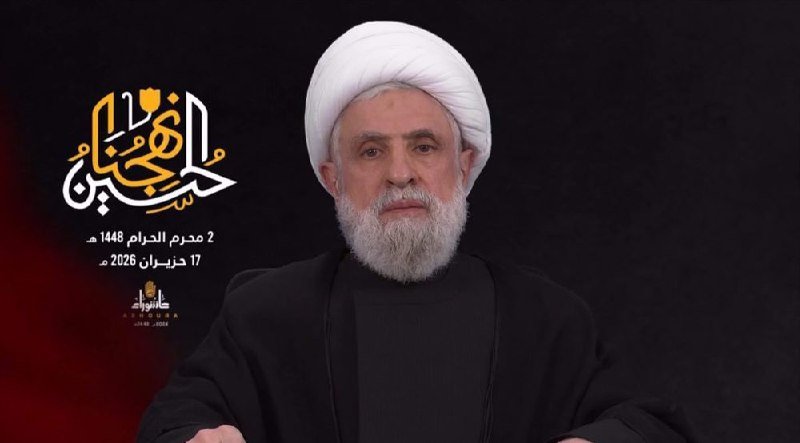
At 02:26 UTC on 15 June 2026, Al Jazeera's breaking-news desk reported that residents of Lebanon remained deeply sceptical of a US-Iran ceasefire that had been announced only hours earlier. By 03:01 UTC, Israeli government ministers — quoted in Hebrew-language press and relayed by Al Alam — were publicly conceding that the Trump administration had failed in its effort to treat the Lebanese and Iranian arenas as separate diplomatic files. By 03:04 UTC, the same line of Israeli commentary was urging that "the direct connection between the two fronts in Lebanon and Iran must be recognized." By 04:19 UTC, residents of southern Lebanon were beginning a cautious, limited return to their villages, with a wary calm holding since dawn.
The most telling thing about the past 24 hours is not the ceasefire itself. It is the speed with which the long-standing Israeli insistence on decoupling the two arenas has collapsed. The argument that the war in Gaza and the confrontation with Iran could be managed as parallel but insulated files — with the Lebanese front as a subordinate theatre — was always more rhetorical than strategic. It took a near-miss regional war to make the rhetoric obsolete.
The diplomatic shape of the failure
The Israeli read-out, as relayed by Al Alam, is unusually blunt. Ministers are quoted as saying that the Trump administration "did not succeed in trying to separate the Iranian arena from the Lebanese arena." That is not a sentence a sitting Israeli government uses lightly. It amounts to an admission that the policy Washington has spent the better part of two years selling — sequenced diplomacy, issue-linkage without issue-conflation, pressure on Tehran paired with parallel quiet work in Beirut — has run aground on the empirical fact that the same local actors, the same supply lines, and the same political constituency connect the two files whether or not Western negotiators wish to acknowledge it.
This publication's reading of the day's reporting is straightforward: the two-fronts doctrine is not a new Israeli invention, but its re-emergence in the cabinet's own framing is a signal that Jerusalem expects the US-brokered arrangement to be tested in the south-Lebanon village of Qana, the Bint Jbeil district, and the coastal road from Tyre before it is tested anywhere else.
Why the south matters now
Southern Lebanon is the geography where the diplomatic abstraction meets the operational reality. The 04:19 UTC Al Alam bulletin describes a "cautious calm" since dawn and a "limited gradual return" of the population to villages that have been emptied and re-emptied multiple times over the past two years. The word "testing" does heavy work in that dispatch. A return of civilians is, in itself, a political signal: it is an indication that the armed factions operating in the area have given some form of deconfliction assurance. It is also a hostage to fortune — any single incident, any mistaken identification, any rocket or drone that lands across the line, can detonate the calm.
The structural point is that the south is not a buffer. It is the load-bearing joint between the Iranian and Lebanese arenas. A ceasefire architecture that does not account for the joint is a ceasefire architecture that has not yet done the hardest part of its work.
What the counter-narrative gets right
It would be a mistake to read the Israeli ministers' quotes as the whole story. There is a respectable counter-position, and it deserves air. The argument runs: Tehran and its local allies have an interest in presenting the two arenas as a single battlefield because that framing grants them leverage in any future negotiation. The more Washington can be persuaded that Israeli action in Beirut is a proxy for Israeli action in Tehran, the more Washington will lean on Jerusalem to restrain itself. Seen this way, the insistence on linkage is itself a weapon.
That argument is not without weight. The question is whether it survives contact with the evidence of the past 48 hours. The evidence is that the Israeli government — not opposition voices, not foreign commentators, but ministers — has now said, on the record, that the two arenas cannot be separated. A government does not adopt that framing for the benefit of its adversary; it adopts it because its own operational picture no longer supports the alternative.
The stakes if the architecture fails
If the south-Lebanon calm holds for weeks rather than days, the political economy of the region begins to shift. Reconstruction funding, which has been suspended for the duration of the active phase of the conflict, becomes a lever. The political class in Beirut, currently frozen between presidential paralysis and the demands of a population that has been displaced, can begin to plan rather than improvise. The Iranian negotiating position, in any future round, gains a different kind of credibility — not because Tehran has won, but because the ground beneath it has stopped moving.
If it does not hold, the consequences are not symmetrical. Israel can absorb another cycle of southern-Lebanon fighting at a cost it has already demonstrated it is willing to pay. Lebanon cannot. The country has been running on a caretaker government, a depleted central bank, and a diaspora that has been quietly financing the state for the better part of five years. A renewed southern front is not a setback for Lebanon; it is an exhaustion event. That asymmetry is the most under-reported fact in the day's wire.
What remains genuinely uncertain
Three things the sources do not resolve. First, the precise terms of the US-Iran announcement: Al Jazeera's 02:26 UTC report frames it as a "ceasefire," but neither the Israeli ministerial quotes nor the southern-Lebanon dispatch specify what has been agreed, in what sequencing, and on what verification mechanism. Second, the internal Israeli debate: the ministers quoted by Al Alam are not named, and the framing of the quotes — through Arabic-language relay of Hebrew-language press — leaves room for the original wording to be sharper or softer than the translation. Third, the position of the armed non-state actors on the ground, whose public posture is silence, and whose compliance is the variable that will determine whether the cautious calm survives the week. A reader who treats the 04:19 UTC bulletin as a forecast rather than a snapshot is reading it correctly.
Desk note: the wire has treated the US-Iran announcement as the headline. This publication's framing is that the headline is the collapse of the decoupling argument in the Israeli cabinet's own words — and that southern Lebanon is now the venue where that collapse will be tested, village by village.
Wire provenance
This editorial synthesis draws on the following public wire/social posts:
- https://t.me/alalamarabic/
- https://t.me/alalamarabic/
- https://t.me/alalamarabic/
Follow the event.
These dated source records provide context. They do not retrospectively verify this archive article.
Separate what the nuclear watchdog reported from what it could not determine after the June 2025 strikes.