Beirut's toll crosses another threshold as Israel weighs its next move
Lebanon's health ministry puts the death toll from Israeli strikes since 2 March at 3,798. A parallel report says the IDF is scaling back and waiting on a political decision from Tel Aviv.
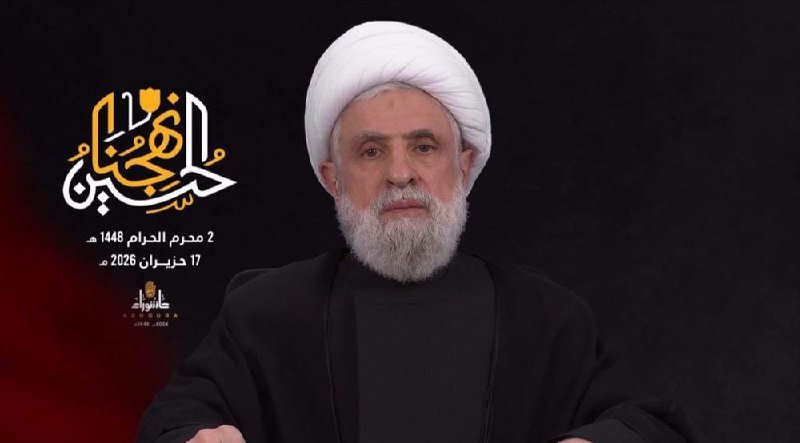
On 15 June 2026, Lebanon's Health Ministry said Israeli attacks have killed 3,798 people and wounded 11,781 others since 2 March, a toll that has accumulated through more than three months of sustained bombardment and ground operations. Hours later, an Israeli security source told Channel 12 that the military is scaling back its operations and waiting on a decision from the political leadership. The two messages, delivered the same afternoon, point in opposite directions. One is a ledger of destruction; the other is the language of pause.
The pattern is familiar: a wartime government insists it is winding down, while the casualty figures on the receiving end keep climbing. Each side has an interest in the framing. The Israeli line, carried by Channel 12 and reported by The Cradle, signals to a domestic audience fatigued by reserve call-ups and to a diplomatic audience in Washington and beyond that escalation is not the policy. The Lebanese line, channeled through the Health Ministry in Beirut, is a count of lives ended. Reading them together is the work of the moment.
What the numbers describe
The Lebanese Health Ministry tally — 3,798 dead, 11,781 wounded, dated from 2 March to mid-June — is the official figure produced inside a country at war. These are ministry-produced numbers, not an independent body count, and the methodology behind them has been contested in past cycles of fighting. What the figures do describe, without ambiguity, is the scale of physical destruction over a fixed window. Reconstruction ministries, hospital directors, and aid agencies working in the south and the southern suburbs of Beirut have reported strain consistent with a casualty count of this magnitude; a parallel wave of displacement, measured by the UN and Lebanese crisis cells, runs in the hundreds of thousands. The point is not whether every name on the list is verified to a high evidentiary standard; the point is that the human infrastructure of a country has been absorbing this load for over three months.
What the Israeli message says
The Channel 12 report, as relayed by The Cradle on 15 June 2026, describes an Israeli military awaiting political direction. The phrase "scaling back" is doing real work in that sentence. It suggests a re-prioritisation of effort, not a withdrawal, and it locates the next move squarely in the cabinet and the prime minister's office rather than in the general staff's campaign plan. Israeli security reporting on this kind of decision has historically been a leading indicator: when the military says it is waiting for a political call, the political call is usually already in negotiation with intermediaries, whether in Cairo, Doha, or Washington. The audience for that message is also internal. Reserve fatigue is real, and a public that has watched funerals on the evening news for months responds to the vocabulary of wind-down even when the strikes have not stopped.
How the two narratives sit together
The friction between the two messages is the story. An Israeli "scale-back" described in mid-June does not reconcile with a death toll that is still rising week on week, and the Lebanese ministry's update lands on the same day the Israeli source describes restraint. Both can be true at once: a campaign can be re-prioritised, units can be redeployed, target packages can be narrowed, and a country can still be receiving strikes that kill civilians at a pace that produces fresh ministry numbers. The honest reading is that the political and operational tempos are out of sync, and that the public messaging on both sides is calibrated for constituencies that are not in the same room.
There is also a counter-read worth naming. Israeli officials have argued throughout that Hezbollah's reconstructed infrastructure in the south and the Dahieh, the southern suburbs of Beirut, leaves the campaign with unfinished operational work, and that any pause risks the kind of re-armament cycle that produced the 2 March escalation in the first place. That argument is made publicly by retired generals and quietly by serving ones, and it is the strongest version of the case for continued pressure. The countervailing argument, made from Beirut, is that the cost of that pressure falls on civilians, hospitals, and a state that is already running on emergency funds. Neither framing is marginal, and neither will retire on the strength of a single news cycle.
What remains uncertain
Several things are still in motion. The Israeli political decision the security source described has not been announced publicly; whether it points toward a formal ceasefire framework, a unilateral reduction in tempo, or a re-prioritisation of targets is not specified in the reporting. The Lebanese ministry's figures do not yet break out combatant versus civilian deaths in a way that the available sources can verify, and the methodology of those counts is, as noted, contested in past conflicts. The diplomatic channel — who is talking to whom, and on what timetable — is not visible in the materials at hand. What is visible is a country absorbing a four-figure death toll, and a military on the other side of the border signalling that the next move belongs to its politicians.
How Monexus framed this: the wire carried the Israeli and Lebanese messages as separate beats. We are running them in the same frame because the day's reading depends on holding them together.
Wire provenance
This editorial synthesis draws on the following public wire/social posts:
- https://t.me/thecradlemedia
- https://t.me/TheCradleMedia