The Quiet Protocol War: How MCP Is Becoming the TCP/IP of AI Agents
An Anthropic-origin integration protocol is rapidly becoming the default plumbing for AI agents, with Google, Microsoft, and GitHub all shipping implementations. The strategic implications for who controls the agent stack are profound.
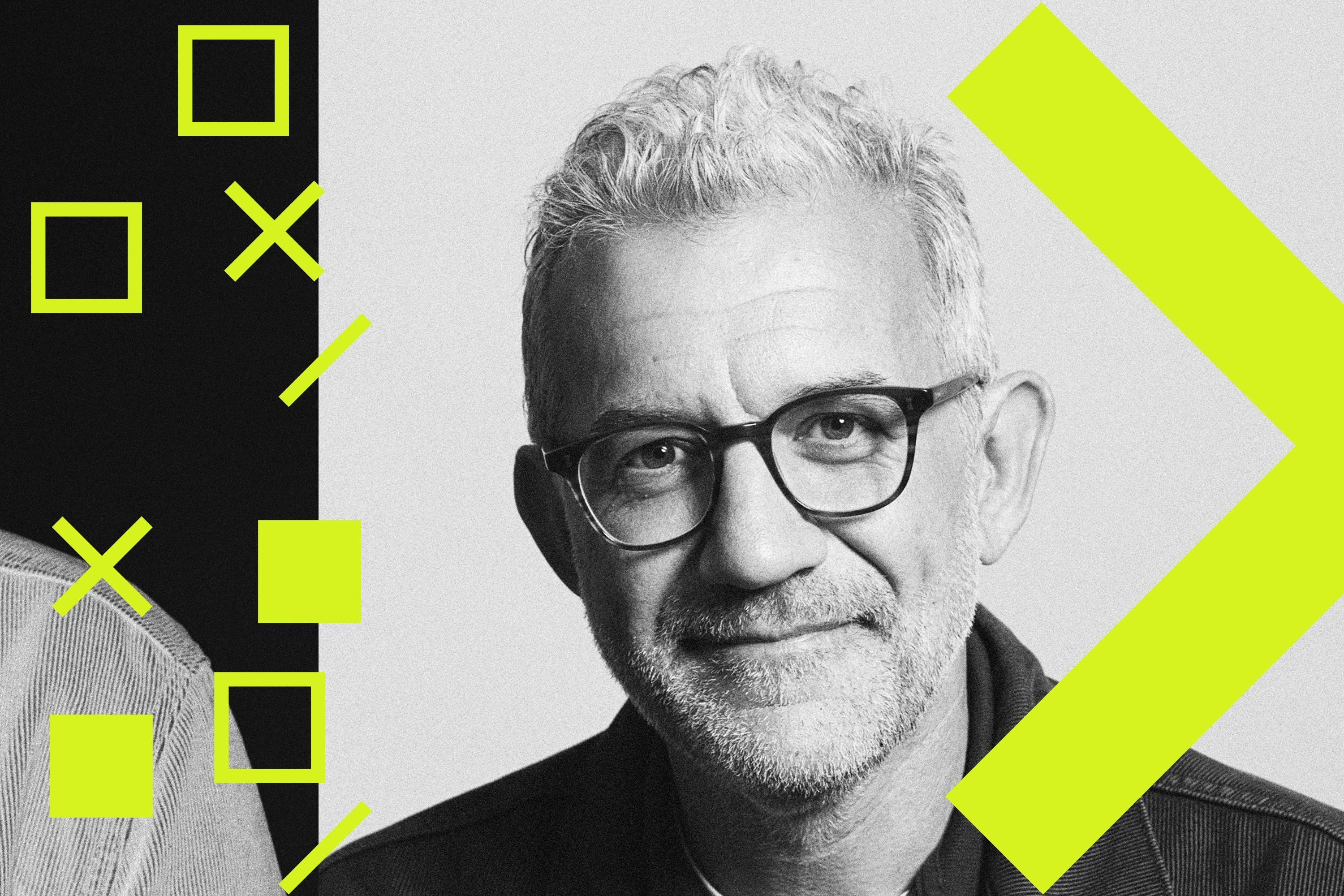
On 15 June 2026, a four-hour live tech broadcast walked viewers through a series of conversations that, taken together, sketch the architecture of a new computing layer. The most consequential segment featured Shawn Wang, known in developer circles as Swyx, whose Latent Space podcast has become a clearinghouse for technical signal on the AI stack. His core argument: a protocol called MCP, originally introduced by Anthropic, is on track to become the integration standard for AI agents, the way TCP/IP became the lingua franca of the internet.
That claim deserves more weight than the casual observer might give it. Integration is unglamorous work. It is also the work that determines who owns the platform.
What MCP actually does
MCP, or Model Context Protocol, addresses a problem that has bedevilled every era of enterprise software: the M×N integration tax. Every tool that wants to talk to every other tool requires a custom connection. As the number of tools grows, the number of connections explodes quadratically. MCP converts that into an M+N problem, the same way standardised shipping containers and standardised electrical plugs did for global trade. A server implementing MCP can be queried by any MCP-compatible client. A client implementing MCP can connect to any MCP-compatible server.
Wang emphasised on the broadcast that the protocol is not equivalent to a generic OpenAPI specification. MCP distinguishes between resources, prompts, tools, sampling routes, and transport, with AI-native permissions built in. It is a protocol designed from the ground up for agents that can plan, invoke, and chain operations autonomously. The design choice that MCP servers can also act as clients is what turns a collection of integrations into a network: by the end of 2025 or early 2026, server-to-server orchestration of agent fleets becomes possible. At that point, the protocol stops being plumbing and starts being infrastructure.
The adoption curve is already steep. Wang noted that Google, Microsoft, and GitHub have all released implementations of MCP. That is not the behaviour of companies testing a curiosity. It is the behaviour of companies hedging against being locked out of a standard they did not control.
The Anthropic advantage and the registry threat
MCP originated at Anthropic, which gives the company a structural advantage that compounds over time. Wang flagged on the broadcast that Anthropic is launching its own MCP registry, a directory where servers can be listed and discovered. This creates a direct threat to third-party registries like Smithery, which had attempted to occupy that niche.
The pattern is familiar. When a big lab releases an official solution to a problem the ecosystem has been solving informally, the default burden of proof shifts to the third party. Official solutions usually win, not because they are technically superior on day one, but because they come with distribution, trust, and the implicit endorsement of the protocol's authors. Smithery may survive by offering curation, certification, or features the official registry lacks, but the headwind is real. Third-party registry operators should be planning contingencies now.
The deeper strategic question is what MCP registries become in the long run. If MCP is TCP/IP, then registries are domain-name-system operators, and the entity that controls authoritative registration controls discoverability. That is not a trivial chokepoint.
Google's quiet dominance and the protocol paradox
If MCP is the protocol layer, the model layer is a different story. Wang pointed to a viral observation that Google now owns the Pareto frontier across all major AI labs, meaning Google offers simultaneously the smartest, cheapest, and most cost-effective models. The pricing of Gemini 2.5 Pro has reset the competitive landscape. Anthropic and OpenAI now have to compete on capability-per-dollar, and Google is setting the terms.
This creates an interesting tension. The protocol that is becoming the integration standard originated at Anthropic. The model that is setting the price-performance frontier is Google's. If MCP achieves the ubiquity Wang anticipates, Anthropic will have built the equivalent of the internet's underlying transport protocol, a critical piece of infrastructure that nevertheless does not guarantee application-layer dominance. Google, meanwhile, has a path to being the default model that runs on top of that infrastructure, much as Google Search became the default application on top of HTTP.
There is a historical parallel worth noting. The company that developed TCP/IP, the U.S. Department of Defense's DARPA research arm, did not become the dominant consumer-facing platform of the internet age. That prize went to companies that built on top of the protocol. But DARPA was a government agency with no profit motive. Anthropic is a venture-backed competitor in the same market as Google. The question of whether Anthropic can afford to maintain MCP as a neutral standard, or whether it will eventually be tempted to tilt the protocol in ways that advantage its own models, is one of the more interesting governance questions in tech right now.
Autonomy horizons and the agent capability curve
The strategic value of MCP is tied to a separate trend Wang summarised from METR research. The study found that the AI agent task horizon, defined as the length of task a frontier model can complete at the 50th-percentile human capability level, is doubling every three to seven months. The current frontier, Claude 3.7 Sonnet, operates autonomously for roughly one hour. If the trend holds, agents will be able to complete a full workday within a year, a full workweek within two, and a full month-long project within three.
That trajectory makes MCP materially more valuable. An agent that can only operate for an hour is a tool that augments a human worker. An agent that can operate for a month is a contractor. The integration problem scales with autonomy: the more an agent can do, the more systems it needs to touch, and the more the M×N tax hurts without a shared protocol. MCP's value proposition strengthens as agent capability grows.
Stakes: who wins and who adapts
The players in this space face different strategic realities. Anthropic has a first-mover advantage on the protocol layer but faces a well-capitalised competitor in Google that can bundle model access with integration tools. Google has the model layer and is now building out the protocol layer through implementation. Microsoft and GitHub have distribution and developer mindshare. Third-party registry operators like Smithery face platform risk. Enterprise software vendors face a harder question: do they build their own MCP servers and risk being commoditised, or do they refuse to integrate and risk being bypassed by agents that route around them?
The most likely outcome, based on the broadcast's signal, is a layered stack resembling the early internet: a shared protocol at the bottom, a small number of dominant model providers competing at the next layer, a larger number of agent frameworks and tool providers above that, and a long tail of application-layer companies building on top. The companies that control the protocol and the model layers will capture the most value, as has been the case in every previous computing platform shift.
For now, the integration war is quiet. It is happening in developer documentation and GitHub repositories, not in Super Bowl ads. But the patterns are familiar to anyone who has watched a protocol become a standard before. By the time the broader market notices, the architecture will be locked in.
Wire provenance
This editorial synthesis draws on the following public wire/social posts:
- https://www.youtube.com/watch?v=ogDhBUa8128