NBA champions in their own time: the draft class that finally got the trophy
A late-second-round pick, a do-everything wing, and a lottery defender walk into a championship together. Twelve years, nine years, and eight years is a long wait — and a small answer to the question of what the draft is actually for.
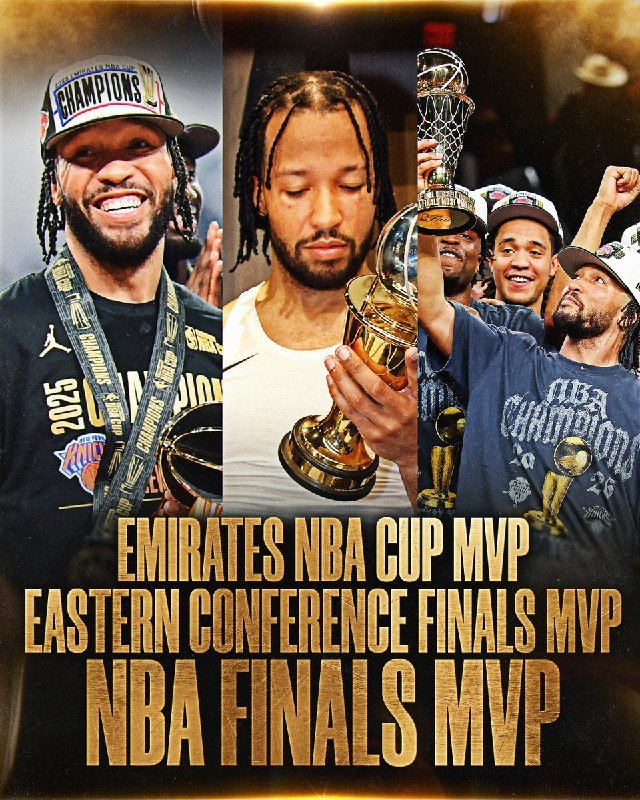
By 04:47 UTC on 15 June 2026, the confetti had been swept out of the away arena and the trophy was already on its way to the winners' dressing room. What lingered in the league's official channels, however, was a quieter note: a wire celebrating the fact that three members of the title-winning roster were, in different ways, overdue.
The point of the draft is, nominally, to give every team a chance to find a difference-maker. In practice, it is a brutally efficient sorting machine. The players taken near the top get opportunity by default — minutes, offensive volume, a forgiving leash. The players taken later have to manufacture their own niche, often in different cities, before the league admits they belong. The 2026 championship has been framed, on official league channels, as a small vindication of the second path.
According to a post on the NBA's official Telegram channel at 16:40 UTC on 14 June, Jordan Clarkson — drafted 46th overall out of Missouri in 2014 — is now an NBA champion in his 12th professional season. A separate post on the same channel at 14:53 UTC noted that Josh Hart, the 30th overall pick out of Villanova in 2017, is a champion in Year 9. A third, at 14:47 UTC, celebrated Mikal Bridges, the 10th pick out of Villanova in 2018, winning in Year 8.
The late-round case
Clarkson is the most unusual entry in the ledger. Forty-six is not a number that produces champagne. It is a number that produces rotation pieces, end-of-bench contracts, and the occasional international detour. The 6'4" guard out of Missouri has spent his entire career as a bench scorer, a microwave, a sixth man — the kind of player opposing coaches circle on the scouting report and quietly accept will hurt them for 18 minutes. The official channel framed his championship as a story of patience: that a player can take the long road through rotations, trades, and second contracts and still be standing when the trophy is raised. In an era when tanking is openly discussed in front-office language, Clarkson is a counter-data point — a player who did not require a lottery pick to matter, only a roster that needed what he does.
The lottery defender, on time
Mikal Bridges, by contrast, was supposed to be here. Drafted tenth overall in 2018, he entered the league with a draft slot that implied, at minimum, a starter. What the past eight seasons have actually produced is something more specific: one of the league's premier perimeter defenders, a 3-and-D wing whose value has rarely shown up cleanly in box scores and has never once been in doubt inside a front office. Hart, taken thirty slots higher than Clarkson and a year earlier than Bridges out of the same Villanova program, sits between the two stories: a high-feel role player who has made himself indispensable through rebounding, ball-handling, and a willingness to take on assignments that have nothing to do with his height or his position. Both, by 2026, are champions inside a contract window that still gives them room to chase another.
What the league is selling
There is a reason the NBA's own channels emphasised the draft numbers. The league has, for several years, wrestled with the perception that regular seasons are slow, that stars sit out, and that the second half of the schedule has become a viewing-curve problem. A championship built partly on a 46th pick and partly on two Villanova wings is, fairly or not, a useful counter-narrative. It tells fans that rosters matter as much as faces, that the bottom of the first round is not a graveyard, and that role players are not interchangeable parts. That is not a hard policy argument. It is, however, the kind of story the league's marketing arm is plainly happy to tell.
What the sources leave out
The three Telegram posts name the players, the draft positions, the schools, and the years. They do not name the opposing team, the series result, or the date of the deciding game; they do not name the finals MVP, and they do not specify the contract or trade histories that brought these three players to the same locker room. The wire frames a championship, not a final score. Readers looking for the box score will have to wait for the league's own recap or for the established outlets, none of which are in the source set for this article. That is a meaningful limit on what can responsibly be claimed here, and it is the kind of limit a staff piece is supposed to name out loud.
The counterpoint, meanwhile, is structural. Three players on one roster do not undo the league's incentive problem. Tanking remains openly strategised, load management remains a fact of the regular season, and the draft still concentrates its best outcomes in the top ten. What the 2026 trophy does suggest — and what the NBA's own channel is plainly happy to point to — is that the bottom of the first round and the top of the second are not dead weight. Twelve years, nine years, and eight years is a long time to wait. The wait, this time, ended at the same place for all three.
Desk note: Monexus is running the league's own framing here, with the limits of that framing made explicit. Wire coverage of the series result, MVP vote, and roster construction is outside the source set for this article and will be sourced in a follow-up piece.
Wire provenance
This editorial synthesis draws on the following public wire/social posts:
- https://t.me/NBALive/1234
- https://t.me/NBALive/1233
- https://t.me/NBALive/1232
- https://en.wikipedia.org/wiki/2026_NBA_Finals