Netanyahu's Iran Defiance Is a Domestic Survival Strategy
Israeli anger at an interim US-Iran framework is not only about non-proliferation. It is about a prime minister who has built his political identity on blocking exactly this kind of deal.
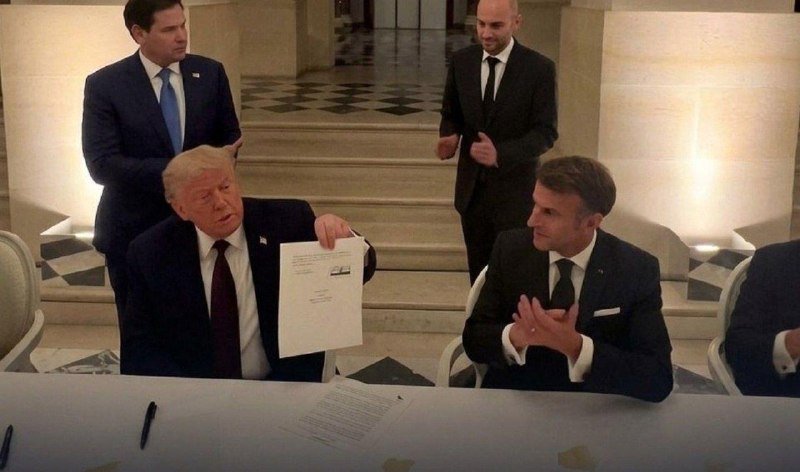
Benjamin Netanyahu had a ready answer on Monday for anyone wondering why Israel is not celebrating the memorandum of understanding signed this week between the United States and Iran. "With or without an agreement, Iran will not have a nuclear weapon," the prime minister declared, in remarks relayed by Israeli and pro-government channels. The line is now the spine of his public response to what is, on its face, the most consequential regional accommodation of his premiership: a framework deal negotiated in Washington that, by Netanyahu's own framing, leaves open exactly the outcome he has spent two decades telling Israelis he alone can prevent.
The political arithmetic explains the defiance. Israelis from across the political spectrum reacted angrily to news of the initial US-Iran deal on Monday, according to reporting from FRANCE 24, directing their fury not at Washington, not at Tehran, but at Netanyahu — the man who built his 2023 return to office on the explicit promise that no US administration would be allowed to close the nuclear file on terms Israel could not veto. The MOU does not formally recognise a pathway to a weapon. It also does not foreclose one. For a prime minister whose domestic legitimacy has been welded to the slogan of preventing precisely this kind of ambiguity, ambiguity is political death.
A coalition built against the deal
Netanyahu's governing coalition was assembled, in large part, in opposition to the 2015 Joint Comprehensive Plan of Action. Religious-nationalist and hard-right partners, including Otzma Yehudit and Religious Zionism figures, were given portfolios on the explicit understanding that a successor deal would never see the light of day. The prime minister's own parliamentary record is studded with public addresses against any return to a JCPOA-style arrangement, including an address to the US Congress in 2015 that became the most-watched set-piece of his career. For a base that has internalised this as a generational red line, a memorandum of understanding — even one that is, technically, a step short of a final accord — reads as a betrayal carried out under an allied flag.
That is the context for Netanyahu's parallel argument, advanced in the same set of remarks on 15 June, that there exists "an organised and systematic effort to minimise Israel's achievements." It is a complaint that doubles as a request: give me credit for the things I have actually stopped, and judge the things I have not by the standard of how bad they could have been. In the prime minister's telling, the MOU was made possible only because the regional balance has tilted decisively in Israel's favour. The "Iranian terror axis," he said, is "a shadow of what it was," a line aimed at audiences in the settler-right and the centre-right who have grown weary of open-ended war. He points to Israeli military control over parts of Gaza, to disrupted Hezbollah command structures in the north, to a defence budget trajectory that the same remarks described as still rising.
The structural problem with both stories
The first story — that this deal is a disaster because it concedes too much to Tehran — and the second story — that the deal is acceptable because Israel has already won the war it needed to win — are mutually inconsistent, and the prime minister is running both at full volume. Each is, in its own way, a defensive move. The first rallies the base that feels abandoned by Washington. The second reassures the donor class and the security establishment that the institutional architecture of the state is intact. The risk is that the same voters eventually notice they are being asked to hold two opposite beliefs at once, and the answer to the obvious question — "so did we win, or are we losing?" — is whichever one keeps the coalition together on the day of the vote.
The broader pattern is familiar in Israeli politics. A prime minister with no obvious successor in his own party, facing a corruption trial that has dragged on for years and a hostage question that has split the country, reaches for the most reliable instrument of his political survival: the perception that only he can be trusted to manage the existential file. The MOU, whatever its technical contents, is a stress test of that instrument. If the deal produces any visible Iranian advance — a frozen enrichment reversal, an inspection regime that grants inspectors less than the Israelis insist on, a sanctions relief package that returns Iranian oil to global markets at scale — the prime minister's domestic argument will be that the agreement is fatally flawed, and that he must stay in office to correct it. The MOU is therefore not just a foreign policy event. It is a referendum mechanism for an internal political contest.
What Israel is actually being offered
The reporting available as of 18:51 UTC on 15 June 2026 does not, on the public record, lay out the specific commitments Iran has made in exchange for sanctions relief, the duration of the framework, or the verification architecture. FRANCE 24's account describes the Israeli reaction; it does not enumerate the terms. Netanyahu's own remarks, as carried by pro-government channels, do not itemise the document. This matters. The Israeli objection, as articulated, is to the existence of a deal — not to any specific clause — which suggests that for the critics, no text short of a full Iranian capitulation would have been acceptable. That is a legitimate position for an Israeli government to take, but it is not the same as a position about non-proliferation. It is a position about veto.
The corollary is that the MOU will be judged, domestically in Israel, not on whether it constrains Iran but on whether it is reversible. If the next Israeli government — or the same one after a reshuffle — can credibly threaten to strike Iranian facilities in the event of a perceived breach, the deal survives. If that threat is no longer credible, the deal becomes the start of a process the prime minister's base was promised would never begin. The Israeli defence budget trajectory Netanyahu highlighted on Monday is, in this light, less a routine line item and more a hedge: the price tag of preserving the option of unilateral action in a diplomatic environment that is, for the first time in a decade, being designed to make that option costly.
Stakes, and what is not yet known
The immediate losers in this standoff are the Israeli political figures who have tied their fortunes to the most maximalist reading of the nuclear file and now find themselves on the wrong side of a prime minister they cannot easily attack without attacking the government they sit in. The immediate winners are the opposition leaders, led by Yair Lapid and Naftali Bennett in various configurations, who have spent years arguing that Israel needed an off-ramp from indefinite confrontation and now have a US administration supplying one. The longer-run question — whether the MOU produces a durable non-proliferation regime, or merely postpones a crisis — will be answered by Iranian behaviour over the next 18 to 36 months, not by Israeli press conferences.
What remains genuinely uncertain is whether Netanyahu's defiance is a negotiating posture, in which case some version of the deal is being held out as inadequate in order to extract Israeli-friendly amendments, or a principled red line, in which case the prime minister is prepared to spend the political capital of an unprecedented rupture with Washington to force the agreement's collapse. The public record as of Monday evening carries strong signals for both readings, and the Israeli press has not yet converged. The Monexus read is that the prime minister will try to hold both interpretations in suspension for as long as the diplomatic calendar permits, and that the domestic audience — not the Iranian one — will decide which version he is forced to commit to.
This publication treated the Israeli reaction as the lead, in line with the prominence given by FRANCE 24 and by Israeli-government channels broadcasting the prime minister's response. Wire copy on the MOU's substantive terms remained thin at the time of writing, and the article has flagged the gap rather than back-fill it.
Wire provenance
This editorial synthesis draws on the following public wire/social posts:
- https://t.me/BellumActaNews
- https://t.me/wfwitness
- https://t.me/wfwitness
- https://t.me/wfwitness
- https://t.me/wfwitness
Follow the event.
These dated source records provide context. They do not retrospectively verify this archive article.
Separate what the nuclear watchdog reported from what it could not determine after the June 2025 strikes.