Netanyahu tests the Lebanon clause: a US-Iran deal, a disputed border, and a 24-hour credibility window
Hours after the US-Iran MoU was electronically signed, Tehran drew a line under the Lebanon clause and southern Lebanon's casualty count began to rise. The 60-day clock is now also a strike tempo.
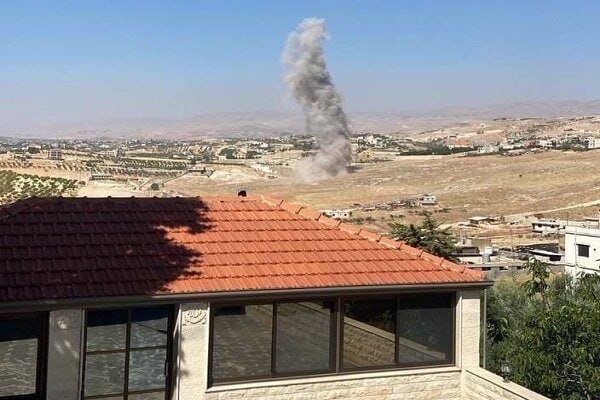
A memorandum of understanding between Washington and Tehran, electronically signed on Wednesday 17 June by Presidents Donald Trump and Masoud Pezeshkian, was less than six hours old when the pressure gauge started moving. Esmail Baghaei, spokesperson for Iran's Foreign Ministry, drew a red line in plain English: any continuation of Israeli attacks on Lebanon, he said, would be treated as a violation of the other side's obligations under the deal. By the evening, Israeli strikes in southern Lebanon had killed one person and injured eleven, some critically, according to Al Alam's reporting on Israeli emergency-services figures. The MoU had a Lebanon clause, and the Lebanon clause now had a clock.
The deal itself is structured as a 60-day implementation period in which Washington removes obstacles preventing Iran from accessing frozen funds, after which "final negotiations" begin on the nuclear file and sanctions relief, as Baqaei outlined on state-aligned Telegram channels. Iran commits to diluting its enriched uranium in return for large-scale economic relief; the Strait of Hormuz begins to reopen; the two sides talk, and only talk, about nuclear questions and sanctions for those sixty days. Trump acknowledged, per Press TV's read of his remarks, that global oil reserves had been roughly four weeks from exhaustion, the kind of admission that explains why this MoU got a signature rather than another round of escalation.
It is the Lebanon clause where the architecture is most fragile. Trump's call to Netanyahu to use a "softer touch" in Lebanon, reported by Al Jazeera, is not a clause in any document. It is a preference, transmitted by phone, on a file Netanyahu's government owns operationally. Baghaei's framing is sharper: if Israeli strikes on Lebanon continue, Iran will treat that as the United States breaching its commitments, and Iran reserves the right to respond in a way that does not distinguish between the actor and the guarantor. Translated from diplomatic language, that is a coupon that can be cashed inside the 60-day window.
Netanyahu is now in a tightening vise. The deal, as Middle East Eye's analysis argues, leaves him under pressure not only from Tehran but from inside his own political coalition: a coalition whose members already this week publicly faulted Vice President JD Vance for the substance of the agreement. Marco Rubio's 2015 Senate-floor warning that any deal would result in Iranian cash flowing to regional proxies has been recirculated by Open Source Intel as the operative baseline of GOP scepticism. The Israeli prime minister's room to keep striking Lebanon at the present tempo, in other words, is being squeezed from three directions at once: by an Iranian threat of escalation, by an American presidential request for restraint, and by a US political class that has already declared the deal a defeat and will not mourn if it breaks.
Israeli security concerns remain, on the record, legitimate. The Lebanese border is operational, Hezbollah's compliance posture is a contestable claim rather than a verified fact, and any Israeli government would weigh rocket and tunnel risks on its own timetable. The agreement, however, does not ask Israel to declare Hezbollah disarmed. It asks that the rate of Israeli strikes in Lebanon not become the lever that detonates a deal Tehran is treating, for now, as a victory. That is a different, narrower, and harder ask, and it is being delivered to a prime minister whose domestic critics will read any visible restraint as proof that Trump traded Israeli security for cheap oil.
The 24-hour credibility window the original sketch of this story identified is, in practice, already half-elapsed. By Wednesday night, Baghaei had publicly accused Israel of violating the spirit of the agreement even before the text was a day old. The next test is whether the next Israeli strike package in southern Lebanon is rolled out at the tempo of June, or at the tempo of October 2024. Watch the traffic separation scheme through the Strait of Hormuz, still steady according to OSINTdefender's MarineTraffic pull, and watch, more tellingly, the casualty count out of south Lebanon over the next seven days. Those are the gauges. The signatures in Islamabad and Washington were the easy part.
Sources
- Al Jazeera: "Trump to Netanyahu: Use a 'softer' touch on Lebanon" (17 June 2026)
- France 24: "Middle East live: Trump, Iran's president sign deal to end Mideast war" (17 June 2026)
- Deutsche Welle: "Live updates: Trump signs interim deal to end Iran war" (17 June 2026)
- Middle East Eye, via X: analysis of Netanyahu's political pressure (17 June 2026)
- Reuters, via X: "Explainer: What challenges could stand in the way of a final US-Iran deal?" (17 June 2026)
- Open Source Intel (Telegram): aggregation of Baghaei statements, Rubio 2015 floor clip, Vance reaction (17 June 2026)
- Tasnim News (Telegram): Bizikian signing report; Baqaei on the 60-day clock (17 June 2026)
- Al Alam (Telegram): southern Lebanon casualty figures (17 June 2026)
- Press TV (Telegram): Trump's "four weeks of oil" remarks (17 June 2026)
Desk note
Monexus framed this on operational substance: who fires what, when, and which clause activates which counter-measure, rather than on the signing ceremony. Iranian and Israeli red lines are both reported in their own words; the analysis sits on the question of whether the MoU's weakest link can survive its first day.
Follow the event.
These dated source records provide context. They do not retrospectively verify this archive article.
Separate what the nuclear watchdog reported from what it could not determine after the June 2025 strikes.