Netanyahu's Lebanon calculus: holding the south while a US-Iran deal takes shape
Jerusalem has told Washington it will not withdraw from southern Lebanon, even as a US-Iran arrangement reportedly takes shape in parallel. The two tracks are now visibly running on the same clock.
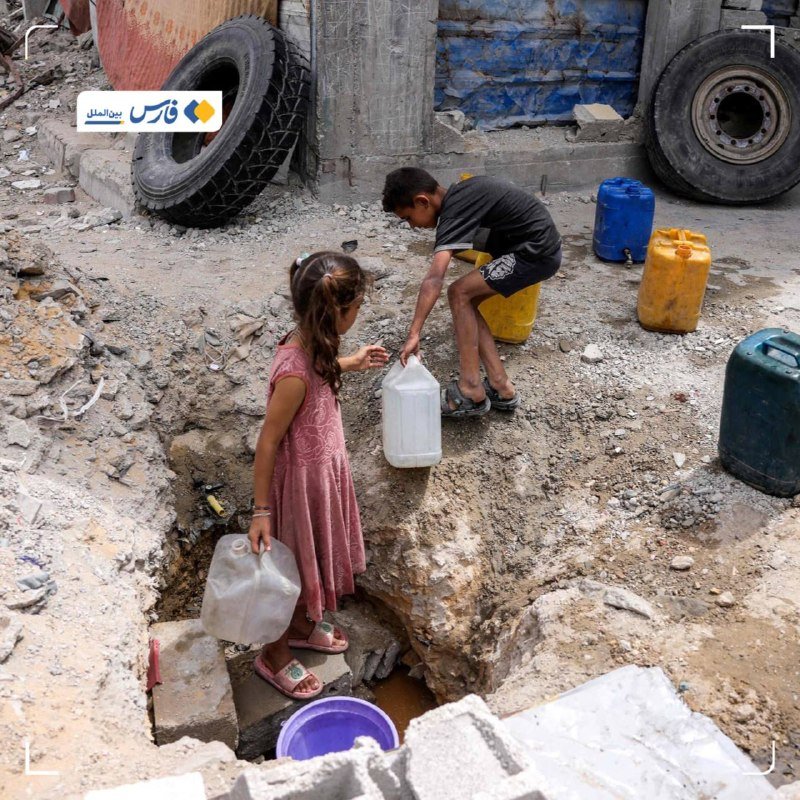
On the morning of 15 June 2026, two very different clocks started ticking over the same stretch of Levantine coastline. In southern Lebanon, forcibly displaced families began filtering back into towns that Israeli forces have been operating in for months, defying security warnings that the area remains an active military zone. In Washington and Jerusalem, a quieter conversation was underway: Prime Minister Benjamin Netanyahu has told the Trump administration that Israel will not pull its troops out of Lebanon, and does not consider itself bound by the Lebanese reservation embedded in the wider US-Iran arrangement now reportedly taking shape. The two tracks — the slow return of civilians on the ground, and the high-stakes diplomatic geometry between three capitals — are now visibly running on the same clock, and almost nobody is pretending otherwise.
The news is that the separation between the Lebanon file and the US-Iran file is collapsing in real time. Jerusalem is signalling, in language calibrated for an American audience, that any deal struck with Tehran will be tested against a unilateral Israeli veto on the ground in the south. That is not a small variable. It is the variable.
What the sources actually say
Reporting carried by The Jerusalem Post on 15 June 2026 frames Netanyahu's position as conditional: Israel will not leave Lebanon, sources told the paper, but it will not strike if the ceasefire holds. The same reporting notes that the prime minister has yet to publicly address the US-Iran deal or the Lebanon track that runs through it, an absence that Israeli commentators read as deliberate sequencing rather than indecision. Israeli wire reporting via Intelslava sharpened the same message into a one-line claim: Netanyahu has told Trump that operations in Lebanon will continue, that Israeli troops will not withdraw, and that Israel does not consider itself bound by the Lebanese reservation inside the US-Iran package. Read together, the two threads describe the same posture from two different ends — restraint on paper, permanence on the ground.
On the Lebanese side, The Cradle Media reported on the same morning that forcibly displaced families were already returning to southern towns early on 15 June, in open defiance of Israeli security warnings. The phrasing matters: residents are not waiting for a political settlement or a formal ceasefire announcement in Beirut. They are voting with their feet on the assumption that the guns are quiet enough to risk a return. That assumption is the kind of thing that turns into a self-fulfilling ceasefire — or into a very bad day, very quickly, if it is wrong.
The two-track trap
The structural problem is straightforward, and it has been obvious since the US-Iran track first surfaced as something more than a talking point. A deal with Tehran that promises quiet on the northern front is not credible if Jerusalem reserves the right to define, unilaterally, what counts as a Lebanese reservation and what counts as a Hezbollah violation. Likewise, an Israeli security posture that depends on permanent troop presence in southern Lebanon is not credible as a ceasefire if civilians are walking back into the villages those troops are sitting on. The two positions are not just in tension; they are mutually exclusive at the margin, and the margin is where the next outbreak will be decided.
A useful way to read the week: Washington is trying to build a regional architecture that requires Israeli buy-in. Jerusalem is telling Washington, in effect, that the architecture can be built, but the load-bearing wall on the Lebanese border will be drawn in Tel Aviv, not in Vienna or Muscat or Doha. The Intelslava framing — that Israel "does not consider itself bound" by the Lebanese reservation — is the diplomatic equivalent of a contractor announcing they will ignore part of the blueprint. The question for the Trump administration is whether the building still stands without that wall.
The Global South read, and why it is not the fringe read
The framing that gets called the "Global South" read in Western wire copy — that this is a deal being assembled over the heads of the people who will live with its consequences — is, in this case, not a fringe read. It is the literal description. Lebanese civilians returning to their towns are not party to the US-Iran track, and neither is the Lebanese government as a sovereign negotiator. The arrangements that determine whether those towns are safe, whether the displaced can plant a summer crop, whether the schools open in September, are being hashed out in three languages across three capitals. That asymmetry of voice is the kind of thing that produces durable resentment long after the diplomats have moved on to the next file.
It is also worth steelmanning the Israeli position for a moment, because the sources do not. Israeli security planners are looking at a northern border that has produced two major wars in twenty-five years, an Iranian proxy network that has reconstituted itself after each round, and a Lebanese state that has historically been unable or unwilling to enforce its own monopoly of force south of the Litani. A posture of "we do not consider ourselves bound by the Lebanese reservation" looks, from Jerusalem, less like aggression than like the absence of a trustworthy alternative. The counter — that permanent occupation produces its own long-run security costs, in Lebanese state failure, in Hezbollah recruitment, in the diplomatic isolation of Israel itself — is real, and it is the case that a younger generation of Israeli security voices is increasingly willing to make in private. Both readings are true. The policy choice is about which one bites first.
What remains uncertain
Several things have not been corroborated. The reporting is consistent that Netanyahu has communicated the position to Trump, but the exact mechanism — a phone call, a message through an envoy, a margin note on a draft — is not specified in the threads available to this publication. The status of the US-Iran deal itself is described as taking shape; no signing date, no text, no defined scope. The number of displaced Lebanese who have returned is not given, and the security conditions under which they are returning are described as warnings defied, not as a coordinated, monitored return. The sources do not specify whether the Lebanese government has endorsed the returns, distanced itself from them, or stayed silent. All of these are load-bearing details, and all of them are still soft.
The fairest summary is also the most uncomfortable one. The ceasefire is holding on the ground because civilians are choosing to test it, and the diplomatic deal is being built in the air because Washington and Jerusalem have decided that the timing is right. Both bets can be right for a few weeks. Whether they can both be right for the months that follow is the open question, and the answer will not come from any of the communiqués now being drafted in three capitals. It will come from a specific village in southern Lebanon on a specific morning when the warnings turn out to have been either right, or wrong, in a way that cannot be walked back.
This publication treats the Lebanon file and the US-Iran track as one story, not two, on the grounds that the sources do.
Wire provenance
This editorial synthesis draws on the following public wire/social posts:
- https://t.me/intelslava
- https://t.me/The_Jerusalem_Post
- https://t.me/thecradlemedia
Follow the event.
These dated source records provide context. They do not retrospectively verify this archive article.
Separate what the nuclear watchdog reported from what it could not determine after the June 2025 strikes.