Netanyahu's Security-Zone Doctrine: A Reading of the 15 June Press Conference
On 15 June 2026 the Israeli prime minister told reporters Israel will hold captured security zones for as long as necessary, build new regional alliances, and run in the next election. The doctrine, not the press conference, is the news.
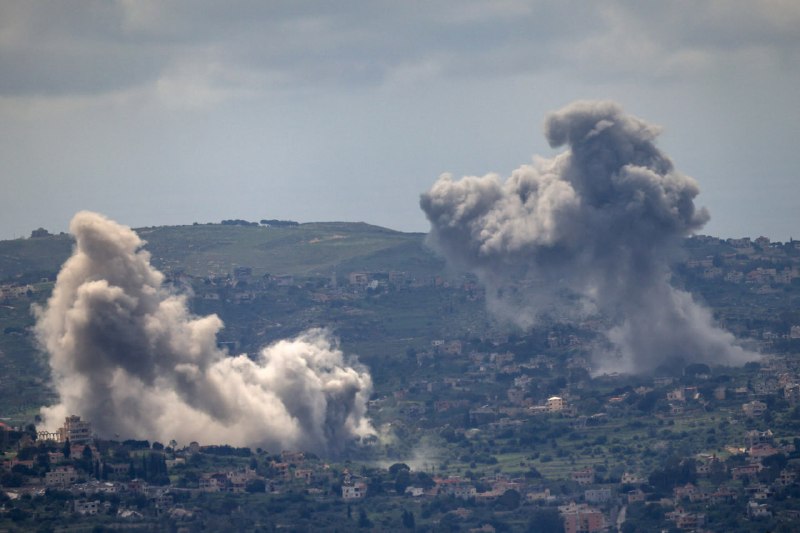
At 18:14 UTC on 15 June 2026, the Israeli prime minister walked to a podium in Jerusalem and said the quiet part out loud. Israel, he declared, "will remain in the various 'security zones' we have captured for as long as necessary in order to protect the state." Two minutes later he added a second clause: new regional alliances, and "defense self-sufficiency." At 18:17 he announced he intends to run in the next election and win. At 18:20 he admitted the government still does not know what the agreement it is currently negotiating will look like. The press conference, billed as a victory lap, turned into something more useful: an unfiltered statement of doctrine.
The news is not that Netanyahu spoke. Israeli prime ministers have spoken to the press in moments of crisis and triumph for decades. The news is the doctrine: permanent occupation of captured buffer territory, a new regional alliance architecture that goes beyond the Abraham Accords, a rearmament logic pitched as autarky, and an open political horizon in which the man who will execute this doctrine also wants four more years to do it. Read in that order, the four statements are not a press conference. They are a campaign platform.
The security-zone line
The first substantive claim — that Israel will remain in "security zones" it has captured — is the most consequential. The phrase "security zone" is a term of art in Israeli military history. It was used to describe the southern Lebanese strip held from 1985 to 2000, the Jordan Valley presence maintained after the 1994 peace treaty, and the area east of the 1949 armistice line held until the Camp David agreements. In each case the term was a euphemism for a unilateral buffer held by force and justified by reference to a threat that did not require a permanent presence to neutralise.
The press conference did not specify which zones Netanyahu meant. The phrasing — "the various security zones we have captured" — implies a network, not a single perimeter. That matters. A single buffer, even a wide one, is a defensive concept. A network of zones is an offensive one: it allows the holding force to dominate lines of communication, observation and approach across a wide arc. Israeli planners, in their own doctrinal writing, have long distinguished between a "depth zone" designed to trade space for early warning, and a "control zone" designed to deny territorial approaches to an adversary. The plural, used casually, points to the latter.
The political effect of the line is to harden the negotiating position of any Israeli delegation currently in talks. If the prime minister has publicly committed to permanent presence, the floor under any deal is the zones themselves. The ceiling is whatever the other side will concede in exchange for them. This is the standard structure of territorial negotiations: declare what you will keep, and let the other side price the rest.
The alliance and autarky clauses
Two minutes after the security-zone line, the same podium added a second plank: "We will build new alliances with countries in the region and beyond, and we will ensure our defense self-sufficiency." Read together with the first statement, this is a coherent — and quite traditional — Israeli grand strategy. The security zones deny territory to adversaries on the ground. The alliances ensure that no coalition of states can squeeze Israel diplomatically or economically into returning them. The self-sufficiency clause ensures that, even if those alliances falter, Israel can hold the zones by itself.
This is not a new formula. It is recognisably the Ben-Gurion synthesis: hold the high ground, cultivate the periphery, build the domestic arms base. What is new is the explicit invocation of self-sufficiency in 2026, in a year in which Israel's main arms supplier, the United States, has a defence-industrial base visibly stretched by parallel commitments to Ukraine, the Indo-Pacific and its own recapitalisation. The autarky clause is, in this reading, an insurance policy against the day a future US administration reads the same cost calculus differently.
The alliance clause, meanwhile, has a specific subtext. The phrase "in the region and beyond" widens the aperture beyond the Abraham Accords partners — the United Arab Emirates, Bahrain, Morocco, Sudan — to include the countries that normalised during and after the Gaza war, and to gesture at the next cohort: Saudi Arabia, the larger Indonesia, the post-normalisation African states. It is also, deliberately, a message to Tehran: that the architecture of containment around Iran is being reinforced, not relaxed, at the moment of negotiation.
The election line
At 18:17 UTC, in the same press conference, Netanyahu declared he intends to run in the upcoming elections and win. The political timing is not incidental. Israeli coalition arithmetic has been unstable since the war began; the prime minister's personal ratings have moved with each phase of the conflict. By tying the security-zone doctrine, the alliance expansion and the autarky programme to his own candidacy, Netanyahu is making a single argument: that continuity of leadership is a strategic asset, and that any successor will have to defend the same platform without the same international relationships.
The risk in the argument is that it can be inverted. An Israeli electorate that wants the zones held is also an electorate that wants them held at the lowest possible cost in blood and treasure. A doctrine of permanent presence, stated openly, raises the question of who will garrison these zones for years to come, and at what price. Israeli reservist politics is the binding constraint on the longest wars; a doctrine that requires sustained mobilisation is, in the medium term, a domestic political question as much as a regional one.
What we do not yet know
The same press conference, in a line that received less attention, contained the admission: "We still don't know what the agreement will be." That clause is more revealing than the doctrine statements, because it places a ceiling on everything else. The security zones, the alliances, the autarky programme are being announced in a context in which the government itself acknowledges that the substantive document of whatever it is currently negotiating has not been finalised.
The four statements, read together, are the public posture of a prime minister who wants to lock in the wartime settlement, harden the regional architecture and secure a fresh electoral mandate — all before the terms of the agreement he is currently negotiating are known. The doctrine is the headline; the negotiation is the part still under water. The risk of an exposed position of this kind is that any subsequent concession will be read as a retreat from the doctrine, and any failure to concede will be read as a confession that the doctrine was always the point.
The stakes
If the doctrine holds, the map of the region after 2026 looks materially different from the map of 2023. Permanent Israeli presence in a network of captured zones is a structural fact, not a tactical one; it changes the planning horizons of every adjacent state and every external patron. The alliance expansion, if even partly delivered, multiplies the diplomatic cost of any future move to reverse the zones. The autarky line, if executed, reduces the leverage of any single external supplier over Israeli decisions.
If the doctrine does not hold — if the agreement that emerges requires Israeli withdrawal from one or more of these zones — then the same press conference becomes a high-water mark. Future Israeli governments will be measured against the line Netanyahu drew in Jerusalem on 15 June 2026. The cost of retreat, in that case, will be paid in domestic politics first, and in regional positioning second.
The election is, in this sense, the hinge. A renewed mandate ratifies the doctrine. An electoral loss — whether to a successor of the right or to a centrist coalition — opens the door to a more transactional interpretation of the same statements. The press conference will be read, in years to come, either as the founding text of a new Israeli grand strategy or as the rhetorical ceiling above which the actual settlement was negotiated. The events of the next several months will determine which.
This publication notes that wire coverage of the 15 June 2026 press conference is dominated by Telegram-channel real-time feeds, with limited same-day verification from mainstream Western or regional wires. The doctrinal claims are Netanyahu's own; the strategic consequences sketched here are inferences from the public posture, not from any document of agreement yet seen. The story will be re-read once the agreement itself is published.
Wire provenance
This editorial synthesis draws on the following public wire/social posts:
- https://t.me/ClashReport
- https://t.me/ClashReport
- https://t.me/amitsegal
- https://t.me/amitsegal
- https://t.me/Middle_East_Spectator
- https://t.me/presstv
- https://t.me/abualiexpress