Netanyahu's trillion-dollar claim and the gap between Israeli rhetoric and a US-Iran deal
Hours after a US-Iran deal sent oil lower, the Israeli prime minister publicly cast doubt on it and floated a trillion-dollar damage figure. The dissonance is the story.
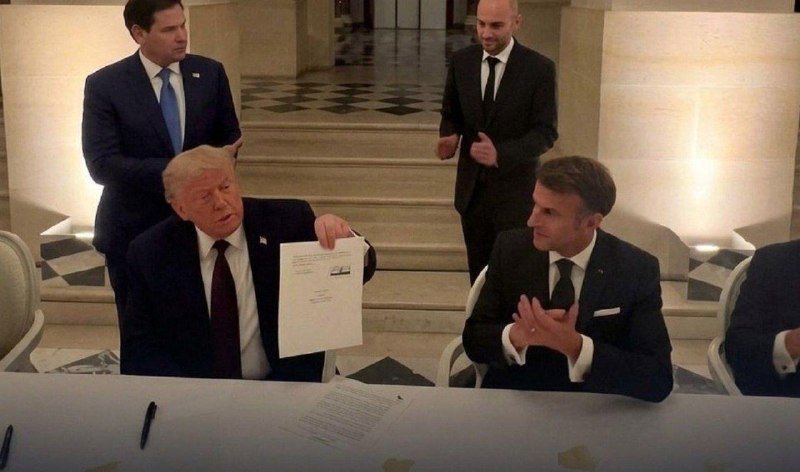
The market reaction was almost theatrical. On 15 June 2026, a US-Iran agreement reached over the weekend pulled crude lower, lifted equities, and left crypto traders distinctly unimpressed. The headline the algos priced was a thaw: a deal, signed, sealed, expected to suppress an oil-risk premium that had been baked into the curve for months. Then, mid-afternoon UTC, the Israeli prime minister went on camera and insisted the struggle is not over. By 18:48, Benjamin Netanyahu had framed it as open-ended, cast doubt on the very text of the agreement Washington had just signed, and put a one-trillion-dollar figure on alleged damage to Iran's economy — a number with no obvious source and no obvious methodology.
The dissonance is the story. The US Treasury and the White House are selling a diplomatic outcome. Israel is selling a war that, by its own leader's telling, has no end-date. Markets are caught pricing both at once, and crypto — the supposedly apolitical bookmaker — is the one asset class openly refusing to believe either side.
What Netanyahu actually said
Three points came across in Netanyahu's remarks on 15 June, as relayed by Israeli and regional Telegram channels between 18:04 and 18:48 UTC. First, the diplomatic posture: he told audiences Israel does not know the precise contents of the agreement between Iran and the United States, a line that pulls the rug from under any "we are signed up to this" framing. Second, the strategic posture: "the struggle is not over and will not be over," directed at Iran and "its arms," language that explicitly preserves room for further military action regardless of what is or is not in the document. Third, the rhetorical posture: he described his mission in life as the struggle against Iran's nuclear program, and added that "with an agreement or without an agreement, Iran will not have nuclear weapons."
The trillion-dollar damage claim sits alongside all of this. Netanyahu offered it as a self-estimated round number — "some estimate it at one trillion dollars" — without naming the estimator, the methodology, or the time horizon. It is the kind of figure that travels well in domestic Israeli coverage and gets walked back in the wire wires, and that asymmetry is part of the problem.
The deal the market is pricing
Crypto trader's framing of the weekend accord is the cleanest read on what was actually signed. As of 11:19 UTC on 15 June, the read-through to global markets was: oil down, equities up, crypto unimpressed. The reasoning is straightforward — past rounds of US-Iran detente have been announced, celebrated, and then collapsed or reinterpreted, and traders have learned to fade the first-day reaction. The lack of a verifiable text, the speed of the announcement, and Netanyahu's own admission that he does not know the contents all point in the same direction: this is a framework, not a settlement.
It is also worth noting what the Israeli statements do not say. They do not say Israel was consulted. They do not say the agreement is acceptable. They do not commit Israel to the deal's architecture. In diplomatic terms, that is a reservation of the right to act unilaterally — a position with a long history of producing exactly the kind of escalation that the market had been told was being defused.
The gap, in plain terms
Two governments are telling two stories about the same piece of paper. Washington is selling a thaw. Jerusalem is selling a continuation. The structural pattern here is older than any single administration: when a hegemon negotiates a status quo with a regional rival, allied states with their own red lines can — and routinely do — refuse to be bound by the result. The rhetoric on 15 June is the public surface of that refusal. The trillion-dollar figure, floated into the same press cycle as the deal, functions less as a damage assessment than as a domestic political anchor: it tells an Israeli audience that the cost has already been paid and that the project must continue.
Counter-read: it is also possible that the prime minister is genuinely in the dark on the text, that the figure is an honest estimate of cumulative sanctions and strike-related damage, and that the remarks are simply calibrated for a domestic audience that needs to hear the fight is not over. The two readings are not mutually exclusive. Both lead to the same place: Israel is reserving its freedom of action, and the diplomatic document carries less weight than the markets initially priced.
Stakes and what to watch
If the trajectory holds, three things follow. The oil curve re-bids a geopolitical premium that the weekend deal briefly erased — which is the trader's instinct reflected in the muted crypto response. Iran's negotiating partners in Beijing and Moscow are reminded, again, that any US-led framework can be undercut by an ally with the will and the air force to act on its own reservations. And the Israeli domestic coalition, for which opposition to a nuclear-armed Iran is a coalition-shaping commitment, gets the cover to maintain a posture that the agreement was supposed to retire.
What the public record does not yet show is whether the agreement itself addresses the question Netanyahu raised — enrichment levels, inspection regime, the disposition of stockpiles — or whether it is a narrower package that leaves those questions for a later round. Until that text surfaces and is read against the prime minister's red lines, the most honest read is the one crypto arrived at first: a headline, not a settlement.
This article drew primarily on Telegram-channel reporting (Clash Report, amitsegal, Middle East Spectator, WarMonitors) and the crypto-market read in CoinDesk. The exact text of the US-Iran agreement was not in the materials available at time of writing.
Wire provenance
This editorial synthesis draws on the following public wire/social posts:
- https://t.me/middle_east_spectator
- https://t.me/clashreport
- https://t.me/amitsegal
- https://t.me/warmonitorstg
Follow the event.
These dated source records provide context. They do not retrospectively verify this archive article.
Separate what the nuclear watchdog reported from what it could not determine after the June 2025 strikes.