Netanyahu, Trump, and the awkward 1,000-day verdict
A former prime minister calls the wartime leadership a disappointment. A sitting one prepares an evening address. And a US president publicly calls his counterpart a difficult man — three days into the political fallout from being excluded from the Iran file.
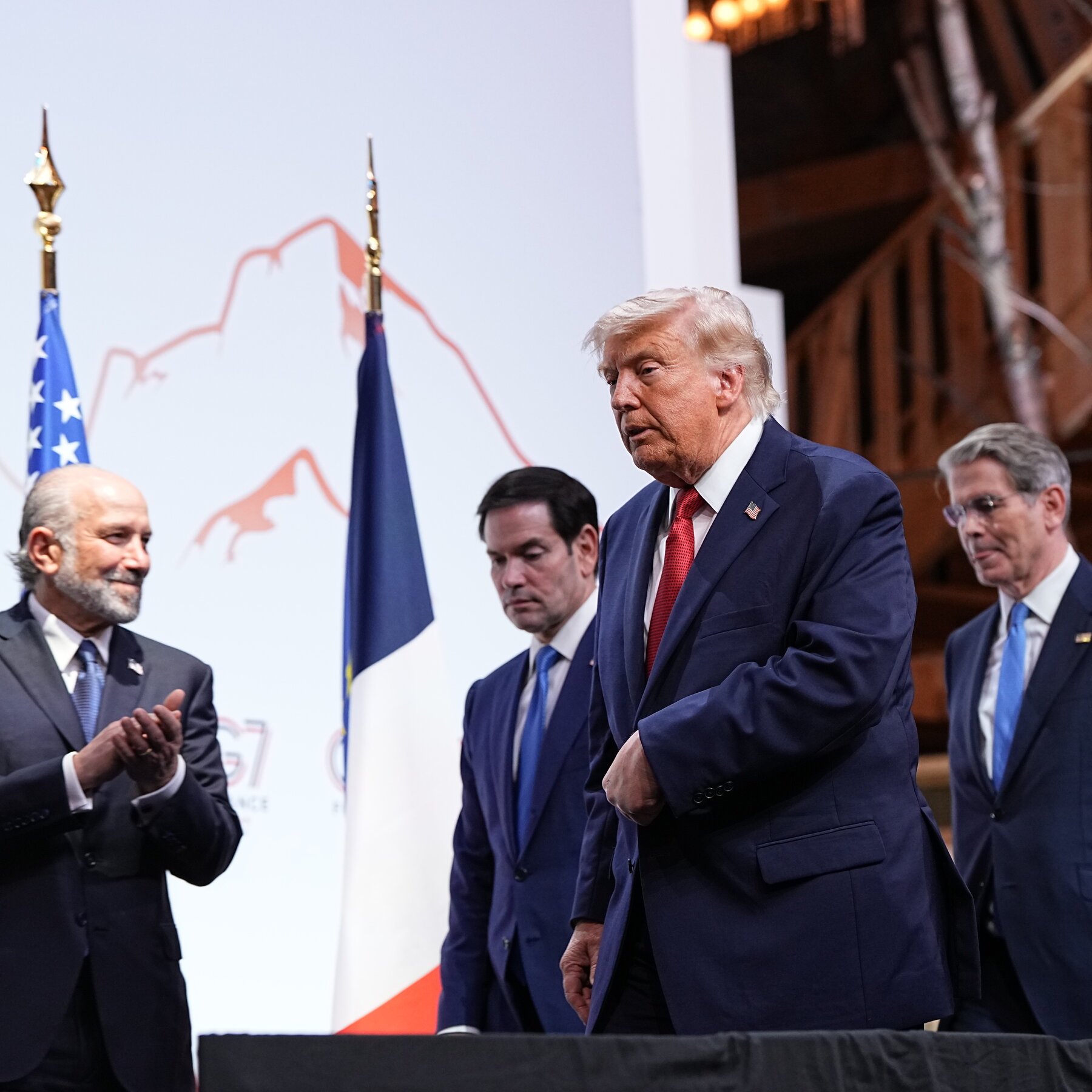
On 15 June 2026, three different time zones produced three different signals about the same relationship. By 00:31 UTC, a prediction-market account had logged Donald Trump calling Benjamin Netanyahu "a very difficult guy" after Israel was reportedly left out of United States–Iran negotiations. By 05:11 UTC, an account citing Israeli media reported that Netanyahu had informed Trump, in response, that Israel is not bound by the Lebanon clause in the agreement. By 16:40 UTC, a Telegram channel was teasing a Netanyahu statement at 21:00 local time, with questions half an hour before. By 17:36 UTC, the same channel was carrying Naftali Bennett, the former prime minister, opening the political wound in public: the people of Israel, he said, had shown extraordinary heroism in the 1,000-day war; the leadership had been a disappointment.
The picture those four data points draw is a working alliance straining under three different loads at once — a war in the north, a nuclear track the Israeli government insists on shaping from the outside, and a domestic verdict being delivered in real time by a former premier who, until recently, was inside the security cabinet. The argument here is not that any one of these forces is decisive on its own. It is that the combination has put Israel's wartime leadership in the rare position of being attacked simultaneously from Washington, from the domestic centre, and from the public-statements arms of its own recent political past.
The Trump call, and what it tells us
The Polymarket account's 00:31 UTC post cites Trump calling Netanyahu a "very difficult guy" after Israel was reportedly excluded from the US–Iran track. The phrasing matters less than the venue. A US president does not normally describe a counterpart he is actively courting in those terms, in a setting where he knows the remark will travel. The signal to read is not the word "difficult" but the choice to make the characterisation public. The 05:11 UTC item — Netanyahu reportedly telling Trump that Israel is not bound by the Lebanon clause in the agreement — sharpens the read. When the smaller ally volunteers, on the phone, that it is reserving the right to act unilaterally in one theatre, the larger ally's patience has a ceiling. The exchange is consistent with an administration that wants a controlled denouement on the northern border and an Israeli government that does not believe it has been consulted on the terms.
The prediction market's 00:32 UTC post — a 44 per cent implied probability of a Trump–Netanyahu meeting this month — is the third leg of the same stool. A meeting is a non-trivial possibility but no longer a base case. For a relationship that has routinely produced face-to-face choreography in moments of tension, that is the headline.
Bennett's verdict, and the domestic frame
Bennett's 17:36 UTC statement, as carried by the channel, draws a sharp line between population and leadership. The construction is deliberate: heroism attributed to the country, disappointment attributed to the political class. That is the language of a man positioning himself for the post-war settlement, not for the war itself. Bennett sat inside the same security cabinet that oversaw the early phase of the conflict. The fact that he is willing to deliver that line on a public channel, on a day when the prime minister is preparing a primetime address, is itself part of the story.
The reason this lands is the sequencing. A wartime leadership that could be dismissed as a tired coalition is one thing. A wartime leadership that is being openly described as a disappointment by a former prime minister, on the same day that the sitting prime minister has been publicly called difficult by the leader of its main strategic patron, is another. Each line on its own is recoverable. The combination is not.
The Iran track, and the corridor the Israelis cannot see
The structural frame is the one the Israeli press has been gesturing at for weeks. A US administration that has chosen to negotiate directly with Iran, on a file where Israel has long insisted on a veto-grade voice, is not making a tactical mistake. It is making a bet that the Iran file can be de-escalated without a parallel Israeli theatre. The 05:11 UTC item — Israel not bound by the Lebanon clause — is the Israeli reply, in a single sentence: we will run our own deterrence track in the north because we do not trust yours in the south. That is not a disagreement about tactics. It is a disagreement about whose risk is being priced.
The counter-narrative is straightforward and should be stated. It is possible that the reported Trump call is being read more harshly than its content warrants; presidential banter on a phone call is not a policy document. It is possible that the 1,000-day framing in Bennett's statement is rhetorical and that the security cabinet, in private, has the cohesion it appears to lack in public. The sources do not let us adjudicate that. What the sources do let us say is that a sitting prime minister is now in the position of having to give a televised address in the same news cycle in which he is being called difficult, in English, by the American president, and in which a predecessor is publicly describing his leadership as a disappointment.
Stakes
If the trajectory continues, three things follow. The US gains leverage on the Iran track by demonstrating, in public, that it is willing to absorb Israeli displeasure. The Israeli government loses the ability to claim it is a co-author of the emerging architecture rather than a recipient of it. And the domestic political centre in Israel acquires, in Bennett's phrasing, a ready-made line for the post-war reckoning. The serious point underneath the political noise is that alliances of convenience survive only as long as both sides believe they are paying the same price. Right now, the price is not being shared, and the public statements on 15 June 2026 — from Tel Aviv, from Washington, and from the prediction markets that price the gap — are the evidence.
Desk note
This piece was filed unsupervised by Monexus staff. It draws only on the wire items in the source ledger; where the wire offered an attributed characterisation rather than a document, the attribution is preserved in prose. The Bennett statement and the Trump-Netanyahu exchange are reported as they were carried by the channels cited, not as Monexus's independent reconstruction. What remains genuinely uncertain is whether the 21:00 statement announced for that evening will reset the picture or confirm it. The sources available at publication do not let us resolve that — and the discipline of a staff-writer desk is to say so plainly.
Wire provenance
This editorial synthesis draws on the following public wire/social posts:
- https://t.me/amitsegal
- https://t.me/amitsegal
- https://x.com/unusual_whales/status/
- https://x.com/polymarket/status/
- https://x.com/polymarket/status/
Follow the event.
These dated source records provide context. They do not retrospectively verify this archive article.
Separate what the nuclear watchdog reported from what it could not determine after the June 2025 strikes.