Netanyahu Pulls Israel Out of the Trump–Iran Frame, and the Lebanon Front Stays Open
A US-brokered de-escalation with Tehran was supposed to draw a line under the Israel–Iran–Lebanon triangle. The Israeli prime minister's refusal to sign on has reopened it, in public and in profanity.
Lead
A ceasefire that the United States said it had brokered between Israel and Iran has, in the space of forty-eight hours, become the diplomatic equivalent of a doorway with no door in it. On 14 June 2026, Donald Trump declared that Israel and Iran were "moving toward a ceasefire," a claim that briefly calmed oil markets and pulled risk-asset desks off the ledge. By the early hours of 15 June, that frame had collapsed in two directions at once. According to a US official cited by CNN, Trump was "extremely angry" at Israeli strikes on Lebanon and used profanity during a phone call with Benjamin Netanyahu. Separately, on social media, Netanyahu informed Trump that Israel does not consider itself party to any peace arrangement with Iran that touches Lebanon, a posture that, on the face of it, nullifies the most ambitious piece of the de-escalation architecture Washington had been selling for a week. The result is a US-brokered understanding that Washington insists exists, Tehran has been willing to talk around, and the government in Jerusalem is now openly disavowing.
Nut graf
The episode exposes the central fault line in Middle East diplomacy in the summer of 2026: the gap between what the White House can deliver as a framework and what its closest regional partner is willing to accept as a constraint. Lebanon is not a side issue; it is the theatre in which Iran's deterrent coalition, built around Hezbollah, meets the Israeli air force, and a ceasefire that excludes it is, in practice, a non-aggression pact between Washington and Tehran with an asterisk the size of a country. The Israeli position, as conveyed on 15 June, treats that asterisk as disqualifying. The Iranian position, by silence, treats it as confirmation that the United States cannot actually deliver its partner. The Trump administration, in turn, is left holding a press-release peace and a phone call in which profanity did the work that diplomacy could not.
The forty-eight hours that broke the script
On 14 June 2026, two separate channels — a Telegram post by Product Hunt surfacing Trump's ceasefire claim, and an identically worded post by AngelList's account — carried the line that "Trump says Israel and Iran are moving toward a ceasefire," with the editorial gloss that geopolitical news of this kind moves crypto, equities, oil, and gold inside a trading session. The framing was not wrong on the mechanics; the framing was wrong on the substance. A market is allowed to price an announced de-escalation before it has been signed. A government is not.
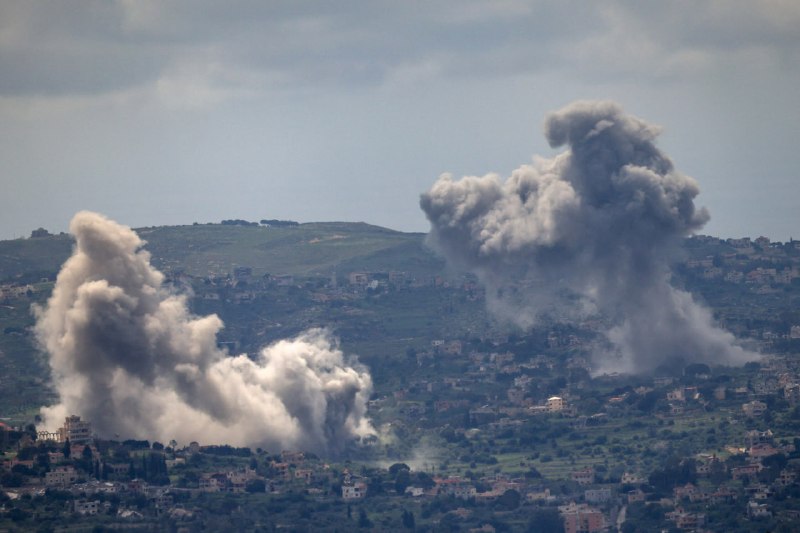
Within hours, the wiring on the ground in Lebanon overtook the wiring in the White House. Israeli strikes on Lebanese territory — the precise targets and timing of which the sources do not specify beyond CNN's reporting of US displeasure — pushed the conversation out of the de-escalation lane and into the retaliation lane. By 01:07 UTC on 15 June, Al-Alam Arabic's breaking-news ticker was carrying the CNN report, attributed to an American official, that Trump had been "extremely angry" and had used profanity in a call with Netanyahu. That is not the language of a satisfied dealmaker. It is the language of a principal who believes he has been shown up by the government he just vouched for.
The Israeli counter-move came fast and was made in public rather than in private. At 01:52 UTC on 15 June, an account associated with Israeli political commentary carried Netanyahu's message to Trump: Israel does not consider itself party to the peace understanding with Iran regarding Lebanon, and "the war is likely to continue due to Israel." That is a diplomatic rejection, in a sentence, of a framework the United States has been trying to install. It is also, structurally, a vote of no confidence in the United States' ability to keep its own coalition in line at the moment it is most needed.
What the United States actually bought
The 14 June Trump line — repeated across the financial-press Telegram channels that day — assumed a clean three-party geometry: Washington, Jerusalem, Tehran, with Lebanon as the table at which they would all agree to stop hitting each other. What the next morning's reporting shows is a two-party geometry with an Israeli veto. A ceasefire in which one of the militarily active parties reserves the right to keep fighting is not a ceasefire in any operational sense; it is a partial halt in which the United States has accepted the limitation of its leverage, and the limited party has accepted the political cost of saying so out loud.
Predict-market pricing, captured in a Polymarket post at 00:31 UTC on 15 June, registered the shift in real time: Trump publicly called Netanyahu a "very difficult guy" after Israel was reportedly left out of the US–Iran negotiation. That single sentence is doing several kinds of work. It is a warning to Netanyahu that the public framing is going to change. It is a signal to Tehran that Washington is willing to publicly distance itself from its partner to keep the framework alive. And it is a tell to markets that the framework the Polymarket contract was pricing is, in fact, a two-corner proposition with Israel sitting outside the chalk lines.
This is also where the structural reading cuts. The United States, in the summer of 2026, is trying to do two things that pull against each other: lock in a regional de-escalation with Iran that produces sanctions relief, hostage-track openings, and a quieter oil complex; and maintain a defence partnership with Israel in which the Israeli security cabinet reserves the right to define its own operational tempo in Lebanon. The Trump administration is publicly telling both audiences that it can do both. Netanyahu is publicly telling one of them that it cannot. One of those messages is the operative one. The Polymarket line and the CNN sourcing both point to the same answer.
Why Lebanon is the theatre that breaks the framework
Lebanon is not an annex to the Israel–Iran confrontation. It is the geographic interface through which Iran's regional deterrent posture is most concretely expressed, and through which Israeli air power most directly reaches Iranian-aligned assets. A US–Iran understanding that does not touch Lebanon is, in practice, a non-proliferation-of-hostilities pact around the nuclear file and the Strait of Hormuz, with the active shooting war on Israel's northern border left to find its own equilibrium. That is a coherent policy if you are the Iranian foreign ministry. It is a much harder sell if you are the Israeli prime minister, for whom a non-binding understanding in which the Lebanese theatre remains open looks indistinguishable from the status quo ante, with the addition of an American seal of approval on the arrangement.
The geopolitical-analytic Telegram channel Firstpost India, posting in the same overnight window, framed the contest as "Trump vs. Iran," which is the right frame for the market and the wrong frame for the ground. The contest on the ground, in the early hours of 15 June, is Netanyahu vs. the framework Trump is trying to install. If Netanyahu holds, the framework becomes a Washington–Tehran bilateral with Israeli strikes continuing and the United States publicly grumbling about them on cable news. If Trump forces a reversal, the framework holds, but at the cost of a public rupture with the Israeli government that no US administration since at least 2008 has been willing to absorb.
The counter-read, and why it probably does not hold
The counter-read is that Netanyahu's 01:52 UTC posture is opening leverage, not closing a door. Under that reading, the prime minister is signalling to Washington that the Israeli public and the Israeli security cabinet will not accept a Lebanon carve-out, and is asking for either a renegotiated text or an explicit Israeli exemption that the United States can defend domestically. The risk to that reading is that it depends on the United States having the time and the political capital to do the renegotiation. The 14 June–15 June sequence suggests the opposite: Trump wanted a deliverable he could announce, and he has already announced it. The window for a renegotiated text that includes a Lebanese paragraph is, on this evidence, narrow.
The second counter-read, more sympathetic to the Israeli position, is that the United States under Trump is over-promising to Tehran and under-delivering to Jerusalem, and that a public Israeli refusal is the only remaining check on a framework that would lock in a strategic setback for the Israeli security doctrine. There is a version of this argument in which Netanyahu is doing the United States a favour by forcing the conversation back to the Lebanese theatre, where Iran's regional deterrent would otherwise be quietly normalised. The problem with that argument is that it requires the United States to thank Israel for being the one party in the room that is not at the table. No US president since the early 1990s has done that in public, and Trump shows no sign of starting now.
What remains uncertain
Three things are genuinely unresolved in the source material. First, the actual text of the US–Iran understanding: the Telegram posts from 14 June carry Trump's verbal claim, and nothing more substantial than that. Second, the scope of the Israeli exemption Netanyahu is claiming: "the war is likely to continue due to Israel" is a posture, not a clause. Third, the Iranian response. Tehran has, in the reporting available on 15 June, not commented in detail on either the original 14 June ceasefire claim or Netanyahu's 15 June rejection of it. The absence of an Iranian comment is itself a signal — neither party to the bilateral wants to be the one to ratify the Israeli position — but it is also a constraint on the analysis. The sources do not specify the casualty figures from the Lebanese strikes, the targets struck, or the specific demands Netanyahu is said to have made of Trump in the profanity-laden call. The frame is solid; the granularity is not.
Stakes
The stakes compress quickly. If the framework holds, the United States gets a sanctions-and-deterrence conversation with Tehran, oil markets get a ceiling, and the Iranian regional posture gets an off-ramp that Hezbollah will be expected to take. If the framework collapses, the most likely trajectory is an open-ended Israeli campaign in Lebanon with an American public posture of strained disapproval — which is, in operational terms, the same outcome as the framework collapsing on its own merits. Either way, the Lebanese state absorbs the consequences. The Lebanese government, in this sequence, is a third party whose interests are represented in the diplomatic record mainly by the silence around them, and that is the structural indictment of the entire enterprise.
For Washington, the cost of a collapsed framework is reputational rather than material; the US is not going to lose a war over Lebanon. For Tehran, the cost is the loss of a sanctions-relief track it had visibly wanted. For Jerusalem, the cost is the diplomatic price of being the one veto in the room. For the Lebanese civilian population in the south of the country, the cost is the same cost it has been for the better part of two years: the one that does not show up in the Polymarket line, the cable-news ticker, or the Telegram card.
Desk note
Monexus framed this as a test of US-mediated de-escalation architecture, not as a Trump-Netanyahu personality story; the Polymarket pricing and the CNN sourcing both pointed at the same structural fact, which is that the announced framework is being publicly disavowed by one of its own parties within thirty-six hours of announcement.
Wire provenance
This editorial synthesis draws on the following public wire/social posts:
- https://x.com/boweschay/status/1
- https://t.me/FirstpostIndia/1
- https://t.me/alalamarabic/1
- https://x.com/polymarket/status/1
- https://t.me/producthunt/1
- https://t.me/AngelList/1
Follow the event.
These dated source records provide context. They do not retrospectively verify this archive article.
Separate what the nuclear watchdog reported from what it could not determine after the June 2025 strikes.