Netanyahu on the back foot as a US-Iran memorandum of understanding exposes the Lebanon fault line
A reported US-Iran memorandum of understanding, and Iran's push to fold Lebanon into it, has split Israel's political class and put the buffer zone back at the centre of the conversation.
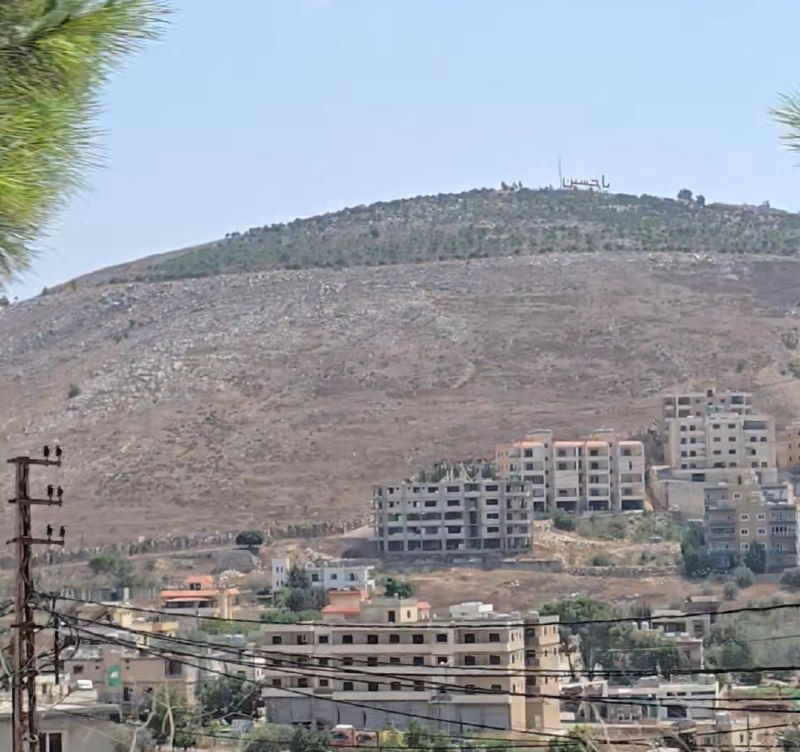
By the close of 15 June 2026, the political weather in Jerusalem had turned on a single question: whether the United States, in its latest diplomatic exchange with Iran, had quietly conceded ground on the Israel-Lebanon border. Israeli Prime Minister Benjamin Netanyahu, speaking to reporters in the evening, insisted that Iran had pushed for an Israeli withdrawal from the Lebanon buffer zone and that "that didn't happen" — a denial aimed at his own cabinet as much as at Tehran. Within ninety minutes, opposition politicians and members of his own coalition were on Israeli airwaves using the phrase "greatest strategic failure" to describe the reported understanding. By 22:57 UTC, Iran's English-language Press TV was carrying the criticism under a headline that named the prime minister directly. By 23:35 UTC, Al Alam Arabic was quoting an Israeli source via i24NEWS claiming that "the United States has surrendered" on the Lebanon clause. The argument, in other words, is no longer over whether something was agreed. It is over what was agreed, and at whose expense.
The contested document is a memorandum of understanding between Washington and Tehran, the precise text of which has not been published. What is publicly known is narrower: that the two governments have been negotiating through intermediaries, that a draft has crossed multiple drafts, and that Iran has insisted on language that ties any Israel-related security track to the situation on the Israel-Lebanon frontier. The Netanyahu statement of 15 June, reported on X by the prediction-market account @Polymarket, is the first time an Israeli prime minister has publicly addressed the buffer-zone question in connection with the US-Iran track. The fact that he addressed it at all is the story.
What Israel is fighting about, internally
The Israeli critique has two registers. The first is substantive. Israeli opposition figures, quoted in the Press TV summary of the 22:57 UTC bulletin, argue that any US concession that decouples the Lebanon file from a broader normalisation track is, in itself, a strategic reversal — because it treats the border as a negotiable item rather than a security condition. The second is domestic. Several of the sharpest criticisms quoted on Press TV came from within the prime minister's own coalition, not from the opposition benches. That is the more unusual feature of the day's coverage. In Israeli politics, intra-coalition criticism of the prime minister on a national-security file is rare and consequential. It signals that the cost of the reported deal is being absorbed inside the governing majority, not by the usual external opposition.
The Netanyahu denial — that Iran pushed for a buffer-zone pullback and "that didn't happen" — is doing two jobs at once. It is telling his right flank that the territorial line along the Litani and the Blue Line has not moved. It is telling Washington, through an open microphone, that any future US-Iran text containing such language will be rejected by Jerusalem. The phrasing is calibrated because the prime minister cannot afford to be seen as the leader who traded Israeli depth on the northern border for a wider understanding with Tehran, and he cannot afford, in the same week, to break publicly with the American administration that has guaranteed the negotiation's cover.
What Iran is buying, structurally
The Iranian interest in the language is easier to read. Tehran has, for two decades, framed its regional posture around a network of allied or partner formations — in Lebanon, in Syria, in Iraq, in Yemen. A US-Iran understanding that is silent on those formations is, from Tehran's vantage point, an understanding that concedes American leverage over them. A US-Iran understanding that is explicit about them is, from Tehran's vantage point, an understanding that recognises them as facts on the ground. The push to include Lebanon inside the four corners of the memorandum is therefore not a side request. It is the test of whether the document is a tactical pause or a structural acknowledgement.
That is the reading that has Israeli analysts worried, and that is the reading carried, in slightly different vocabulary, by the Iranian English-language outlets. The Al Alam Arabic bulletin of 23:35 UTC cites an Israeli source, via i24NEWS, to the effect that "the embarrassment is everything related to including Lebanon within the agreement and that the United States has surrendered." Press TV's bulletin two hours earlier uses the phrase "greatest strategic failure" without attributing it to a single named politician; the phrasing is generic enough to suggest that the channel is summarising a cluster of statements from across the Israeli political class rather than quoting a single voice. Both bulletins, taken together, describe an Israeli debate in which the substantive concern and the partisan concern have fused.
The American position, as best as it can be read
The US administration has not, in the materials available to this publication on 15 June 2026, published the memorandum or any portion of it. The standard American practice in this kind of negotiation is to keep the text confidential while principals make calibrated statements. What is known is that the United States has been conducting the exchange with Tehran on a track separate from the Israel-Hamas track, separate from the Israel-Hezbollah track, and broadly separate from the wider normalisation file. The decision to keep those tracks apart is itself a strategic choice: it allows Washington to make progress with Tehran on the nuclear question and on regional de-escalation without forcing any Israeli government to own those gains politically.
That separation, however, is the precise point of friction on 15 June. The Israeli critique is, in effect, that the separation is artificial: that a US-Iran understanding on the nuclear file will, by gravity, shape the security environment on Israel's northern border whether or not the word "Lebanon" appears in the text. The Netanyahu statement addresses that critique head-on. The Israeli-source commentary carried by Al Alam Arabic argues the opposite — that the separation has already collapsed, and that the surrender on Lebanon is now a fact. The gap between those two readings is the political space inside which the prime minister's coalition is fracturing.
What remains genuinely uncertain
The text of the memorandum is not public. None of the three source items available for this article — the Al Alam Arabic bulletin of 23:35 UTC, the Press TV bulletin of 22:57 UTC, and the Polymarket social-media report of 18:46 UTC — contains a leaked draft. All three are downstream of Israeli media, principally i24NEWS, and of Israeli political commentary. The reporting is, in other words, two steps removed from the document itself. Iranian state-adjacent outlets are reporting Israeli criticism; an Israeli prime minister is denying the substance of the Israeli criticism; and an Israeli source is, via a third outlet, accusing the United States of having conceded. The chain of attribution is long, and the load-bearing claim — that the United States "surrendered" on the Lebanon clause — rests on a single anonymous source quoted by i24NEWS and relayed by Al Alam Arabic. This publication treats that claim as reported, not as established.
A second uncertainty is the buffer-zone question itself. The Israel-Lebanon buffer zone, established under the ceasefire framework that ended the 2024 Hezbollah war, has been a moving target since the ceasefire took effect. Israeli forces have conducted operations inside it; international monitoring has been intermittent; the line of withdrawal has been the subject of bilateral US-mediated talks. The Netanyahu denial of 15 June, that Iran pushed for a pullback and "that didn't happen," is a statement about a current state of affairs. It is not a commitment about the future of the line. The political argument inside Israel is, in significant part, about whether the prime minister has the political capital to enforce that denial if a US-Iran text is published that pulls in the opposite direction.
Stakes and the weeks ahead
If the Netanyahu denial holds — if the memorandum is published, or summarised by the US administration, in language that does not touch the buffer zone — the political damage inside the prime minister's coalition is manageable. The opposition's "greatest strategic failure" line will fade. The American track with Tehran will continue. The Lebanon file will revert to the bilateral US-mediated channel that has been operating, more or less visibly, since the ceasefire. If the denial does not hold, the prime minister faces a harder set of choices: he can accept the text and absorb the coalition cost; he can reject the text and absorb the cost of a public rupture with Washington; or he can defer, and watch the cost compound. The next forty-eight hours — the window in which the memorandum is most likely to be either published, formally denied, or quietly walked back — will determine which of those paths is forced.
For Iran, the calculation is symmetrical. A text that names Lebanon is a text that acknowledges the architecture Tehran has spent two decades building. A text that does not name Lebanon is a text that allows Tehran to claim a strategic win without forcing a confrontation with Jerusalem. The push to include the language is therefore not, on the Iranian side, a maximalist demand. It is the test of whether the deal is a real one. The Israeli political crisis of 15 June 2026 is, in this reading, the first measurable consequence of that test.
How Monexus framed this: the wire cycle on the evening of 15 June was dominated by Iranian state-adjacent outlets relaying Israeli political criticism. Monexus read the three available source items side by side, attributed each substantive claim to its chain of origin, and treated the prime minister's denial as the most authoritative single statement on the buffer-zone question. The "surrender" framing is reported as a claim, not as a fact.
Wire provenance
This editorial synthesis draws on the following public wire/social posts:
- https://t.me/alalamarabic
- https://t.me/presstv
- https://x.com/polymarket/status/
- https://en.wikipedia.org/wiki/Israel%E2%80%93Hezbollah_ceasefire_(2024)
- https://en.wikipedia.org/wiki/Blue_Line_(Israel%E2%80%93Lebanon)
- https://en.wikipedia.org/wiki/Litani_River
- https://en.wikipedia.org/wiki/United_Nations_Interim_Force_in_Lebanon
- https://en.wikipedia.org/wiki/Joint_Comprehensive_Plan_of_Action
Follow the event.
These dated source records provide context. They do not retrospectively verify this archive article.
Separate what the nuclear watchdog reported from what it could not determine after the June 2025 strikes.
- https://t.me/alalamarabic
- https://t.me/presstv
- https://x.com/polymarket/status/
- https://en.wikipedia.org/wiki/Israel%E2%80%93Hezbollah_ceasefire_(2024
- https://en.wikipedia.org/wiki/Blue_Line_(Israel%E2%80%93Lebanon
- https://en.wikipedia.org/wiki/Litani_River
- https://en.wikipedia.org/wiki/United_Nations_Interim_Force_in_Lebanon
- https://en.wikipedia.org/wiki/Joint_Comprehensive_Plan_of_Action