Seventeen hours in Tehran: what Qatar’s mediation exit tells us about the state of the Iran–US file
A Qatari delegation spent 17 hours in Tehran and left without a deal. The duration itself is the story — and it points to how narrow the space for an off-ramp has become.
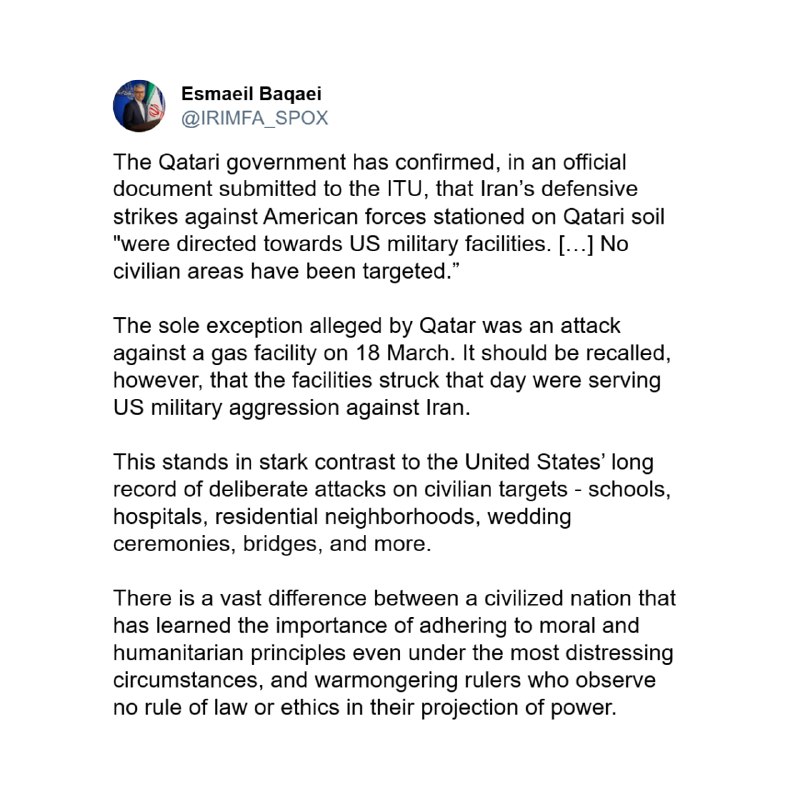
A Qatari diplomatic delegation left Tehran in the early hours of 15 June 2026 after roughly seventeen hours of negotiations, according to Iran-aligned outlets citing Fox News. Fars News International reported the departure first, near 00:45 UTC, with Iran’s Tasnim agency confirming the timeline within the hour and the English-language war-monitoring channel Clash Report relaying the Fox News sourcing at 00:32 UTC. The Qatari side has not, as of publication, issued a public read-out of substance. What the three wire-aligned telegrams agree on is the duration and the fact of exit — a long sit, a quiet departure, and a media footprint dominated by Iranian state-adjacent channels and a single US network pick-up.
The length of the meeting is the most legible signal in the reporting. Seventeen hours is not a perfunctory shuttle errand; it is the kind of sustained session that suggests both sides arrived with a document to argue over, not just talking points to perform. It is also the kind of session that, when it ends without an announcement, typically means the gap on at least one core issue remained too wide to bridge on the spot. The Gulf state in the middle of this — Qatar — has spent the last year positioning itself as the only mediator both Washington and Tehran treat as operationally credible. That positioning is now being tested in real time.
What the three telegrams actually say
Strip the cross-chatter away and the three thread items carry essentially one shared claim: the Qatari team departed Tehran after an extended negotiating round, with the 17-hour figure originating in Fox News reporting and then propagating through the Iranian state-aligned information ecosystem. Fars, Iran’s semi-official news agency with deep links to the Islamic Revolutionary Guard Corps, framed the departure with the word “intensive.” Tasnim, the other major state-aligned outlet, used the same vocabulary. Clash Report, a US-based English-language channel that monitors Middle East military movements, simply passed the Fox News wire forward with attribution intact.
The sourcing chain matters. When the only English-language primary on a sit-down inside Tehran is a US cable-news report, and the rest of the information environment is filled out by outlets that answer to the Iranian state, the verifiable ground is narrow. Readers can confirm that a delegation was in the room, that it stayed through the night, and that it left. They cannot, on the public record available at publication, confirm what was on the table — sanctions sequencing, nuclear-stockpile verification, the disposition of proxy assets, or the prisoner file that has run in parallel for months. The Qatari foreign ministry’s public posture, which tends toward tight-lipped acknowledgement of mediation work, has not been contradicted by anything in the telegrams either. The default reading is: talks happened, talks did not conclude, the mediator left without a victory lap.
Why Qatar, and why now
Doha has accumulated an unusual amount of leverage in this file for a state of its size. It hosts the largest US forward base in the region at Al Udeid, it restored full diplomatic relations with Tehran under a 2024 arrangement brokered with Chinese and Iraqi help, and it is one of the few Arab capitals that maintains working channels with both the Iranian foreign-policy establishment and the American negotiating team. The pattern over the last two years has been for Qatar to absorb the logistical and political cost of shuttle diplomacy that the Saudis, the Iraqis, and the Omanis have variously stepped back from at different points.
The timing also fits. Mid-June sits inside a window in which several regional actors have signalled, through both public statements and quiet channels, that they would prefer a de-escalation track to remain live before autumn. Gulf states with exposure to the Strait of Hormuz corridor have a structural interest in keeping the negotiation architecture from collapsing. The fact that Doha is sending senior figures into Tehran for an overnight sit-down rather than holding virtual consultations suggests the mediator believes there is text on the table worth staring at in person. That, on its own, is mildly encouraging. It is not the same as a deal.
The structural frame: a narrowing off-ramp
The broader pattern is one of an incumbent order in slow retreat from the Middle East security architecture it built over three decades, and a regional order in slow, contested renegotiation. Within that pattern, the Iran–US file has become a kind of stress test: it is where the question of what replaces the old architecture is most concretely contested. The mediators are not the principals, but the choice of mediator — and the duration of a sit-down — tells you how the principals read the political weather back home. A 17-hour meeting implies both capitals calculated the cost of walking away with nothing was higher this week than the cost of staying in the room.
The off-ramp, in other words, is still being negotiated, but the shoulders on that off-ramp have narrowed. Domestic political constraints in Washington, the question of how any deal would survive an Israeli government that has signalled red lines of its own, and the sequencing demands of Iranian negotiators who want sanctions relief on a verifiable timeline — all of these compress the space. A mediator is most useful precisely when the principals are close enough to want a face-saving formula but not close enough to write one themselves. The Doha sit fits that description almost exactly.
What the gap probably is
The telegrams do not name the sticking point. The framing here is necessarily inferential, drawn from the durable pattern of the last two years of intermittent Iran–US contacts and from what is publicly known of the parallel tracks.
The most likely candidate is the standard impasse: Iran wants sanctions relief on a fast, demonstrable timeline and is willing to accept constraints on enrichment in return; the United States wants verifiable constraints first and is willing to discuss relief after. The two positions are not incommensurable, but they are sequenced differently, and sequencing is what blows up these talks. A second candidate is the question of regional behaviour — proxy networks, arms transfers, the posture of Tehran-aligned forces in Iraq and Syria — which the US side tends to want inside the negotiation envelope and the Iranian side tends to want externalised. A third is the prisoner file, which usually moves on its own track but tends to get caught in the same political weather. The public record does not let this publication pick between those three with confidence; the honest framing is that any of them, or some combination, is plausible.
The Iranian information layer
It is worth saying plainly that the wire for this story runs almost entirely through Iranian state-aligned outlets and a single US cable pick-up. That is a feature of the information environment, not a bug in the reporting. Tehran controls access to the physical sit-down, and the Iranian state-aligned agencies — Fars, Tasnim, IRNA, Mehr — have a structural advantage in producing first-pass accounts of any meeting on Iranian soil. Western reporters, when they get a read, often get it via the same channels in translation. The relevant discipline for a reader is to treat the duration and the fact of departure as the confirmed payload, and to treat the vocabulary of “intensive” negotiations as the framing the Iranian side wants the meeting remembered by.
A counter-reading worth weighing: it is possible the meeting concluded on a productive note that neither side wants to publicise yet, and that the next signal will come through a separate channel — a US readout, a Qatari foreign-ministerial statement, an announcement in a third capital. Mediation of this kind often works by silence followed by sudden movement, and reading too much into a quiet departure is its own error. The 17 hours are real. What they produced is, for now, an honest blank.
Stakes over the next four to eight weeks
If the Doha track produces movement, it will most likely show up first in the language used by the US special envoy in public remarks, or in a coordinated Qatari–Omani–Saudi statement, rather than in a single dramatic announcement. If it does not, the alternative is not necessarily a return to open escalation; the more likely shape of failure is a slow drift back into the pattern of late-2025, in which sanctions enforcement and proxy confrontations set the rhythm while the diplomatic file stays nominally open. The Mediterranean theatre, the Red Sea corridor, and the question of Iranian missile production all sit downstream of how this file is handled.
The structural wager behind the Qatar mediation is that the Gulf states, as a bloc, now have a stronger interest in managed de-escalation than they did two years ago, and that this interest gives Doha enough political cover to keep shuttling even when the principals are publicly trading hard words. That wager is being tested in 17-hour increments. The next test is likely to come before the end of the summer.
What remains genuinely uncertain
The sources do not specify who led the Qatari delegation, who they met on the Iranian side beyond the foreign ministry apparatus, or whether the talks included technical experts or were confined to political principals. The sources do not specify whether sanctions relief, nuclear constraints, regional de-escalation, or the prisoner file were on the table. The sources do not specify whether the US side was in the room physically, virtually, or only via the Qatari back-channel. Each of these omissions is normal — mediation of this kind is structured to be opaque in its early stages — but readers should hold the confirmed payload lightly. The fact of a 17-hour sit and a quiet departure is the story. The substance, for now, is an honest blank that the next two to four weeks will either fill or quietly bury.
Desk note: the wire for this story runs through Iranian state-aligned agencies (Fars, Tasnim) and a single US cable pick-up (Fox News, relayed by Clash Report). Monexus has treated the 17-hour duration and the fact of departure as the confirmed payload, and has avoided importing Western-readymade framings about Iranian negotiating behaviour that the public record does not currently support.
Wire provenance
This editorial synthesis draws on the following public wire/social posts:
- https://t.me/FarsNewsInt
- https://t.me/JahanTasnim
- https://t.me/ClashReport