Smotrich's revolt: the coalition Netanyahu cannot afford to lose is the one tearing him apart
Israel's finance minister publicly trashes the American-Iranian understanding and vows to keep the regime-change campaign alive. The premier has a problem: he agrees, out loud, in private, and on the record.
At 07:42 UTC on 15 June 2026, Israeli Finance Minister Bezalel Smotrich went on the record with a judgment that most Western chancelleries have spent the week tiptoeing around. The American arrangement with Iran, he said in Hebrew-language remarks circulated by Clash Report, is bad for Israel and bad for the free world. The joint campaign, he added, had many achievements in weakening Iran, and those gains should not be reversed. The message was plain: the regime-change project continues, with or without Washington.
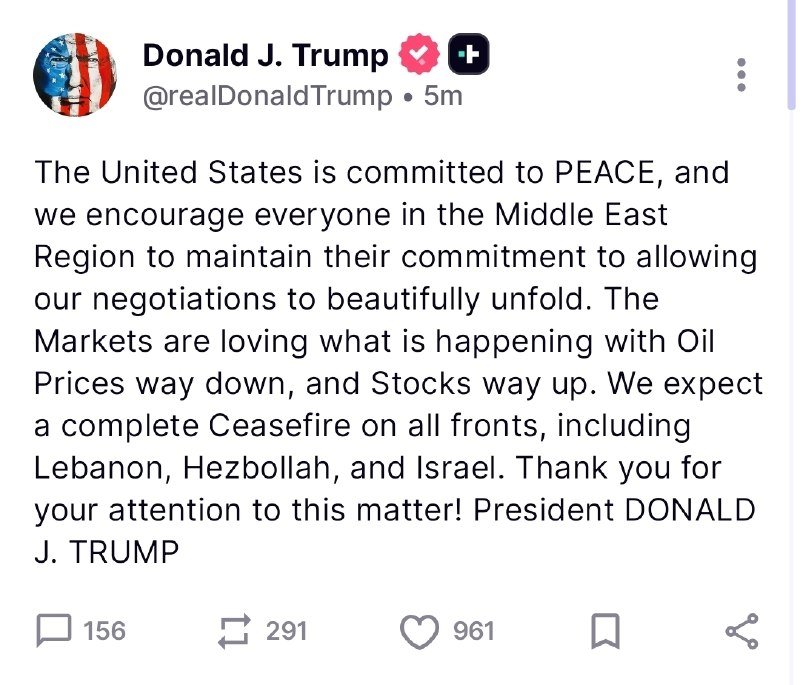
That statement did not land in a vacuum. Two hours earlier, at 07:00 UTC, the office of the Israeli Minister of War — the rebranded defence portfolio — confirmed that Prime Minister Benjamin Netanyahu had told President Donald Trump that Israel would not withdraw from Lebanon. At 07:02 UTC, the same minister warned that any Iranian attack on Israel triggered by the Lebanon operations would be met with the full force of the Israeli military. Three messages, two ministers, one direction of travel. The agreement that American negotiators have spent months stitching together is, in the language of the Israeli cabinet, the wrong agreement, and Israel reserves the right to keep fighting anyway.
The political reading is straightforward, and more interesting than the diplomatic one. Smotrich leads Religious Zionism, a settler-aligned party whose handful of seats give Netanyahu the parliamentary margin he needs to govern. The finance ministry is, for Smotrich, a platform, not a portfolio. When he says the Iranian deal is bad for the free world, he is signalling to his base, to the settler movement and to the right flank of Likud that the coalition's defining mission — preventing a nuclear-armed Iran and, where possible, toppling the clerical order — is non-negotiable. A deal that freezes the nuclear file in exchange for sanctions relief trades that mission for a piece of paper.
Read against the Lebanon line, the picture tightens. Netanyahu has reportedly told the White House that Israeli forces stay in southern Lebanon. The Iran file and the Lebanon file are, in the Israeli security lexicon, the same file: a northern front calibrated to degrade Hezbollah, drain Iranian resources, and keep the pressure on Tehran while diplomacy runs in the background. If the diplomatic track produces an arrangement that lifts pressure, the military track becomes the only instrument the hard right will accept. Smotrich is naming, in public, what Netanyahu is doing in practice.
The counter-narrative is also worth taking seriously. There is a respectable case that the American-Iranian understanding, whatever its exact terms, extends the interval before Iran can field a nuclear weapon, opens channels that did not exist a year ago, and creates the conditions under which Israeli and American intelligence can continue running sabotage and assassination operations in parallel. Smotrich's critics, including the bulk of the Israeli defence and intelligence establishment, would argue out of frame that the deal makes Israel safer precisely by making some of Smotrich's maximalism unnecessary. That case is not naive; it is the operating assumption of the alliance Netanyahu has spent his career cultivating.
What makes this moment unstable is the gap between the two readings. The Israeli prime minister cannot publicly disown his finance minister without risking the coalition. He cannot endorse him without telling the United States, on the record and in front of the world, that Israel intends to keep working against the very deal Washington is trying to sell. The default position — angry silence, ministers freelancing, anodyne reaffirmations of the US-Israel relationship — is becoming harder to maintain. Each time Smotrich or the defence minister speaks in maximalist terms, the diplomatic space the American team is trying to construct shrinks by a measurable amount.
The structural pattern is older than this government. Coalition politics in Israel have repeatedly produced a situation in which the governing party's most reliable partner is also the one most willing to torpedo its signature foreign-policy initiative. The Oslo years, the Iran-deal years, every Gaza round — the same geometry reappears. What is unusual in June 2026 is the speed. Within a single news cycle, the finance minister declared the agreement hostile, the defence minister warned of full-force retaliation for any Iranian response to operations in Lebanon, and the prime minister's office confirmed that Israel will not be withdrawing from Lebanese territory. Three separate Israeli voices, three separate statements, one direction.
The stakes are concrete. If the American-Iranian track holds, Iran retains its civilian nuclear programme under heavier inspection, sanctions begin to ease, and the regional financial architecture starts to shift; Iranian oil reaches more markets, the rial stabilises, and Tehran gains a wider margin to fund Hezbollah, the Houthis and the Iraqi Shia militias. If the track collapses — and a single Hezbollah rocket, a single Iranian proxy strike, a single Smotrich provocation can collapse it — the alternative is not a return to the status quo. It is escalation across the northern front, an Israeli strike on Iranian nuclear and energy infrastructure, and a regional war that neither Washington nor any European capital has prepared for.
The honest uncertainty here is about American leverage. The available reporting describes a Netanyahu who tells Trump one thing in private and tolerates ministers who say the opposite in public. Whether that posture reflects genuine policy divergence inside the Israeli system, or a deliberate strategy of keeping Washington off-balance so that maximalist options stay open, the public record does not resolve. What the record does show is that the coalition of 2026 is structured to make the answer to that question more dangerous, not less.
This publication frames the Iran file through coalition arithmetic, not through the rhetoric of any single minister. The diplomatic substance of the American-Iranian understanding remains undisclosed; the politics of how Israel responds to it are now on the front page.
Wire provenance
This editorial synthesis draws on the following public wire/social posts:
- https://t.me/ClashReport
- https://t.me/alalamarabic
- https://t.me/alalamarabic
- https://t.me/alalamarabic
Follow the event.
These dated source records provide context. They do not retrospectively verify this archive article.
Separate what the nuclear watchdog reported from what it could not determine after the June 2025 strikes.