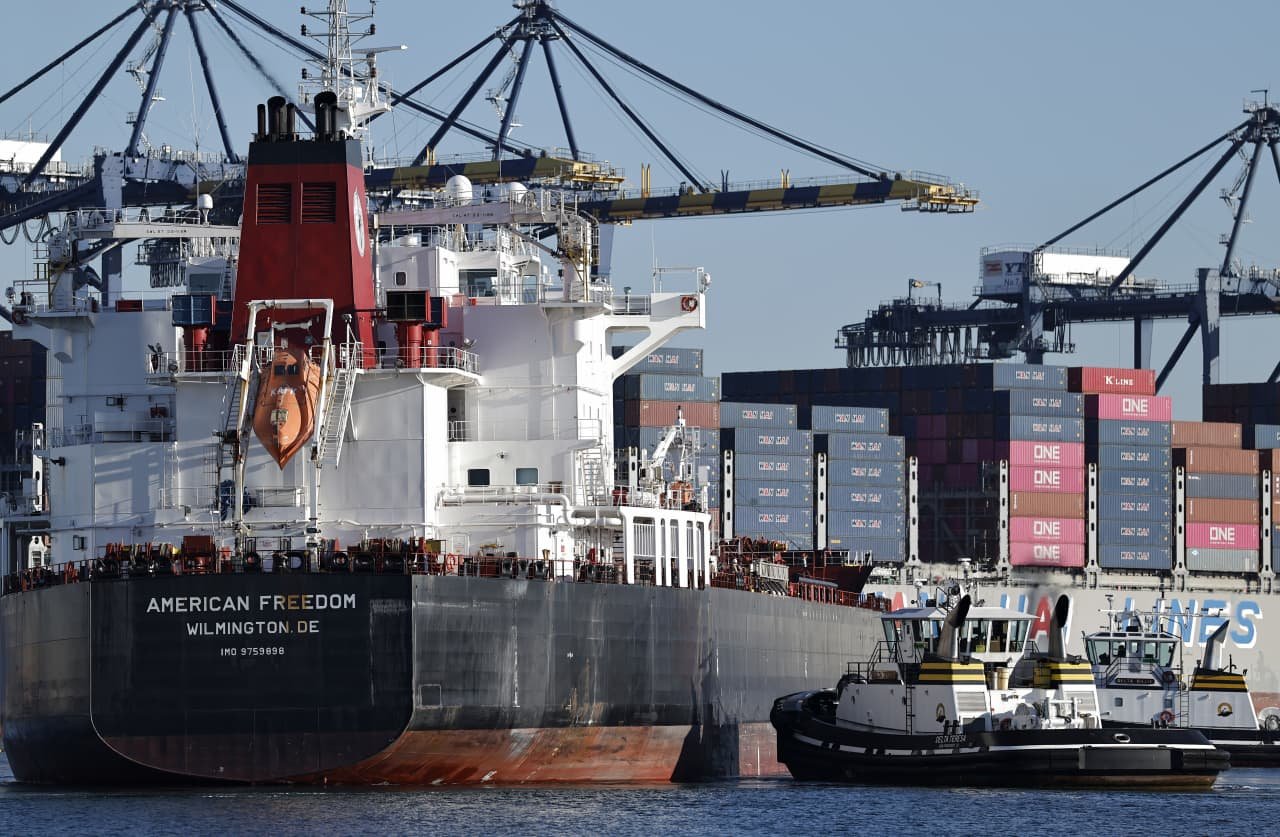
Strait of Hormuz mine clearance may stretch for weeks, leaving oil markets exposed through summer
Mine-sweeping operations in the Strait of Hormuz could take weeks, holding up tens of millions of barrels even as a US-Iran deal takes shape and traders price in a partial reopening.

The Strait of Hormuz is not, as yet, open for business. On 15 June 2026, Israeli daily The Jerusalem Post reported that mine-clearing operations in the waterway could take weeks, holding up tens of millions of barrels of oil and leaving Gulf supply bottlenecked even as broader diplomatic machinery starts to move.
That warning lands on the same morning that Nikkei Asia, citing commodity analysts, told readers to expect energy prices to remain elevated for "a few months, even a year" — higher than they were in February, before the United States and Israel struck Iran. The combination is awkward for everyone who had begun pricing in a quick post-conflict normalisation. It is also useful: it clarifies the difference between a deal on paper and a deal on the water.
A chokepoint on a slow clock
The Strait of Hormuz handles a share of seaborne oil that, on a bad day, the global economy cannot replace. The Jerusalem Post's reporting, dated 15 June 2026 at 15:30 UTC, frames the bottleneck in concrete physical terms: a single mine, in the wrong patch of water, can suspend commercial transit until it is positively identified and neutralised. Mine countermeasures are not a satellite problem and not a diplomacy problem. They are a ship-and-diver problem, conducted at low speed in narrow waters under continued tension.
The implication is that even an agreed political settlement between Washington and Tehran leaves a physical tail. Naval planners, port authorities, insurers and tanker captains do not move on communiqués. They move on surveyed channels, declassified risk corridors, and revised war-risk premia. Weeks of clearance, on the timeline the Israeli outlet describes, is short enough to feel manageable and long enough to spill into the next quarterly refining cycle.
The deal that isn't quite a deal
The Nikkei Asia wire, published 04:01 UTC on 15 June 2026, sketches the macro picture. Commodity prices, the paper reports, are expected to stay higher than their pre-strike February baseline for months, possibly a year. That is not a worst-case scenario in the style of the 1970s; it is a measured, analyst-grade forecast that the war premium embedded in crude and products will take time to bleed out, even if a US-Iran agreement is reached and held.
Three forces are doing the work. First, the physical bottleneck in the Strait keeps a risk premium attached to every barrel that does move. Second, refining capacity along the Gulf was disrupted in the February strikes, and restarting it to nameplate throughput is not instantaneous. Third, the insurance and credit layers around Gulf shipping — war-risk premia, letters of credit, refinancing of vessel charters — reprice on a slower cycle than the underlying conflict.
The counter-narrative is also worth naming. Traders with a constructive read argue that a credible US-Iran deal would cap the long end of the curve, and that futures already discount a partial reopening. That view has weight, but it is a view about expectations, not about tonnage. The mine problem is a tonnage problem.
Why the structure matters
The cleanest way to read this is in terms of who holds the time preference. A government signing a deal in a capital is operating on a political clock — weeks to months, the span of a news cycle and an election calendar. A tanker operator deciding whether to transit a mined strait is operating on a different clock altogether, set by hydrography, under-keel clearance, and the willingness of an underwriter to write a hull policy at a price the charterer can stomach.
The gap between those two clocks is where the actual price of the war is being paid. It is also where the diplomatic achievement of any US-Iran settlement will be tested. A deal that the cable-news desk can call a "breakthrough" may look, from the bridge of a VLCC idling off Fujairah, like a piece of paper. Conversely, a deal that initially reads as modest can do real work at the margin if it shifts insurance premia and frees up the surveyed channels — and clearing those channels, on the timeline Jerusalem Post describes, is the binding constraint.
The structural pattern is familiar from previous chokepoint shocks. Geopolitical risk transmits to commodity prices not through the announcement of a resolution but through the slow, physical restoration of normal logistics. The 1990-91 Gulf war produced a similar gap, and the 2019 attack on Saudi Aramco's Abqaiq facility produced a smaller, faster version of the same dynamic: a discrete event, a fast paper response from futures markets, and a slower real-world response from refineries, shippers, and insurers.
Stakes through the summer
The immediate stakes sit with three groups. Asian importers — China, India, Japan, South Korea — source the bulk of Gulf crude and will absorb the longest tail of higher prices. European buyers, already digesting adjustments to Russian flows, face a thinner margin for error if a Hormuz disruption compounds existing refining tightness. US shale producers, in turn, get a windfall in the near term that complicates the political economy of any subsequent domestic-price intervention.
For Tehran, the slow clearance is a residual lever. Even after a deal is signed, the timeline of mine-sweeping gives Iran a degree of influence over the pace at which Gulf exports normalise. For Washington and its Gulf partners, the same timeline is a logistical bill that has to be paid in ships, divers, and political patience. For Israel, whose outlets have been the most explicit about the weeks-long clearance window, the public framing is itself a strategic signal: it tells markets and adversaries that the post-strike period is not a return to baseline.
The honest summary is that no source currently in circulation tells us the precise number of mines laid, the exact number of vessels queued, or the day the first surveyed channel will reopen. What the available reporting does say is that the gap between diplomatic progress and physical reopening is wider than the headline-driven reading of the US-Iran track would suggest, and that energy traders are right to keep the war premium in their curves.
Desk note: The two wires informing this piece — Nikkei Asia on the elevated price path and The Jerusalem Post on the mine-clearance timeline — frame the same event from opposite ends of the optics chain. Monexus has read them together because the binding constraint on oil prices in mid-June 2026 is not the text of a deal but the surveyed width of a waterway.
Wire provenance
This editorial synthesis draws on the following public wire/social posts:
- https://t.me/NikkeiAsia
- https://t.me/nikkeiasia
- https://t.me/The_Jerusalem_Post