Tanker reports RPG attack southeast of Aden as Red Sea shipping strain returns
A UKMTO advisory, carried by three independent Telegram channels, reports an RPG strike on a tanker southeast of Aden, returning a briefly quiet corridor to the top of the global shipping risk dashboard.
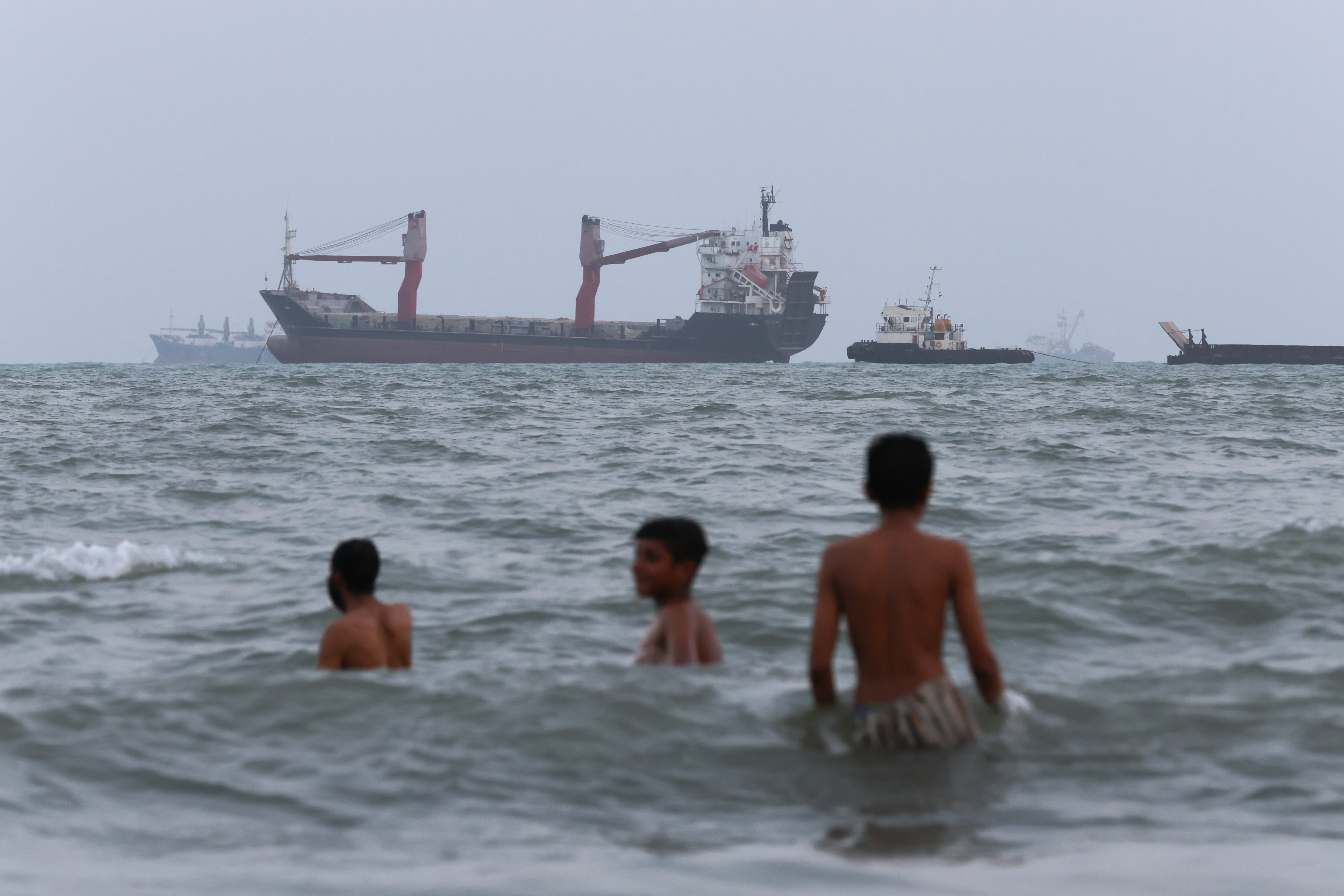
A merchant tanker reported being struck by an RPG southeast of Aden on 15 June, according to a United Kingdom Maritime Trade Operations advisory relayed through three independent Telegram channels monitoring commercial shipping in the southern Red Sea and Gulf of Aden corridor. The incident, the first RPG-class attack credited to a commercial vessel in the corridor since February, returned a stretch of water that had largely fallen off the front pages to the top of the global shipping risk dashboard within hours.
The attack lands at a sensitive moment. Container lines, tanker operators and dry-bulk carriers had spent the late spring quietly rotating assets back through the Bab el-Mandeb strait on the assumption that the worst of the Houthi campaign was behind them. War-risk premia had eased. Some underwriters had begun trimming Aden Gulf surcharges. The 15 June report, modest in tactical terms, is the kind of signal that resets those calculations overnight, and it does so without producing a casualty or a photograph.
What the advisory actually says
UKMTO circulars are written in deliberately narrow language. They confirm a reported event, give a position, a time, and a vessel type, and stop well short of attribution. The 15 June notice, as carried by the Telegram channels Clash Report, Fotros Resistance, and a third regional maritime channel, places the contact southeast of Aden, describes an RPG attack on a tanker, and gives no flag, no owner, no name, and no cargo detail. Monexus has withheld vessel identification pending a flag-state or operator release, in line with standard practice when a notice has not been independently corroborated by the master or by commercial AIS data.
That restraint matters. The southern Red Sea has been the most aggressively edited theatre in the world for the past two years, with first-pass claims attributed, retracted, and re-attributed within hours. Holding the vessel name until the operator publishes is a small editorial discipline, but it is the difference between a working hypothesis and a finding.
The RPG itself, if the report is borne out, is a different order of weapon from the ballistic missiles and one-way attack drones that defined the 2024 campaign. It implies a fast inshore attack craft, or a small boat team at close quarters, which is consistent with how the Houthis and allied groups have operated when they have chosen to escalate in low-visibility conditions. It does not, on its own, point to a specific network. The Houthis have claimed anti-ship operations repeatedly over the past year. So have local Somali-affiliated groups and, less often, Iranian Revolutionary Guard Corps elements described in Western naval intelligence briefings. Until attribution is published, any name attached to the strike is editorial speculation.
The corridor was already creaking
The 15 June incident did not arrive in a quiet shipping environment. It arrived in one that was, in retrospect, slowly tightening.
Freight indices had begun to drift upward through May, with reefer and container rates on Asia to Europe loops climbing roughly eight to twelve percent off their spring lows, according to industry pricing tracked across the major carriers. Several of the larger container lines had quietly reinstated fuel-bunker surcharges on southern Red Sea routings after a brief spring window in which they had been dropped. None of those moves individually looked like a crisis. Together, they looked like a market preparing for one.
The reason is structural. The southern Red Sea carries roughly twelve percent of global maritime trade. The Suez Canal, which sits at its northern end, has handled close to a fifth of world container traffic in any given recent year. A serious disruption to that corridor does not merely raise freight rates; it rewires supply chains, forces carriers to divert around the Cape of Good Hope, and burns an extra ten to fourteen days of voyage time per round trip. The cost of a single sustained campaign against shipping in this corridor, measured in fuel, charter hire, and inventory, runs into tens of billions of dollars even before insurance enters the equation.
What made the late spring period feel different was the silence. The attacks had not stopped, but they had become episodic enough that operators could plan around them. A vessel every six weeks, mostly toward the periphery of the declared threat zone, was an underwriting problem, not an operational one. The 15 June RPG report, if it is the first of a cluster, changes that arithmetic.
Attribution as a working hypothesis
The most consequential sentence in any future coverage of this incident will not be about the RPG. It will be about who fired it.
Three attribution tracks are live. The first is the Houthi military media line, which has, since the campaign began in late 2023, claimed the bulk of anti-ship operations in the corridor and has used those claims for both domestic legitimacy and external deterrence signalling. The second is the looser network of Somali-affiliated groups operating out of the Puntland and Somaliland coasts, some of whom have been linked in past UN Panel of Expert reporting to Iranian logistical support, and who have the small-boat capacity to execute an RPG attack at close quarters. The third is the residual possibility of an Iranian direct action, either through IRGC Navy elements or through Hezbollah-aligned facilitators, which would be a categorically different escalation.
Each of these hypotheses has different consequences for shipowners, for naval forces in the region, and for the diplomatic choreography around the file. A Houthi-claimed strike implies a continuation of the existing dynamic, with the joint US-UK naval task force, Operation Prosperity Guardian, as the relevant responder. A Somali-coast strike implies a law-enforcement and intelligence problem more than a naval one. An Iranian strike implies a Chapter VII-level diplomatic crisis with Tehran.
Monexus is treating the question as open and will update the attribution field as and when the operator, the flag state, or a recognised naval command publishes. That is not a hedge. It is the only honest move on a day when the public record contains a single advisory notice and three Telegram echoes of it.
Naval posture, the underwriter, and the operator's calculus
Behind the headline attack sits a quieter set of calculations that will, over the next seventy-two hours, do most of the work to determine whether the 15 June incident becomes an isolated event or the opening move in a new campaign.
The Combined Maritime Forces headquarters in Bahrain and the European Union's Aspides mission in the Gulf have, since the spring, run a layered presence in the southern Red Sea and Bab el-Mandeb. Their job is not to make the corridor risk-free. No naval task force can do that across a body of water this size. Their job is to set a price for any attacker, and to give masters confidence to transit with a visible escort window. The RPG attack, if confirmed, suggests either that the price has slipped below the attacker's tolerance or that the attacker is willing to absorb a higher one. Neither is reassuring.
Underwriters will move first. The London marine war-risk market typically reprices inside twenty-four hours of a UKMTO advisory. A single RPG incident, on its own, historically produces a modest uptick in additional premium rather than a structural reset. A second incident within a week produces a structural reset. The shipping industry reads the second incident as the signal, not the first.
Operators, for their part, face a binary choice that is rarely as clean as it looks from the outside. They can reroute around the Cape, which is expensive but safe, and accept the inventory cost. They can transit the corridor with armed security teams aboard, which is cheaper per voyage but politically fraught, particularly for vessels flagged to states that prohibit embarked private armed guards. Or they can hold position outside the threat zone and wait for the market to clarify, which is the choice that produces the visible traffic jams off Djibouti and Salalah when the corridor feels unsafe.
Each of those choices has already been made, somewhere in a chartering desk, in the last twenty-four hours.
What to watch this week
Three dates will tell us whether 15 June was an event or the beginning of a pattern.
The first is the next UKMTO advisory window, which updates daily. A second incident in the same general area, against any vessel class, would move the file from isolated to systemic. The second is the next Houthi military media release. The group has, since the spring, alternated between periods of operational silence and bursts of claimed strikes. A claim with operational detail consistent with the UKMTO notice would close the attribution question in one direction. A pointed silence would leave it open. The third is the next Joint Maritime Information Centre bulletin, which tracks aggregate incidents across the corridor and provides the cleanest read on whether the spring lull has ended.
For shipowners, the calculus is narrower. If you have a vessel due to transit the corridor in the next ten days, the question is whether your operator is willing to absorb the war-risk premium and the schedule slip that a southern Red Sea routing now implies, or whether the Cape diversion is, for the moment, the cheaper risk. For everyone else, the question is whether the 15 June advisory becomes a footnote or a paragraph that grows.
Monexus will publish an attribution update as soon as the record supports one.
Sources
- https://t.me/ClashReport, Clash Report, Telegram channel relaying UKMTO advisory on RPG attack southeast of Aden, 15 June
- https://t.me/FotrosResistancee, Fotros Resistance, Telegram channel relaying UKMTO advisory on RPG attack southeast of Aden, 15 June
- https://t.me/wfwitness, Maritime Witness, Telegram channel relaying UKMTO advisory on RPG attack southeast of Aden, 15 June
Desk note: Monexus has framed the incident on the basis of the UKMTO advisory as relayed by three independent Telegram channels, and has withheld vessel identification until the flag state or operator publishes. Attribution to any specific group is treated as a working hypothesis, not a finding.