Tehran's "distrust doctrine" and Netanyahu's open-ended war: the Middle East reads the Trump deal
On a single Sunday, the Quds Force commander, Iran's foreign minister, and the Israeli prime minister all sketched incompatible visions of the region's future — and the Trump deal is the only document none of them signed.
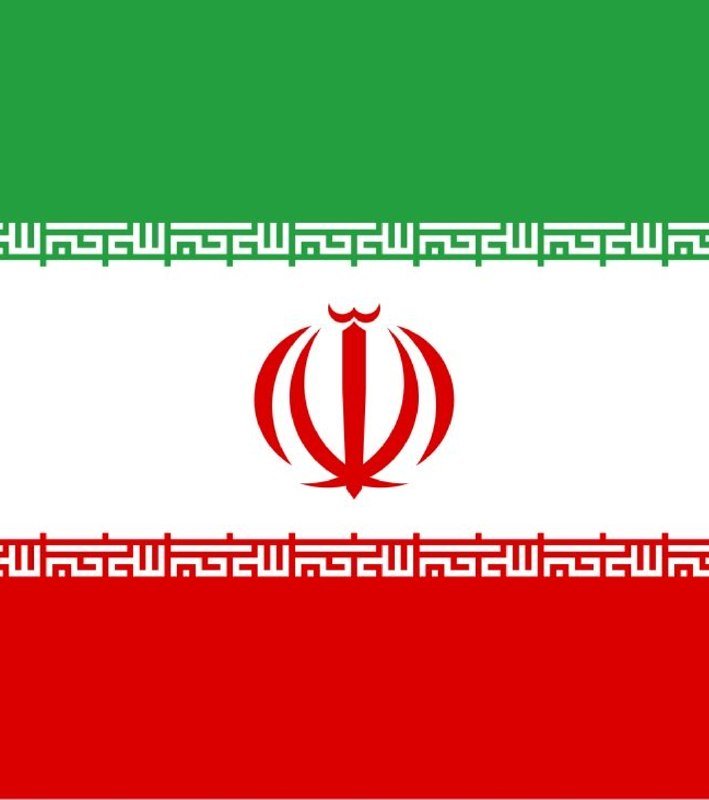
On Sunday 15 June 2026, three officials from three different capitals — none of them sitting at the same table — laid out three incompatible visions of the Middle East's near future, and each was explicit about refusing to subordinate his to the others. Iran's Quds Force commander Esmail Qa'ani framed the past year as "two imposed wars and one imposed coup." Iran's foreign minister Abbas Araghchi told a domestic audience that Tehran's negotiating posture with Washington rests on "distrust — based on past acts of bad faith." Israeli prime minister Benjamin Netanyahu, responding to the Trump-brokered Iran framework, announced that Israel would remain in Lebanon, Syria, and Gaza "without any time limit." The same 24 hours also produced a US B-52 loss, an incident the Pentagon will be pressed to explain on the record.
The pattern is the story. The Trump-era Iran deal, whatever its final shape, is being read in Tehran as a deal to be distrusted, in Jerusalem as a deal to be ignored, and in Washington as a deal whose principal signatories expect compliance from parties who have already said they will not comply. The deal is real. The architecture around it is hollow.
What Qa'ani actually said
According to a statement circulated on 15 June 2026 by the DDGeopolitics channel, Qa'ani described "two imposed wars and one imposed coup" that "imposed a difficult period on our country and region in the past year," and added that "the resistance front had no need to speak — resistance [spoke for itself]." The reference is to a year in which Tehran's regional deterrence has been visibly attrited: the loss of the Assad-land bridge through Syria, the war in Gaza, and the confrontation with Israel in Lebanon. The "imposed coup" language is a pointed read of the fall of Bashar al-Assad in late 2024 — a sequence Tehran has refused to characterise as anything other than an externally engineered regime change, and which severed the overland corridor that ran Iranian weapons and Hezbollah units into the Levant.
The framing matters because it tells Iranian-aligned audiences that the diplomatic opening with Washington is occurring from a position of weakness — and that, in Qa'ani's telling, the weakness is the result of someone else's actions, not Iran's. That is a domestic-consumption argument dressed in regional rhetoric.
Araghchi's "distrust doctrine"
The same day, foreign minister Araghchi articulated what is, in effect, a distrust doctrine for the ongoing US track. "We have a history of broken agreements," he said, in remarks also carried by DDGeopolitics. "All of this exists in our minds. We base our negotiations on distrust — based on past acts of bad faith." It is rare for a sitting foreign minister to put the word "distrust" at the centre of his country's negotiating theory of case. The JCPOA experience — the 2015 nuclear deal from which the United States withdrew unilaterally in 2018, and to which Iran never returned — is the unspoken referent on every line.
The practical effect is that any document Tehran signs in 2026 will be sold to the Iranian public as provisional, reversible, and contingent on Washington's good behaviour. That is not a posture from which a comprehensive settlement is easy. It is, however, a posture from which Iran's leadership believes it can survive politically if the deal collapses — which is the more important calculation in Tehran.
Netanyahu's open-ended war
Netanyahu's response to the Trump framework was the most consequential of the three interventions, because it commits the region's most militarily active state to an indefinite operational posture. "Israel will stay in Lebanon, Syria, and Gaza," the prime minister's office said in a statement summarised on 15 June by DDGeopolitics, "without any time limit." That is not a negotiating position; it is a declaration of permanent forward deployment in three sovereign states, two of which have central governments with which Israel does not have a peace treaty.
The Israeli security argument is straightforward: the threat picture from Iranian proxies and from reconfigured non-state actors in Syria and Gaza has not, in Jerusalem's reading, been sufficiently diminished for a withdrawal timetable to be safe. That is a legitimate operational concern, and it is not one this publication is in a position to dismiss. The political consequence, however, is that a US-brokered deal with Tehran is now, on the Israeli side, being treated as compatible with — not constrained by — an open-ended Israeli presence across Israel's northern and southern theatres. That is a contradiction the Trump administration has not yet been forced to resolve in public.
The B-52 and the credibility tax
The day's other piece of hard news was the loss of a US Air Force B-52, which crashed earlier on 15 June, according to a DDGeopolitics wire that carried the official line that "there is nothing left of the B-52." The platform matters: the B-52 is a strategic bomber that has been a visible part of the US posture against Iran for two decades. The cause is not yet established publicly. Whatever the eventual finding — mechanical failure, operational error, something else — the incident will compound a perception problem the administration already has in the Gulf: that the visible instruments of US deterrence are, in 2026, less invulnerable than they have been presented as being. That is a credibility tax the deal's boosters can ill afford.
What remains uncertain
Several pieces of the picture are not yet confirmed by primary sourcing. The full text of the Trump framework on Iran's nuclear programme has not been reproduced in the materials available to this publication. The official US readout of the B-52 incident has not been issued as of the time of writing. Netanyahu's "without any time limit" formulation has been carried by aggregators; the original Hebrew-language statement and the official cabinet decision it implies should be located before being treated as formal policy. The Iranian statements are being read off channel translations and are not yet on the foreign ministry's own published-record platform. None of this means the picture is wrong — the channel reporting has been consistent through the day — but a careful reader should hold each of the three positions as a stated posture, not yet a verified one.
The honest read of 15 June 2026 is that the Middle East is being governed, for the moment, by three speeches made from three capitals, none of which refer to the same facts. The deal that was supposed to coordinate them is, at best, a framework. The region around it is being held in place by force, by distrust, and by an airframe that, today, did not survive the morning.
Wire provenance
This editorial synthesis draws on the following public wire/social posts:
- https://t.me/DDGeopolitics
- https://t.me/DDGeopolitics
- https://t.me/DDGeopolitics
- https://t.me/DDGeopolitics
Follow the event.
These dated source records provide context. They do not retrospectively verify this archive article.
Separate what the nuclear watchdog reported from what it could not determine after the June 2025 strikes.