The $385B carveout: How a weekend of tariff reversals exposed the industrial-policy contradictions of the reshoring era
A Friday-night customs exemption, a Sunday presidential reversal, and a $385 billion carveout that handed Apple and Nvidia an implicit bailout — all in the same weekend. The episode lays bare what industrial policy looks like when it refuses to call itself industrial policy.
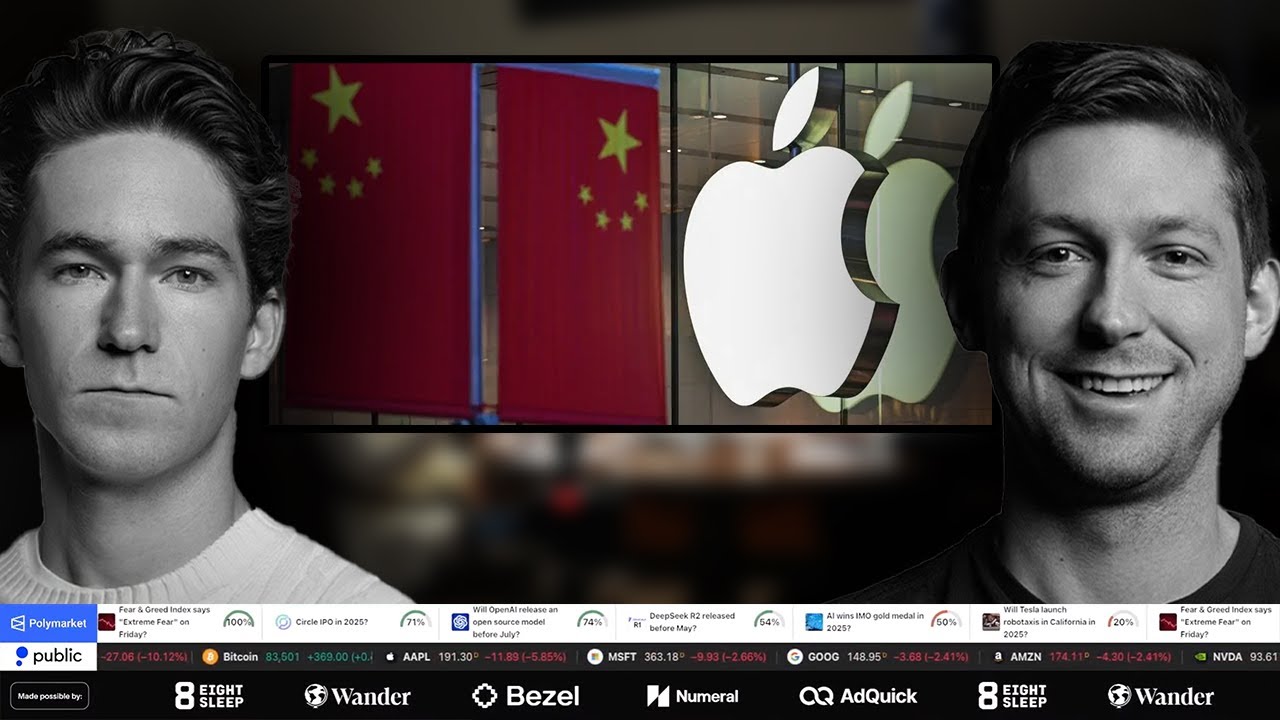
It began, as these things often do in 2026, with a Friday-night email. On 13 June 2026, US Customs and Border Protection quietly extended tariff exemptions to a wide band of electronics imports, covering roughly $385 billion in 2024 trade flows — including about $100 billion in Chinese-origin goods that had previously been exposed to punitive duties. By Sunday evening, the President was on television disowning his own administration's exemption, claiming the products had merely "moved to a different tariff bucket." By Monday morning, Apple shares were up 13% on the week and Nvidia's stock had shrugged off the chaos with a relatively minor 2% monthly decline. The market had read the policy, even if the policy could not read itself.
What the episode actually exposed is not a glitch in the tariff regime but its underlying logic. When the US government decides which industry you can have and which you cannot, as one tech-industry observer put it on 15 June, you have entered what that observer called "the socialism phase of Trump." The Wall Street Journal's editorial board reached the same conclusion from the opposite direction: politicians, not success in the marketplace, were now picking business winners and losers. Both critiques pointed at the same object — a $385 billion carveout that, in effect, socialised the cost of Apple's and Nvidia's supply-chain dependence on China while leaving the profits private.
The exemptions are large enough to matter. Nvidia has commissioned more than 1 million square feet of US manufacturing space and, according to Bank of America research, plans to spend up to $500 billion on domestic AI infrastructure over four years, with Blackwell chips coming out of Arizona and assembly lines in motion at Foxconn's Houston facility and Wistron's Dallas operation. Yet iPhones are still, in Tim Cook's own 2015 formulation, a product that draws on "every tool and die maker in the United States" — which could fit in a single room — while in China the supply base requires "multiple football fields." That gap has not closed in a decade. It is closing on a four-year capex runway, and only because the government is backfilling the difference with selective tariff relief.
The reshoring theatre problem
Reshoring, as it is currently practiced, is a form of industrial policy that refuses to call itself industrial policy. The Trump administration's preferred vocabulary is "reciprocity" and "fairness"; the practical effect is a system of bucket-by-bucket exemptions, with the buckets drawn around whatever supply chain the White House has most recently been lobbied to protect. The Wall Street Journal, paraphrased on TBPN's 15 June broadcast, captured the contradiction with characteristic dryness: a government that selects which firms are exposed to which duties is "not very free market oriented."
The beneficiary list is small. Apple's share of global smartphone profits sits above 80%, even though its share of unit shipments is below 20%, and its ecosystem runs through more than 1,000 Chinese suppliers and roughly 1 million migrant workers who converge on iPhone City for the holiday production push. Nvidia's position is structurally similar: it designs in California and Arizona, but the lithography, advanced packaging, and a meaningful slice of the upstream chemistry remain in East Asia. Without the carveout, analysts cited in the 15 June discussion estimated iPhones could retail at $2,400 to $3,500 if fully exposed to the 145% peak tariff rate on Chinese goods. The exemption is, functionally, a transfer from US consumers and competing foreign OEMs to two American firms whose political access is unmatched.
The cleanest articulation of the deeper problem came from the Stratechery-style analysis paraphrased on the same broadcast: manufacturing has shifted from being a point of integration with a product to being a horizontal, scalable services offering. Building the customer-service and process-control capabilities required for that business, the argument runs, would be a "significant cultural change for a US manufacturing base" — citing Intel's well-documented struggle to operate as a contract foundry. The implication is that reshoring will not deliver what it promises until US industry relearns the operational disciplines that offshoring caused it to forget. The tariffs, in the meantime, are a way of buying time without paying for the cultural change.
The fuel that isn't there
The structural bottleneck in the AI buildout, meanwhile, is not chips or capital but the uranium. Nuclear power still supplies about 20% of the US grid and roughly half of all clean energy, and the US has, over four decades, outsourced its enrichment capacity to allies, competitors, and adversaries alike. The latest Founders Fund incubation, General Matter, is explicitly built around that gap. Scott Nolan, the partner leading the investment, spent roughly twelve years inside Founders Fund looking for a nuclear thesis worth incubating; the constant, in his reading, was that every reactor pitch — every small modular reactor, every microreactor, every advanced design — foundered on the same question: where does the fuel come from?
The historical lineage matters. Founders Fund's incubation record includes Palantir, Anduril, and Varda, three companies that did not exist as categories before the fund built them. General Matter is a bet that the same playbook — find the unsexy infrastructure layer the market has ignored, build it at scale, and let the rest of the stack reassemble around it — applies to uranium enrichment. The pitch, as paraphrased on the 15 June broadcast, is that a domestic enrichment company is the missing on-ramp for the entire next generation of SMRs. The risk is that enrichment is also a long-cycle, capital-intensive, politically radioactive business, with a customer base that is concentrated, regulated, and reluctant to sign offtake agreements at prices that justify the build.
The interesting bet is that General Matter is positioning as a fuel company to a generation of SMR startups that all had the same blind spot. The same weekend that exposed the limits of tariff-driven reshoring also saw the launch of a company built on the proposition that the actual constraint on America's energy transition is not demand but inputs. It is a counterpoint to the Apple-Nvidia carveout: where the tariff regime protects the visible brand, General Matter is being built to supply the invisible infrastructure that the brand requires.
The adoption gap
While Washington argues about which industries to subsidise, the AI buildout is happening on a separate ledger entirely. Ara Kuraesian, the economist at Ramp, presented data on 15 June showing that 35.5% of US businesses have adopted AI to produce goods and services — roughly 4.5 times the 8% figure the US Census currently reports. The source of the divergence is methodological: Ramp's number is built on actual contract and corporate-card spend flowing to model providers, not on survey responses. The Census asks companies whether they use AI; Ramp watches the credit-card statements.
The fastest-growing slice of that spend, on the same data set, is the "vibe coding" layer — platforms like Cursor and Lovable that sit on top of the foundation models and let non-engineers build software. Those platforms are growing in the 40% range month-over-month, faster than the model companies themselves. The reading is that the value is migrating from the model layer into the application and tooling layer, the same way cloud value migrated from AWS to the application stacks built on it. For incumbents, that is a warning: the business is moving faster than their sales pipelines can track, and faster than official statistics can measure.
The soft-power dividend
Tyler Cowen, the George Mason University economist and Marginal Revolution blogger, made a related argument on the same broadcast. His framing of AGI is characteristically personal: artificial general intelligence, he said, arrives "this week," defined as the moment AI is smarter than he is. The serious point underneath the line is that the diffusion of US-built AI gives America a structural soft-power advantage over China that is invisible in the tariff debate but is, in his telling, decisive. "Their smartest entities all of a sudden are American," Cowen said, inverting the framing. "How would we feel, you know, if all of our smartest entities were Chinese? We'd be like, whoa, well, that's the position we're in now."
The argument is that the Chinese model ecosystem — including DeepSeek and Manus, both of which are built on top of American foundation models — has structurally converged onto US AI, and that retraining them to think outside the Western paradigm would, as he put it, make them "much stupider." That is a Fukuyama-style end-of-history claim, recast for the AI era: the universalisation of one set of cognitive tools is itself a form of victory. Critics will note that soft-power accounts have a poor record of predicting the next hard-power surprise. But the data point stands: the smartest entities in China are, today, largely American-trained models, and that is a fact the tariff regime cannot unwind.
The stakes
The weekend of 13–15 June 2026 will not be remembered as the moment industrial policy arrived in America. It arrived a long time ago. What it will be remembered for is the moment the contradiction became visible in a single news cycle: a $385 billion carveout for two companies that did not ask for it publicly, a Sunday-night reversal that left the carveout largely intact, and a market that bought the implicit guarantee before the politics caught up. Apple got its tariff holiday. Nvidia got its four-year capex runway. General Matter, the same week, raised on the premise that none of this matters if the fuel is missing. And Ramp's transaction data suggests that the AI economy these policies are nominally aimed at is already operating at 4.5x the speed the official statistics can see.
The policy debate is now a decade behind the buildout. The question for 2026 is not whether industrial policy exists, but who is quietly running it, and on whose behalf.
Wire provenance
This editorial synthesis draws on the following public wire/social posts:
- https://www.youtube.com/watch?v=-8_JJp0J5aU