The trillionaire question nobody is asking
Elon Musk is now, by one count, history's first trillionaire. The number is the wrong argument — the policy vacuum around it is the real story.
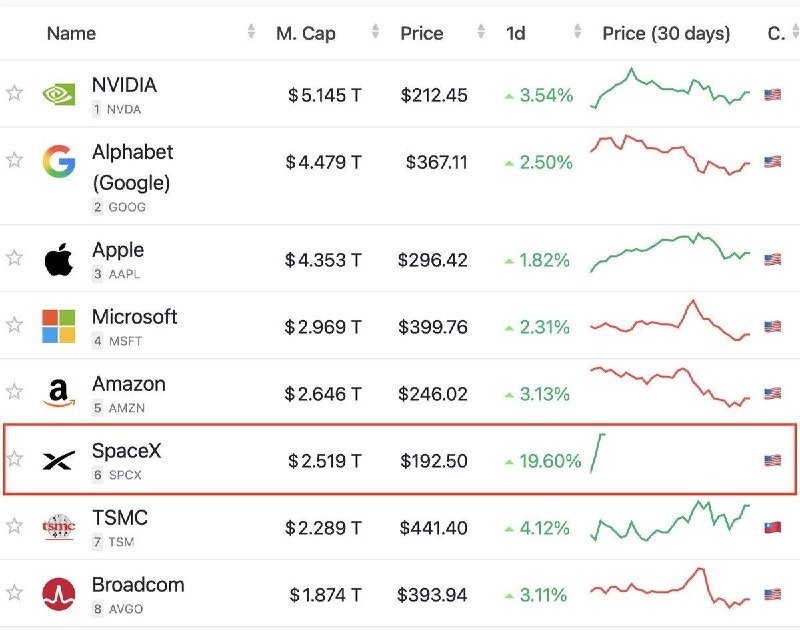
A trillion dollars is, at this point, an abstraction in a country that has stopped trying to tax abstractions. On 15 June 2026, Unusual Whales declared Elon Musk "the first trillionaire, ever," a claim pegged to the SpaceX IPO thesis rather than to realised, liquid wealth [Unusual Whales, 15 June 2026, 02:01 UTC]. The headline landed the way such headlines always do: a moment of social-media theatre, a brief sermon from a politician, a return to normal. That is exactly the wrong response, because the figure is not the story. The story is the policy vacuum around it.
A fortune that is real only on paper can still rewrite the political economy underneath the paper. Treating it as a curiosity is a choice — and a costly one.
The framing is rigged
Public debate has settled into a comfortable pattern. Either Musk's net worth is "fake" because it sits in untraded shares, or it is "fair" because he built the companies. Both moves dodge the actual question: what does concentrated, paper-anchored wealth do to the political system that is supposed to bound it? The current US approach — treating unrealised gains as effectively invisible until they are monetised through a SpaceX IPO or a Tesla secondary — was not designed. It was inherited from a 1913 income-tax architecture that has never been rewritten for an era of trillion-dollar private companies. Pretending the architecture still works, or that a market correction will resolve the problem, is the same shrug in a different costume.
The world has done this before, badly
A credible counter-read is that the trillion-dollar moment is just an artefact of a frothy capital cycle and will revert. Private-wealth historians have seen this movie: the gilded-age robber barons, the petro-billionaires of the 1970s, the dot-com peak in 2000. Each time, concentration looked permanent and then mean-reverted. That is genuinely plausible. But the relevant comparison is not whether Musk stays a trillionaire in 2032. It is whether the political system extracts a public return on the privilege of letting that wealth accumulate untaxed in the meantime. The historical answer is mixed at best. The first Gilded Age produced a populist backlash and a federal income tax. The petro era produced sovereign-wealth funds in every receiving state. The dot-com peak produced Sarbanes-Oxley and a brief bout of regulatory seriousness, much of which was dismantled within a decade. None of these episodes was a clean win for the public balance sheet.
The structural frame, in plain language
The deeper pattern here is the steady transfer of risk from the balance sheets of the very wealthy to the balance sheets of the state. A SpaceX IPO at a trillion-dollar implied valuation requires public-market liquidity to underwrite it; the public markets are backstopped by central banks that have shown no appetite to shrink their footprint; and the regulatory perimeter around that valuation — launch licensing, satellite-spectrum allocation, federal contracts — is a public asset being deployed at private discretion. In other words, the trillion-dollar number is not just a measure of private success. It is a measure of how much public infrastructure has been quietly re-priced as private upside. That is a pattern, not a personality trait, and the pattern predates any single CEO.
The votes that should be paying attention
The proximate political vehicle is obvious: a US wealth tax, an unrealised-gains mark-to-market regime, or a more aggressive application of the existing estate-and-gift architecture. None of those is a fantasy; versions of all three have been drafted by serious legislators and serious economists. The obstacle is not that the policy is unworkable. It is that the constituency that would vote for it is being told, in real time, that the relevant number is fake — and is largely accepting the framing. A June 2026 referendum in a US state, reported by The Epoch Times, saw a right-wing-backed measure lose roughly 55 percent to 45 percent [Epoch Times, 15 June 2026, 12:03 UTC]. The specifics of that contest are local, but the underlying dynamic is not: populist ballot measures on tax and corporate power are losing the messaging war before the policy debate begins. That should worry anyone who thinks the trillion-dollar moment will resolve itself through markets alone.
What we do not know — and what we should
Two things remain genuinely uncertain. First, the SpaceX IPO that anchors the trillion-dollar claim is not yet priced by the public market; the number is an inference from secondary transactions and analyst models, not a settled valuation. Second, the policy response is not just a US question. The European Union, the Gulf sovereigns, and a growing list of middle powers are all writing their own rules on how to tax and regulate the kind of private space and AI infrastructure that produces these concentrations. The competition between those regulatory models is, in the long run, more consequential than any single IPO prospectus.
The reasonable position is not to moralise about a balance sheet. It is to notice that the rules governing how that balance sheet was assembled, defended and eventually monetised were written for an economy that no longer exists — and that the people losing the argument are the ones who refuse to rewrite them.
This piece was filed by the Monexus opinion desk. Wire coverage of the milestone and the surrounding policy debate was lighter than the moment warranted; the framing above is editorial.