When the Word 'Grow' Goes Viral: A Brief on Theological Drift, Tony Robbins, and the Quoting Economy
A 15 June 2026 retweet of a Tony Robbins clip is now the unlikely site of a fight over whether the divine changes. The argument is older than the internet — but the algorithm is new.
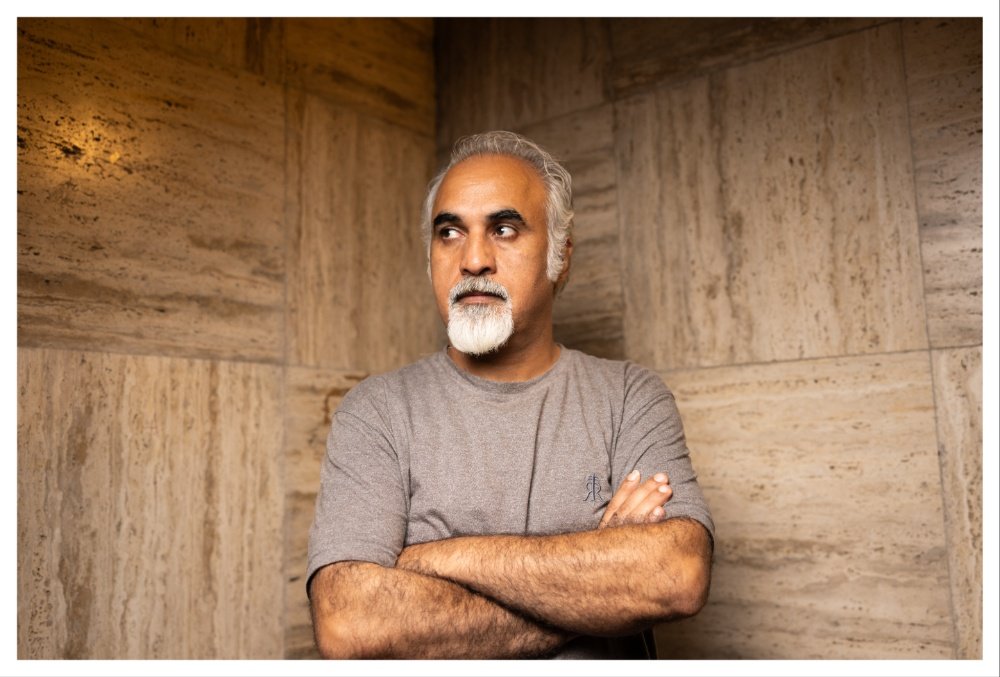
The clip is short, the room is small, and the line that has carried it across the platform is the kind of sentence a person either finds clarifying or immediately contestable. On 15 June 2026, at 19:33 UTC, a user named @newstart_2024 retweeted a Tony Robbins clip with a caption that began, "No. The Lord does not 'Grow.' Society changes, culture changes, politics change…we change…but He does not," followed by the King James rendering of Hebrews 13:8 — "Jesus Christ the same yesterday, and to day, and for ever." Within hours the post had collected the predictable apparatus of a small internet controversy: a clipped religious claim, a longer scripture, a celebrity-adjacent voice, and the social energy of a community accustomed to using scripture as a corrective to public figures. The argument it stages is older than the platform it lives on. The distribution it has gained is not.
What is genuinely interesting is not the proposition — theological conservatives have been making versions of it for at least a century — but the shape of the dispute. A wellness entrepreneur with a global brand is being measured against a doctrinal claim he may not have intended to contradict, and the measurement is being taken in public, in real time, by accounts whose authority is not ecclesiastical but algorithmic. The reporting challenge is to take the proposition seriously enough to characterise it accurately and to take the form of the exchange seriously enough to ask what it tells us about the space in which public religious reasoning now happens.
The clip, the text, and the gap between them
The threaded exchange positions a moment from a Tony Robbins appearance against a scriptural assertion of divine immutability. Hebrews 13:8, in the phrasing quoted, is a Christological statement about constancy across time. The retweet reads that verse as a direct rejoinder to a Robbins formulation — paraphrased in the caption as something close to the idea that the divine "grows" alongside the human. Whether Robbins actually used the word "grow" in that specific sense, or whether the caption summarises a longer riff, is precisely the kind of detail the clip's compression makes hard to verify. The clip circulated as a video thumbnail on third-party mirrors; the surrounding text of the interview is not transcribed in the source material.
That gap matters because the retweet is making a textual claim — this is what the speaker meant — and the only available artefact is a short moving image. The cultural patterns this is built on are familiar: a public figure says something adjacent to theology, a theological community replies with a verse, and the verse does the work of an argument without requiring the commenter to construct one. The dynamic is not new; the velocity is.
Why a wellness speaker, why this verse
Tony Robbins is, by any measure, a strange target for a theological grievance. He is not a pastor, not a priest, not a seminary-trained religious teacher. He is, however, a figure whose audience is religious-adjacent in a particular way: large, self-improvement-oriented, and accustomed to hearing substantive claims about human nature, suffering, and change framed in elevated language. When a speaker in that register says something that sounds theological — even a metaphor for personal development — the religious-readership internet tends to read it as theology, and to hold it to theological standards.
Hebrews 13:8 is the verse that has historically done the most work in Protestant disputes about divine mutability. It is short, quotable, and unambiguous in the King James tradition: Christ does not change. To choose it as a one-line reply is to make a claim about the standards the commenter is applying and to make it efficiently. The retweet's choice of verse is not a casual one; it is the verse a literate conservative Christian reaches for when a public figure is heard to be saying that the divine has a developmental arc.
The counter-reading the comment does not engage
There is a plausible alternative reading of the Robbins framing that the retweet does not address. In some strands of mystical theology, language about the divine "grown into" or "more fully revealed" is read as a description of human apprehension, not of divine change. Process theology, certain kabbalistic traditions, and various strands of Christian mystical writing have all made the move of attributing apparent change in the divine to change in the perceiving subject. The retweet does not engage this move, partly because of the medium — Twitter rewards the verse that can stand alone — and partly because the dominant American conservative-Protestant frame does not generally grant that move standing. The result is a one-sided exchange that looks like a refutation but is, in strict terms, a category argument: the commenter is saying the proposition is theologically impermissible, and the proposition, as represented, is being read without the charitable reading it might also bear.
What this tells us about the quoting economy
The deeper story here is about the quoting economy — the system in which short scriptural units, short video clips, and short captions are matched against one another and rewarded for rhetorical fit rather than for accuracy of representation. The system has obvious strengths: it lowers the barrier to theological literacy, it makes the Bible's most quotable lines available to anyone with a phone, and it lets small communities police large public figures without requiring access to them. It has obvious weaknesses: it strips propositional context, it rewards the most absolute formulations, and it tends to favour the proposition that survives the most compression.
Hebrews 13:8 is, in this sense, almost unfairly well-suited to the format. It is a complete sentence. It has internal rhyme in the King James. It is theologically central. And it makes a flat claim about constancy, which is precisely the kind of claim that holds up in a single line. A more elaborate doctrinal formulation — about divine impassibility, or the relationship between immutability and incarnation, or the distinction between God's essence and God's energies — does not fit the medium and therefore does not get the airtime. The quoting economy is, structurally, conservative in the literal sense: it preserves the formulations that have already proven compressible.
Stakes: who wins, who loses, and over what horizon
The conservative-Protestant social-media constituency that drives exchanges of this kind has, in the past five years, become a recognisable actor in its own right — not just a relay for institutional Christianity but a parallel system in which scripture, celebrity, and platform dynamics are combined into a distinct public voice. That voice is now large enough to set the terms in which a Tony Robbins clip is discussed, and to decide which theological counter-frame receives any air at all. The winner in the short term is the verse: Hebrews 13:8 will be more widely quoted, more deeply internalised, and more confidently deployed as a result of this exchange. The loser, in the short term, is the longer tradition of theological reading that the format cannot accommodate. Over a longer horizon, the more important question is whether the quoting economy is theological reasoning, or whether it has become a substitute for it — one that produces the outward signs of doctrinal vigilance without the internal labour that doctrinal reasoning has historically required. The clip will fade. The question it raises about the medium will not.
What the sources do not resolve
It is worth being plain about what the available record does and does not establish. The clip itself is real; the retweet of it is real; the verse quoted is a real and doctrinally central verse. What the record does not establish is what Tony Robbins actually said in the longer interview, what he meant by it, or whether the framing in the caption accurately summarises his remarks. It does not establish which of the two parties to the exchange is theologically more literate, because the medium of the exchange is not built to surface that information. A reader who wants to make a serious judgment on the underlying theological question will need to look beyond the clip and the retweet — and may find, on doing so, that the proposition the retweet is rebutting is not the proposition a careful reader of Robbins would extract. The format has done its work regardless.
Desk note: Monexus treats the post as a small but legible specimen of how American conservative-Protestant social media conducts its disputes with celebrity-adjacent speakers — a sample, not a verdict.
Wire provenance
This editorial synthesis draws on the following public wire/social posts:
- https://en.wikipedia.org/wiki/Hebrews_13
- https://en.wikipedia.org/wiki/Immutability_of_God