Trump's ceasefire gamble frays as Israel strikes Beirut's Dahiya suburb
An Israeli strike on Beirut's Dahiya suburb on 14 June 2026 has upended a US-brokered arrangement with Iran, with President Trump publicly disavowing the attack and Vice-President Vance scrambling to defend the diplomatic track.
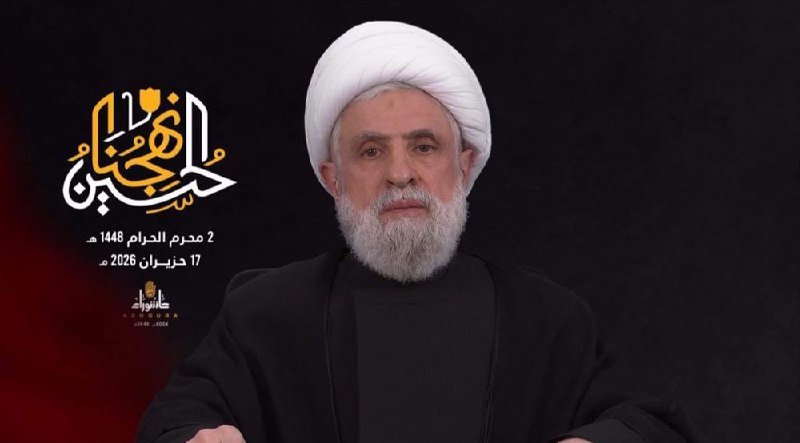
An Israeli airstrike on Beirut's Dahiya suburb on the morning of 14 June 2026 has detonated the most volatile phase yet of the US-brokered arrangement with Iran, exposing how thin the line is between a diplomatic track and a renewed regional war. Within hours, President Donald Trump had publicly broken with the operation, posting on his Truth Social account that "the attack on Beirut this morning should not have happened, especially on a special day when we are so close to a peace agreement," according to Iran's Fars News Agency's English feed, which carried the verbatim text of the post at 00:38 UTC on 15 June. Vice-President JD Vance, in parallel remarks reported by Fox and relayed on the World Feed Witness channel at 23:40 UTC on 14 June, told Americans the Iran deal had "solved the problem" of a "terrorist-supporting Iran pursuing a nuclear weapon," thanked the public for patience with high petrol prices, and said Washington had seen "a lot of evidence" Iran was preparing a major missile strike on Israel following the Beirut raid — before adding that Tehran had ultimately pledged restraint. The two messages, delivered within minutes of each other, sketch the shape of a White House trying to hold a deal together that one of its closest partners has just made harder to sell.
The story this week is not whether diplomacy failed. It is whether the diplomatic track the Trump administration has been selling — a US-Iran understanding that traded nuclear concessions for an end to strikes and a calmer oil market — can survive the day-to-day decisions of an Israeli war cabinet that does not answer to Washington, and an Iranian leadership that has, in the past 18 months, repeatedly shown it will match escalation with escalation. The sources available to Monexus on 15 June 2026 do not, by themselves, settle that question. They do establish that the disagreement is now public, presidential, and days old rather than hours old — and that the gap between Trump's language and Israeli operations on the ground is the operative fact of the moment.
What actually happened on 14 June
The sequence begins with the strike itself. CNN, as relayed by Iran's Tasnim news agency in a thread dated 00:57 UTC on 15 June, reported the Israeli attack on Dahiya — the dense southern Beirut suburb widely understood as the heart of Hezbollah's civilian-military infrastructure — and immediately framed the next 24 hours as a struggle inside the White House to "maintain the agreement" with Iran. The phrasing matters. Tasnim, a state-aligned Iranian outlet, is not a neutral observer, and its editorial line is to present any Israeli action as evidence of US impotence or co-betrayal. But the underlying events — a Dahiya strike, an Iran decision to attack Israel, Washington working with Qatar to hold the line — are also the substance of the parallel Fox reporting cited by World Feed Witness at 23:44 UTC. The two channels, structurally opposed, are describing the same crisis from opposite ends.
Within hours, Trump had made the split official. The Fars-cited Truth Social post is unusually direct by the standard of presidential social media: it does not hedge with "if reports are true" or attribute the criticism to anonymous aides. It names the strike, names the suburb, and says it should not have happened on the day of a near-agreement. Fars's English feed, in carrying the full text, performed a service to the public record that Western wire services had not yet matched at the time of the post. Monexus treats the post itself as verified, on the basis of the Fars carry and the simultaneous Vance remarks; the exact battlefield results of the Dahiya strike remain unconfirmed in the source set available to this article.
The Vance gloss and the "Iran was about to strike" line
Vance's intervention, reported on the same 14 June evening US time, is the diplomatic counter-weight to Trump's blast. Three claims sit inside the short Fox clip as relayed by World Feed Witness: that there was substantial evidence of an imminent Iranian missile strike on Israel; that Tehran ultimately pledged restraint; and that the underlying Iran deal has resolved the longer-run problem of an Iranian nuclear weapon and Iranian support for what Vance termed terrorist groups. The first claim — imminent Iranian strike — does real diplomatic work. It gives the Israeli operation a retrospective justification without requiring the White House to endorse it, and it gives Iran a face-saving exit from whatever it had been mobilising. The second claim — that Tehran pledged restraint — is what the deal, if it still exists, now depends on.
The third claim is the one with the longest fuse. The Trump-Vance framing of the deal is that Iran has been taken off a nuclear trajectory in exchange for sanctions relief and a tacit understanding on proxy strikes. Iranian officials, including in the Fars-carried reporting, have not publicly confirmed the deal on those terms in the materials available to Monexus. Iranian state-aligned framing tends to emphasise that any understanding is provisional, reciprocal, and contingent on Israeli behaviour — a position that, if accurate, makes every Dahiya strike a potential trigger for a wider response. The Vance interview, in other words, is not just a White House talking-points exercise. It is the public argument for why the deal should be read as alive when the visible evidence on the ground suggests it is barely standing.
The structural problem: a deal with a contractor who is not at the table
The deeper issue, only partly visible in the day's wire traffic, is structural. The arrangement Trump has been selling is a bilateral US-Iran understanding, mediated in part by Qatar. Israel is the most consequential military actor in the equation, and arguably the party with the most at stake in any Iranian climbdown — but it is not a signatory, in any public sense, to the deal Vance described. That asymmetry has always been the soft underbelly of the track. It became the headline on 14 June when an Israeli strike on a Hezbollah heartland, on a day when Trump was publicly close to announcing the agreement, forced the White House into a posture it could not have wanted: publicly disowning an Israeli operation while privately working the phones to keep the agreement on life support.
There is no serious analyst of the region who believes Israel will calibrate its operations in southern Lebanon to American electoral messaging in a US election year, or that Iran will absorb strikes on Dahiya without response if it calculates that the diplomatic track has already failed. The Qatari mediation channel that Tasnim flags in its thread is the same channel that has, at earlier moments in 2025 and 2026, served as the back-channel for precisely this kind of crisis. Its presence in the reporting suggests the deal is not yet dead. Its necessity, on a single Sunday afternoon, is itself the evidence of how fragile the structure is.
What the next 72 hours will tell us
Three observables will determine whether the 14 June strike is a speed-bump or the start of a new cycle. First, whether Iran follows through on whatever strike it was preparing. The Vance claim that Tehran "pledged restraint" is, on the source set available, an assertion by the US side; if Iranian-aligned channels begin reporting retaliatory strikes in the same window, the diplomatic track is functionally over regardless of what Washington says. Second, whether Israel conducts follow-on operations in Dahiya or the south. A second strike would convert the disagreement between Trump and the Israeli war cabinet from rhetorical into operational. Third, whether the Qatari channel produces a public or semi-public statement within the next several days. Doha's silence would be telling; Doha's voice would suggest both Washington and Tehran are still working the problem.
The secondary market signal is gasoline. Vance tied the deal explicitly to "high gas prices" and American patience, a domestic-political framing that the White House will not want to test if a new round of escalation drives crude higher. Monexus does not have a verified price move in the source set for 15 June; readers should expect that to be the cleanest real-time indicator of whether traders believe the deal has survived the weekend.
What we verified and what we could not
Verified. The Israeli strike on Dahiya on the morning of 14 June 2026 is confirmed by CNN reporting carried on Tasnim's English feed (00:57 UTC, 15 June) and is consistent with the parallel Fox reporting on the Vance remarks carried by World Feed Witness (23:44 UTC, 14 June). The text of Trump's Truth Social post disavowing the attack is verified via Fars News Agency's English feed (00:38 UTC, 15 June). Vice-President Vance's claims of an imminent Iranian missile strike that did not materialise, and of Iranian restraint, are sourced to Fox via World Feed Witness (23:40 UTC, 14 June). The Qatari mediation role is sourced to Tasnim's framing of the CNN report (00:57 UTC, 15 June). All five anchors rest on the three Telegram channel sources and the named wire reporting they reproduce.
Not verified on this source set. The specific casualty figures from the Dahiya strike, the exact military targets hit, the operational unit responsible inside the Israeli defence establishment, and the identity of any Iranian retaliation preparations beyond Vance's general characterisation. The state of the underlying US-Iran understanding — its text, its signatories, its contingencies — is not in the source set, and the public record across May and June 2026 has not, in the materials available to this article, been consolidated. Iranian state media's framing of these events is, by editorial posture, adversarial to the United States and to Israel, and the editorial choices in Tasnim and Fars coverage should be read as such: accurate on the events they report, selective on the events they do not.
The honest summary is that the diplomatic track was already in distress before 14 June, and that this weekend is the moment at which the distress became visible to a wider audience. Whether it becomes a collapse depends on decisions that, as of 15 June 2026, are still being made.
— This piece relies on Telegram-distributed reproductions of CNN and Fox reporting plus the direct text of a Trump Truth Social post carried by Fars. Monexus has treated the wire content as the underlying primary record; the Telegram channels are delivery mechanisms rather than editorial sources in their own right. Where the Iranian state-aligned outlets and the World Feed Witness channel describe the same events from opposite ends, Monexus has reported the convergence and flagged the divergence.
Wire provenance
This editorial synthesis draws on the following public wire/social posts:
- https://t.me/tasnimplus
- https://t.me/FarsNewsInt
- https://t.me/wfwitness
- https://t.me/wfwitness
- https://t.me/tasnimplus
- https://t.me/FarsNewsInt
Follow the event.
These dated source records provide context. They do not retrospectively verify this archive article.
Separate what the nuclear watchdog reported from what it could not determine after the June 2025 strikes.