Trump's Strait of Hormuz Message Reshapes the Iran Sanctions Debate
A weekend declaration that 'oil will now flow' and that regime change was never the point has reframed Washington's Iran file around energy throughput, leaving Tehran with leverage it has not had in years.
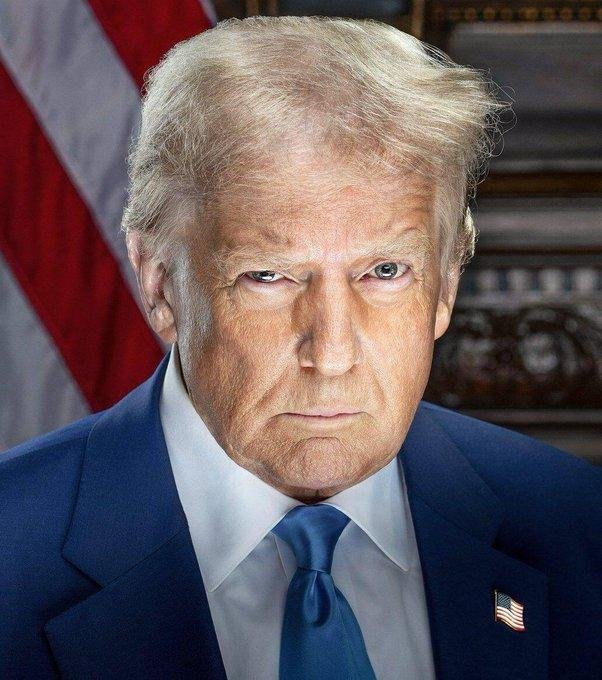
At 11:17 UTC on 15 June 2026, Donald Trump posted to his social channels a sentence that travelled further than the post itself: "Oil will now flow… I never cared about regime change." The message arrived without a transcript, without a press conference, and without the usual scaffolding of senior officials flanking the president. It was, in form, exactly the kind of unscripted presidential utterance that markets and chancelleries have learned to read as policy on its own. In substance, it did something more consequential: it recast the United States' Iran file as an energy-throughput file, and in doing so handed Tehran a narrow but real opening that the previous two administrations had refused to extend.
The statement matters less for what it said about the Islamic Republic than for what it conceded about American purpose. By publicly detaching the sanctions architecture from a regime-change objective, the president effectively told oil traders, Gulf shippers, and Asian importers that Washington no longer treats the closure of Iran's export channels as a tool of political transformation. Energy flows are the objective; the politics of Tehran are, on this telling, a side concern. The shift is not a thaw — the sanctions remain — but the rhetoric that has surrounded them for two decades has been quietly re-engineered.
What changed in the message
The operative phrase is "oil will now flow." Posted to X at 11:17 UTC on 15 June 2026, the line is not a policy document, but it is not throwaway either. It carries the cadence of an instruction — the future tense, the implied operator ("will"), the silence on conditionality. For a market that has spent the last eighteen months pricing the Strait of Hormuz as a tail-risk scenario, the post is a directional signal: the United States government is now speaking in the language of throughput, not isolation.
The follow-on sentence — "I never cared about regime change" — is the structural concession. For two decades, bipartisan US policy has framed the squeeze on Iranian crude as a vector for political pressure that would, in time, alter the character of the Iranian state. The president has now publicly said that vector was never the point. That is a meaningful departure from the rhetorical baseline established by the George W. Bush administration, sustained through the Obama-era nuclear diplomacy, and tightened under Trump's first term and the Biden years. Whether the policy architecture changes in lockstep with the rhetoric is the open question; the rhetoric alone has already moved price.
The counter-narrative: Tehran's leverage is narrower than it looks
Read against the commentariat consensus, the post is being interpreted in much of the Western press as a softening — a tacit invitation to negotiation, a return to the transactional posture that produced the 2015 nuclear deal. That reading is plausible. It is also incomplete. The Iranian state has spent the post-2018 period building the architecture of an oil sector that can survive partial sanctions: discounted crude sold into the Chinese grey market, ship-to-ship transfers in the Gulf of Oman, and an expanded network of refineries in Asia that do not require dollar settlement. Tehran can therefore absorb a rhetorical thaw without conceding much in practice.
The harder read is that the statement is not a concession to Tehran at all, but a concession to the market. The Strait of Hormuz carries roughly a fifth of globally traded oil. Any sustained disruption produces a price spike that lands hardest on the import-dependent economies of Asia and on US shale-investor balance sheets whose debt loads are priced against sustained throughput. By reframing the objective as flow rather than pressure, the administration may be signalling that it intends to manage the strait as a piece of energy infrastructure — policed, yes, but not weaponised. The Iranian state, on this reading, is not a negotiating partner but a variable to be stabilised.
The structural frame: dollar politics, with a footnote
The global oil trade remains denominated, in the main, in US dollars. That is the deeper architecture that any Hormuz discussion sits inside. The Iranian workaround — pricing a portion of exports in yuan, settling some cargoes in non-dollar instruments — has not collapsed the dollar's primacy, but it has demonstrated that the system has seams. A US policy that prioritises flow over pressure is, in effect, an admission that the seams are worth preserving. Allowing the Islamic Republic to export a calibrated volume of oil into a non-sanctioned buyer pool is a way of keeping those seams shallow, of avoiding the kind of full-cutoff that would force a structural acceleration of the de-dollarisation experiments that Iran, Russia, and China have been running in parallel.
The corollary is uncomfortable for sanctions maximalists in Washington and Tel Aviv. A flow-first policy is, by construction, a sanctions-relaxation policy in slow motion. It does not unwind the existing architecture, but it does lower the political cost of doing business at the margin — the very margin where the Iranian state has built its resilience. The administration's defenders will say that this is realism: a stable oil market is a more reliable source of leverage than a maximalist sanctions regime that produces, on net, a tighter Sino-Iranian energy relationship and a louder chorus in Beijing and Moscow about the weaponisation of the dollar.
Stakes and forward view
The first-order beneficiary of the post, if its logic holds, is the Asian buyer set — Chinese teapot refineries, Indian state processors, and the small set of trading houses willing to clear Iranian crude at the discount. They get access to incremental barrels, and with them a quieter political environment for the kind of quiet trade that has been the working arrangement of the last three years. The first-order loser is the Israeli and Gulf-aligned lobby in Washington that built its case against Tehran on the regime-change frame. That frame is now, on the record, off the table.
Over a six-to-twelve-month horizon, three indicators will tell us whether the rhetoric and the policy are aligned. First, the volume of waivers, de facto or explicit, granted to Asian buyers — measured indirectly through ship-tracking and Chinese customs data. Second, the dollar share of Iranian oil receipts, which has been drifting downward since 2018 and would, under a flow-first doctrine, stabilise rather than collapse. Third, the tone out of the Iranian foreign ministry and the office of the supreme leader: a working arrangement does not require public enthusiasm, but it does require the absence of public confrontation.
The sources available to this publication do not yet resolve whether any of those three indicators have moved. The X post at 11:17 UTC on 15 June 2026 is the document of record. The architecture around it is still being negotiated, in the kind of quiet back-channel conversations that have characterised US-Iran management since the 1980s. The markets, for now, are doing the talking — and what they are saying is that the era in which the Strait of Hormuz was treated as a regime-change project is, on this president's own telling, over.
How Monexus framed this: the wire services reported the post as a statement; this publication is reading it as a structural concession that reorders the sanctions debate around energy throughput rather than political transformation.
Wire provenance
This editorial synthesis draws on the following public wire/social posts:
- https://x.com/unusual_whales/status/2066464317499727872
- https://x.com/ekonomat_pl/status/2054728946793558016
- https://x.com/sknerus_/status/2066464317499727872