Trump claims Hormuz oil traffic is moving again as London and Paris prepare a naval escort mission
President Trump says tankers are leaving Hormuz under a toll-free US arrangement, while France and the UK prepare a multinational escort. The two announcements may be complementary — or they may collide on the high seas.
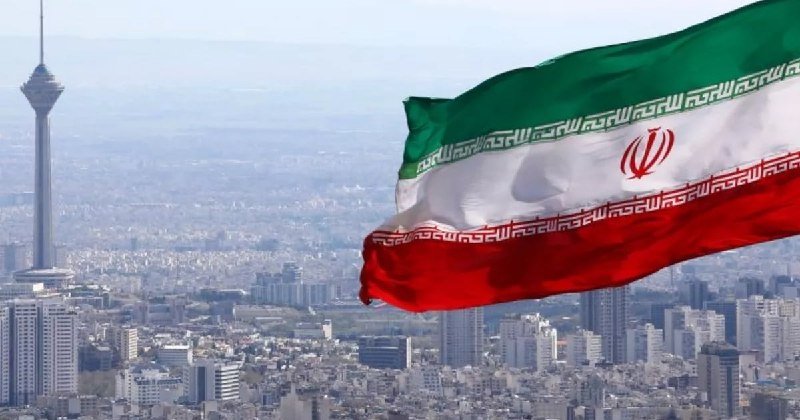
At 13:42 UTC on 15 June 2026, President Donald Trump announced from aboard Air Force One that oil tankers were once again moving out of the Strait of Hormuz along a route he described as "totally safe, secure, and pristine," a phrase that travelled faster through global commodities desks than through diplomatic channels. The post landed hours after the President touched down in Geneva en route to the G7 summit in France, and within minutes of a separate report that Paris and London were preparing a multinational naval mission to escort shipping through the same waterway. Two announcements, same strait, two very different theories of the case — and a market that has spent the better part of a month pricing the difference.
The reopen is real in the sense that the US naval blockade Trump imposed on the corridor has been lifted and the toll regime scrapped. Whether tanker traffic has actually resumed at scale is, for now, a claim — and not one Tehran accepts. What is undeniable is that the diplomatic choreography of 15 June has produced two parallel architectures for the same chokepoint: an American-led, toll-free arrangement unilaterally declared from a US aircraft, and a Franco-British escort mission that, by design, sits outside Washington's command.
The American theory of the case
The chronology on the wire is unusually compressed. On 14 June at 21:40 UTC, Trump's team moved to lift the US naval blockade and authorise a toll-free reopening of the strait — a decision that, on its face, amounted to a unilateral de-escalation by Washington and a renunciation of one of the more coercive instruments in the US maritime toolkit. By the next afternoon the President was on the phone declaring that "ships are starting to move, many loaded up with oil, out of the Strait of Hormuz," a line carried on social channels at 13:39 UTC and amplified at 13:42 UTC as tankers were reportedly transiting under the new arrangement.
Read in isolation, the sequence tells a tidy story. The US Navy interdict, commerce halts, the price of a barrel reflects the disruption, the White House decides the political cost of the blockade now exceeds its leverage, and a toll-free reopening is announced. The "pristine route" language is doing work here: it is designed to convince shipowners, insurers and refiners that the political risk premium on Hormuz transit has collapsed. That is the offer on the table to global markets — and to Tehran, which has been the principal beneficiary of the closure but is also the principal loser if the closure does not hold.
The offer is also implicitly directed at the G7 host. Trump lands in Geneva ahead of a summit where Europe's capitals have spent weeks publicly distancing themselves from the blockade. A toll-free, US-brokered reopening is the kind of outcome the French presidency can present as a win for the multilateral order, without ever having been asked to participate in the blockade itself.
The European counter-current
The other story on 15 June runs through Paris and London. At 13:10 UTC, just under an hour before Trump's announcement, social-wire reporting indicated that France and Britain were preparing a multinational naval mission for the Strait of Hormuz to safeguard shipping. The framing matters. A European-led escort mission is not the same instrument as a US-led blockade. It does not interdict traffic; it protects it. It does not impose tolls; it removes the need for them. And it does not sit under any single national chain of command — which, depending on the reader, is either its main virtue or its main flaw.
For Paris and London, the mission is a way to reassert a European maritime role that the Iraq-era patrols never quite produced and that the more recent Red Sea mission has only partially filled. It is also a way to send a signal to Tehran: the strait's security is not Washington's to grant, withhold, or rent out. For Gulf monarchies that watched the blockade with quiet alarm, a European escort is the kind of insurance policy that does not require a phone call to the White House every time the rules change.
The collision risk is obvious. Two navies operating in the same 21-nautical-mile chokepoint, with overlapping but distinct authorities, under a US-Iranian ceasefire that the Europeans did not negotiate — the geometry is not impossible, but it does not need much friction to fail. The Geneva summit is now also a working session on whether the escort mission absorbs the reopened corridor or competes with it.
The Tehran view
Iranian state-adjacent reporting has, predictably, taken a harder line. A Mehr News wire item published at 13:46 UTC dismissed Trump's claim that ships were moving out of the strait as false, characterising it as a US political announcement unmoored from operational reality. The framing is consistent with Tehran's broader posture during the closure: a public insistence that Iran retains effective control over the corridor and can decide, in its own time, what transits and what does not.
That posture has a real structural foundation. Iran's coastline dominates the northern shore of the strait; its anti-ship missile inventory, fast-boat swarm doctrine and mining capability are designed for exactly the kind of contest the blockade was meant to deter. A toll-free US reopening, announced from the cabin of a presidential aircraft, does not change the fact that any tanker in the shipping lane is closer to an Iranian garrison than to an American carrier. The Iranian read is that Washington has discovered what the IRGC already knew: the strait is too narrow to own, only to share.
This is the part of the story that Western wire coverage of the reopening has been least interested in. The default frame — blockade lifted, tankers moving, market normal — leaves out the question of who, on the water, is actually allowing those tankers to move. If Tehran's account is even partly correct, the toll-free arrangement is less a market event than a permission slip, and the permission is revocable on a Tehran time-clock that does not run through Geneva.
What the sources do not settle
The honest reading of 15 June is that the wire contains two claims and one confirmed action. The confirmed action is the lifting of the US blockade and the toll regime, on 14 June at 21:40 UTC. The first claim is the President's that tankers are moving and that the route is safe; the second is Tehran's that the same claim is false. Neither is independently verifiable from the social-wire record available at the time of writing. There is no Lloyd's List dispatch, no AIS-tracked movement data, no TankerTrackers confirmation in the thread context. The shipowners and insurers who would ordinarily test such claims have not, as of the 15 June 2026 wire window, weighed in.
That matters. A toll-free reopening is a price event the moment it is believed, and a non-event the moment it is not. The Franco-British mission is, by contrast, an insurance product — its value does not depend on the White House's daily read of the situation. The two announcements therefore may not be in conflict at all. They may be a division of labour, with Washington supplying the political announcement and European navies supplying the credible guarantee. Or they may be competing frameworks for the same corridor, in which case the first transit dispute will be the one to watch.
What can be said with confidence is that the architecture of Hormuz security has, on the eve of a G7 summit whose host has spent the year talking about European strategic autonomy, acquired a distinctly European second pillar — and that the Iranian state is signalling, for now at least, that neither pillar impresses it. The Geneva gathering will be the first place where those three positions have to share a room.
This article follows the Monexus desk note convention: the wire record has been used as provenance, with Iranian state-adjacent reporting given explicit weight and labelled as such, rather than treated as background noise to the Western announcement.
Wire provenance
This editorial synthesis draws on the following public wire/social posts:
- https://t.me/polymarket
- https://t.me/polymarket
- https://t.me/unusual_whales
- https://t.me/polymarket
- https://t.me/polymarket
- https://t.me/mehrnews