Trump–Iran deal talk collides with a Netanyahu problem
A self-imposed two-to-three-hour deadline for a US–Iran agreement has slipped into a fourth day, while a US president publicly calls his Israeli counterpart 'a very difficult guy.' The numbers coming out of Tehran do not yet agree with the numbers coming out of Washington.
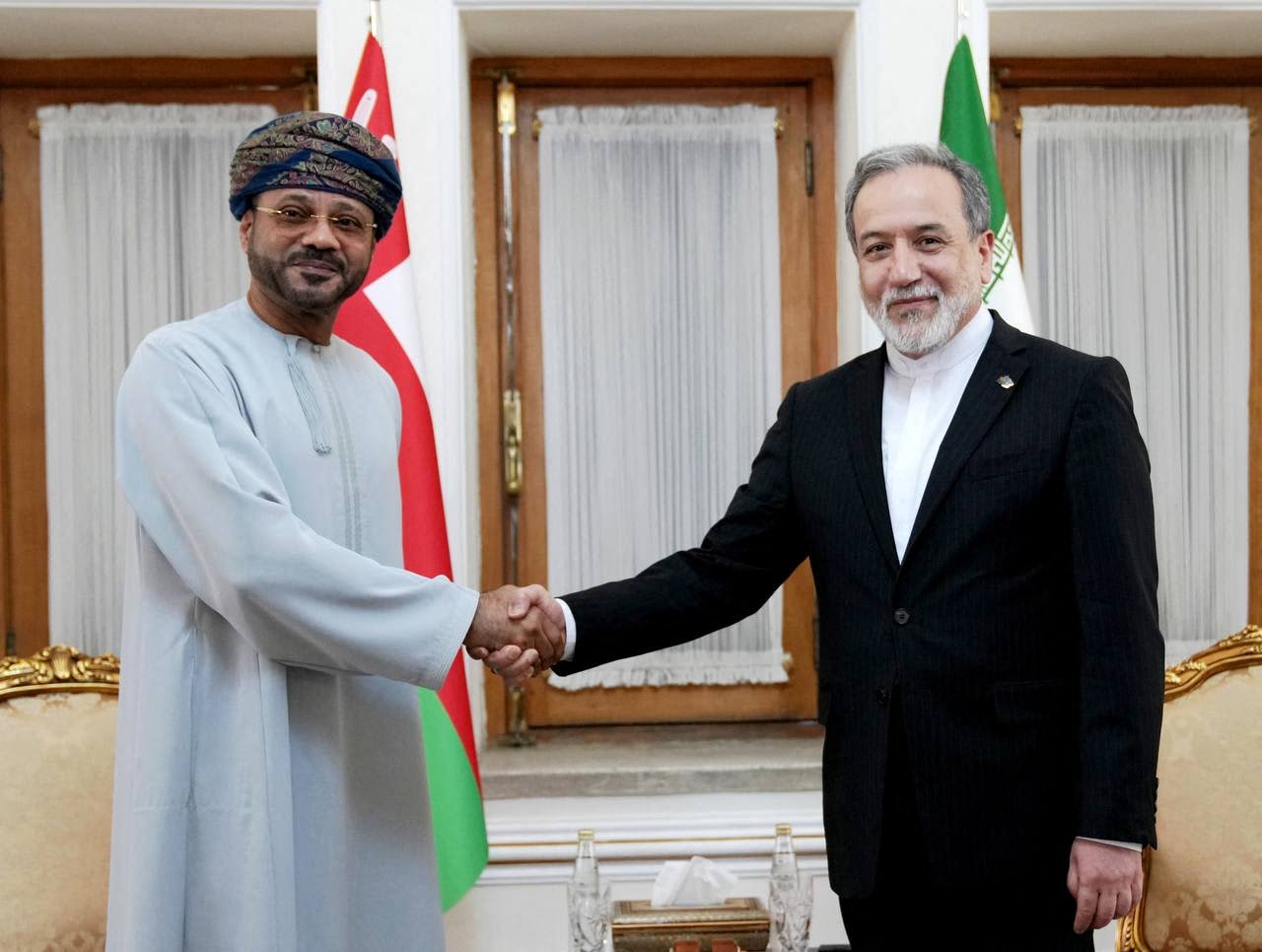
At 17:15 UTC on 14 June 2026, the US president told reporters he expected a deal with Iran to be signed "within two-three hours." By 00:32 UTC on 15 June, the two-three-hour clock had run out roughly twice over, the Iranian delegation had publicly threatened to walk out, and the same US president was on the record calling his Israeli counterpart, Binyamin Netanyahu, "a very difficult guy." The headline of the day, in other words, is less the deal itself than the way three different negotiating tracks have begun to short-circuit each other in public.
What started as a tightly choreographed ceasefire-and-nuclear package between Washington and Tehran has, inside seventy-two hours, become a multi-track crisis of confidence: a financial track (the size and shape of frozen-asset releases), a nuclear track (the verification regime that supposedly accompanies any agreement), and a political track inside the Israeli-American relationship that the US side has now chosen to litigate in front of cameras.
A deal in three numbers that do not yet agree
Three headline figures have circulated since 14 June, and they do not stack. According to a Telegram wire from the BRICS News channel at 00:13 UTC on 15 June, Iranian state media claims the United States has agreed to present $300 billion in reconstruction plans for Iran. According to Polymarket's reporting on Iranian demands at 16:14 UTC on 14 June, the same Iranian side has been asking Washington for "up to $12,000,000,000" in frozen funds. And at 23:39 UTC on 14 June, a separate wire — again citing Iranian media — claimed the agreement under discussion would release $24 billion in frozen Iranian assets.
Read in isolation, each number is plausible inside a different frame. The $300 billion reconstruction figure is a long-tail ask: financing for energy infrastructure, port rebuilds, and the kind of industrial-policy envelope that Tehran's negotiators have publicly mooted for years. The $12 billion is the immediate-cash ask — the working-capital slice that would actually hit bank accounts inside a quarter. The $24 billion is the version of the deal that has reportedly crossed State Department desks in recent weeks: a structured release tied to escrow, verification milestones, and hostage-fund analogues used in past US-Iranian transactions. None of the three figures, on the available sourcing, has been confirmed by a US Treasury official, a White House spokesperson, or an OPEC-side energy ministry. The gap between them — roughly an order of magnitude between the lowest and the highest — is the deal's centre of gravity, not its perimeter.
The Israel track, blown open
The second track is the one the White House has now chosen to make public. At 23:35 UTC on 14 June, the BRICS News channel carried a clip in which President Trump describes Netanyahu as "a very difficult guy," adds that the Israeli prime minister "should be very thankful to us," and argues that "if Iran had a nuclear weapon, Israel wouldn't be around." The Polymarket feed repeated the substance of that characterisation at 00:31 UTC on 15 June, framing it as fallout from Israel's reported exclusion from the US–Iran negotiating channel.
The phrasing matters. "Very difficult" is a particular kind of leak: it concedes that a senior partner is being managed, not consulted, on a matter that partner considers existential. Israeli security concerns about a nuclear-armed Iran are well-documented and have been carried, in their strongest form, by Israeli intelligence chiefs in office and out. The US side is now publicly telling Israel that its interests will be served by a deal whose substance Israel has not been shown. That is not how a normal allied negotiation is run; it is how an administration conducts a negotiation it expects the other side to complain about later.
The market's read of the political problem is visible in the same Polymarket feed: a 44% implied probability, as of 00:32 UTC on 15 June, that Trump will meet Netanyahu this month. That is a low base rate for a sitting US president and a sitting Israeli prime minister who have historically met inside the same calendar window — and a number that suggests the trading crowd does not believe the cooling is performative.
A ceasefire that was announced before the deal existed
At 14:21 UTC on 14 June, both a Product Hunt channel and an AngelList channel on Telegram carried the line that Trump says Israel and Iran are moving toward a ceasefire. As ceasefire language goes, it was almost maximally indeterminate: a direction of travel, not a signed instrument, and it appeared roughly three hours before Trump's "two-three hours" framing of the nuclear track and a full day before the public rupture with Netanyahu became the day's story.
The sequence — ceasefire claim, then a deadline, then a public fight with the leader of the country the ceasefire is supposedly about — is the kind of calendar that gets markets moving. Polymarket's earlier prompt that "geopolitical news like this can move crypto, stocks, oil, and gold within minutes" is, in this case, not a marketing line. It is a description of the kind of afternoon the WTI complex and the ten-year Treasury are about to have on any given day this week.
What we are actually watching
The larger pattern is a familiar one: an administration trying to run a multi-party negotiation on deadline, against an Iranian side that is itself split between a faction that wants the cash and a faction that wants the political symbolism of a US concession, and against an Israeli side that is being told, in increasingly plain terms, that it is not in the room. The US pressure point is a familiar one too — the "ultimate alternative" President Trump invoked at 17:53 UTC on 13 June, which is diplomatic language for a military option that does not need to be drawn in detail to be effective.
What the sources do not tell us is the most important thing. There is no confirmed text of an agreement; there is no named Iranian counterpart who has signed anything; there is no Israeli sign-off on the shape of the nuclear constraint; and the dollar figures vary by an order of magnitude depending on which Iranian state outlet one reads. The deal may yet be signed inside this calendar window. It may also collapse inside the same window. What is already public, and what will not be retracted, is that the US president has chosen to describe the Israeli prime minister in terms that an Israeli prime minister is not expected to absorb quietly. That is the news of the day, and the rest of the schedule is being run against it.
This article was written from publicly circulated wire items, market-implied probabilities, and Iranian state-media claims reported by Telegram channels. Where Iranian and US figures disagree, both have been reported. The $300 billion reconstruction figure is attributed to Iranian state media and is not, on the available sourcing, corroborated by any US official.
Wire provenance
This editorial synthesis draws on the following public wire/social posts:
- http://t.me/s/BRICSNews
- http://t.me/s/BRICSNews
- http://t.me/s/producthunt
- http://t.me/s/AngelList
Follow the event.
These dated source records provide context. They do not retrospectively verify this archive article.
Separate what the nuclear watchdog reported from what it could not determine after the June 2025 strikes.