Trump Floats Iran Deal in Hours, Then 'Difficult' Netanyahu Resists: A Single Weekend, Three Negotiations, and the Shape of US Leverage
Within a 24-hour window the White House announced an imminent US-Iran agreement, a phone call with Zelenskyy, and a public jab at Netanyahu — only for Israel to publicly rebuff the Lebanon track. The weekend lays bare how far US-Israeli coordination has frayed.
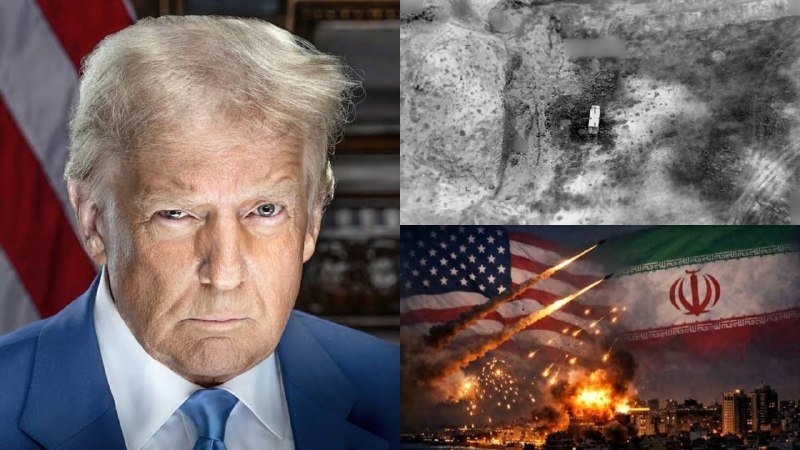
At 16:14 UTC on 14 June 2026, an item crossed the news wires reporting that Iran was demanding up to $12 billion in frozen funds from the United States as a condition of any agreement. Less than an hour later, the same thread of dispatches carried a counter-current: Tehran was threatening to walk away from the talks altogether. By 17:15 UTC, the US side was projecting confidence that a deal could be signed "within two-three hours." By 00:31 UTC on 15 June, the US president was on record calling the Israeli prime minister "a very difficult guy," with Israel reportedly left out of the US-Iran channel. By 08:46 UTC on 15 June, the same office had announced a phone call with Volodymyr Zelenskyy and an agreed G7 meeting to discuss ending Russia's war. By 08:47 UTC, the Israeli prime minister's office was telling Washington, on the record, that Israel would not withdraw from Lebanon.
This is what an overstretched mediation architecture looks like in real time: three live negotiations, all on the same weekend, none of them under one roof, with the principal mediator visibly improvising between them.
The Iran track: deal in hours, then hours of drift
The starting posture of the US-Iran track on 14 June was unusually transactional. Tehran's reported ask — up to $12 billion in releases from frozen balances — is the kind of figure that belongs at the end of a long sanctions-relief negotiation, not the beginning of one. The disclosure of that figure in the open, hours before a signing window was supposed to open, is itself a tell. The accompanying threat to pull out, transmitted in the same news cycle, points to a negotiating team that is simultaneously holding out for the maximum settlement and signalling to domestic audiences that it is not desperate for one.
The US projection of a "two-three hour" signing window, in this reading, was less an expectation than a tempo-setting device — a way of compressing Tehran's decision space and giving cover to Tehran's own negotiators to claim they had extracted urgency. None of the source material available to this publication confirms a signed text. The window appears to have closed without a signature, but not without movement: a phone-level exchange at minimum, and a public acknowledgment that a track exists at all.
The Israel track: 'very difficult guy' and a Lebanon rebuff
The 00:31 UTC item, reporting that the US president had called the Israeli prime minister "a very difficult guy" after Israel was reportedly excluded from the US-Iran channel, is the most consequential sentence of the weekend. The phrase is the kind of personal characterisation that usually leaks rather than gets confirmed; its appearance in a wire-style dispatch suggests it was meant to be heard. The framing — difficulty attributed to a counterpart rather than to a policy disagreement — is also a Washington tell: it reframes a substantive dispute (Israel's red lines on Iran's nuclear and missile files) as a personal management problem.
The Israeli response, recorded at 08:40 and 08:47 UTC on 15 June via Israeli-bench reporting, was pointed. The prime minister's office reportedly told the US that Israel would continue its operation in Lebanon, would not withdraw its troops, and did not consider itself bound by the Lebanese reservation in whatever arrangement the US was working on. That is, in diplomatic language, a flat refusal to accept a fait accompli on Israel's northern border in the name of a wider Iran settlement. The structural shape is familiar: Washington wants one grand bargain across the region; Jerusalem wants its security file handled on its own terms, even at the cost of public friction with the White House.
A third front: Ukraine, by telephone
The 08:46 UTC item reporting a Trump–Zelenskyy phone call and an agreed G7 meeting to discuss ending the war is, on its face, the least developed of the three tracks. It is also the one in which the US framing is closest to Ukrainian framing: Kyiv is the invaded party, and any settlement architecture that emerges will be measured against Ukrainian sovereignty rather than against US domestic politics. The G7 venue matters — it is a Western institutional setting, not a bilateral one — and the inclusion of the call alongside the Iran and Israel tracks suggests the US is using the same weekend to seed a multipolar diplomatic calendar in which Ukraine, Iran, and Israel are all treated as live items, in roughly that order of priority for the White House's communications team.
What the weekend reveals
The single most important thing to read out of these items is not any one of them, but their juxtaposition. A US administration presenting a $12 billion Iran deal in hours, a Zelenskyy phone call producing a G7 meeting, and a public "very difficult guy" line about an Israeli prime minister who then publicly refuses to fall in line on Lebanon — that is not a coordinated strategy. It is a series of negotiating moves being run in parallel by teams that do not fully share an operating picture. The Iranian track benefits from US-Israeli tension, because Tehran's leverage rises when its principal counterparty's coalition is visibly split. The Lebanese track suffers from it, because an Israel that won't accept a US-brokered ceasefire architecture on its northern border removes the cleanest deliverable from the regional package. And the Ukraine track, the one with the clearest moral and legal frame, gets folded in as the diplomatic calendar filler that makes the other two look like part of a grand settlement rather than three separate fires being run from the same podium.
The other reading, which the evidence does not rule out, is the opposite: that the public friction is itself the strategy. A visible fight with the Israeli prime minister gives Tehran room to sign without looking like it has capitulated to a US-Israel axis. A visible Lebanon rebuff gives Jerusalem room to stay in southern Lebanon without being seen as defying the White House on a deal it endorsed. A Zelenskyy phone call that produces a G7 meeting gives the domestic US base a third deliverable to point to in a week dominated by Middle East coverage. None of this requires a single coherent grand bargain. It requires three negotiating teams tolerating one another's opacity.
What we do not know
The source material available to this publication is a mix of wire-style social posts and a small set of Israeli-bench Telegram dispatches; it does not include the text of any US-Iran understanding, the official Israeli readout of the prime minister's reported call with Washington, or any Ukrainian-government confirmation of the 08:46 UTC phone call. The $12 billion figure, the "two-three hours" window, and the "very difficult guy" line are all single-source attributions as they appear in the thread. The Lebanon rebuff is more corroborated, surfacing in two related channels within minutes, but the underlying call between the two leaders is itself unverified by an official transcript. Treat the shape of the weekend as confirmed; treat the specifics as still settling.
Desk note: Monexus is reading this weekend as a stress test of US-Israeli alignment under a single overstretched mediation calendar, not as the breakdown of that alignment. The base case is three parallel tracks that tolerate one another; the risk case is that the Lebanon rebuff forecloses the Iran deal and pulls the whole weekend's architecture down with it.
Wire provenance
This editorial synthesis draws on the following public wire/social posts:
- https://t.me/intelslava
- https://t.me/sprinterpress
- https://t.me/producthunt
Follow the event.
These dated source records provide context. They do not retrospectively verify this archive article.
Separate what the nuclear watchdog reported from what it could not determine after the June 2025 strikes.
A dated voting record is evidence of one decision. Use the original UN record before turning it into an alignment label.
Visual explainer · historical vote of 2022-03-02 →