Trump's Two-Track Iran Gamble Leaves Israel Exposed
A Versailles-era MoU hands Netanyahu a peace he didn't negotiate. Tehran is now being positioned as Washington's enforcement partner, and Israel as the variable to be managed.
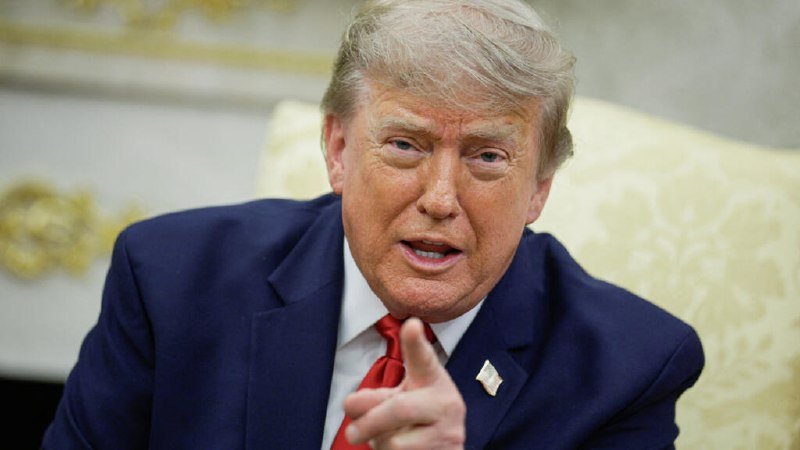
Donald Trump and Iran's President Masoud Pezeshkian signed a memorandum of understanding on Wednesday evening, the White House confirmed through two senior officials to Axios, with Iran's foreign ministry spokesperson Esmail Bagaei and Press TV reporting a parallel digital exchange. Trump signed a copy of the document at the Palace of Versailles after a dinner with his French counterpart, in a sequence Reuters traced and Pakistani Prime Minister Shehbaz Sharif publicly announced as the "Islamabad Memorandum of Understanding." The text, framed as a framework to end the active Middle East war rather than a final settlement, hands Tehran economic relief in exchange for diluting enriched uranium stockpiles, and begins the reopening of the Strait of Hormuz.
Whatever the deal's merits, it lands on an Israel that did not negotiate it, did not sign it, and is now being asked to operate inside it. The memorandum's quiet centerpiece, as reported by Middle East Eye and Al Jazeera on Wednesday evening, is the recognition that Israel's war on Iran has left Prime Minister Benjamin Netanyahu exposed to pressure from two directions at once: from Tehran, which claims vindication, and from inside his own political coalition, where the terms look like a strategic reversal. The administration's readout adds a second, more pointed layer. According to Al Jazeera, Trump has privately encouraged Netanyahu to use a "softer touch" in Lebanon, and Bagaei has warned publicly that continued Israeli strikes on Lebanon would be treated as a violation of US obligations under the deal. Iran, in other words, is being positioned as an enforcement partner of Washington's, and Israel as the variable to be managed.
What the deal actually changes
The interim text, as summarised by France 24 and the New York Times Wednesday evening, swaps verifiable near-term deliverables for a negotiating path toward something fuller. Tehran commits to diluting its enriched uranium; Washington and its Gulf partners commit to economic relief, and to a partial maritime redeployment under which US and coalition warships will leave forward stations in the Persian Gulf and relocate to bases in the Gulf of Oman and the Arabian Sea, according to a Tuesday-night outline carried by the Middle East Spectator channel. Trump, in his own remarks leaving Versailles, also called it "unfair" for Iran to lack ballistic missiles if other regional states keep theirs, a formulation that goes further than anything in the 2015 framework and that the Israeli read-out will not enjoy. The Strait of Hormuz, the channel through which a fifth of seaborne oil normally moves, was effectively closed through the war and will begin to be "fully reopened," per the OSINTdefender summary circulating overnight.
The Netanyahu problem
For Netanyahu, the political geometry is unforgiving. The deal is being sold in Washington as a Trump success, not an Israeli success; Al Jazeera's report that Trump is asking Israel to soften its posture on Lebanon simultaneously takes credit for restraint in one theatre and asks Israel to absorb the cost in another. Tasnim and Press TV, Iranian state-aligned outlets, present the text as ending "the war imposed by the US-Zionist regime," language intended for a domestic Iranian audience but legible in every embassy in the region. Republican members of Congress cited by NewsNation went further overnight, blaming Vice President JD Vance for an arrangement many in the party characterised as a bad deal, a sign that the intra-American pressure on the package has barely begun. Netanyahu, who built his post-October 7 coalition on the premise that a wider war was winnable, now has to defend a peace he did not cut, in a coalition that has no template for it.
The deterrence question no one is naming
Strip the messaging away and the question underneath is whether Israel is being asked to absorb a structural concession in exchange for a deal Washington negotiated with a country that was firing at its cities weeks ago. Iranian foreign ministry statements that any Israeli action in Lebanon now counts as a US-arms violation are not boilerplate; they are the legal hook Tehran intends to use. Trump's reported remark on regional ballistic-missile asymmetry, even if rhetorical, tells Iranian negotiators they can return to that question in a later round. And the redeployment of US naval power out of the Gulf, however gradual, reassigns the burden of regional deterrence to Israel and the Gulf states at exactly the moment Israel is being told to de-escalate with the partners it has been bombing. None of those trade-offs appear in the Versailles photographs.
What to watch next
Three clocks are now running. The first is the Israeli political response: how Netanyahu's coalition handles the first cabinet meeting after the text becomes public, and whether the defense establishment is read in or presented with a fait accompli. The second is the Lebanese track, where an Iranian red line on continued strikes is the test case for whether the deal has teeth or is a press release. The third is the negotiating track itself; the New York Times was clear that this is an interim arrangement, a path toward a fuller deal, meaning the hard questions on missiles, proxies, sanctions architecture, and the timeline for uranium dilution are still in front of the parties, not behind them. Trump thanked Vladimir Putin and Xi Jinping for what he called "absolute neutrality" on the Iran issue overnight, a phrase worth its own file. The diplomacy that produced Wednesday's signature is not the diplomacy that will finish the job.
-- Monexus desk note: The wire characterises this as an interim MoU ending an active war; Iranian state-adjacent outlets frame it as the end of a war "imposed" on Tehran. Monexus has read both against the published terms and Israeli political reporting to surface the gap between them.
Follow the event.
These dated source records provide context. They do not retrospectively verify this archive article.
Separate what the nuclear watchdog reported from what it could not determine after the June 2025 strikes.