Trump–Iran memorandum pulls geopolitical premium out of oil and back into risk assets
A dual signing between Washington and Tehran moved oil and crypto in the same choppy direction, not the same direction, suggesting traders are hedging the deal's collapse rather than pricing its survival.
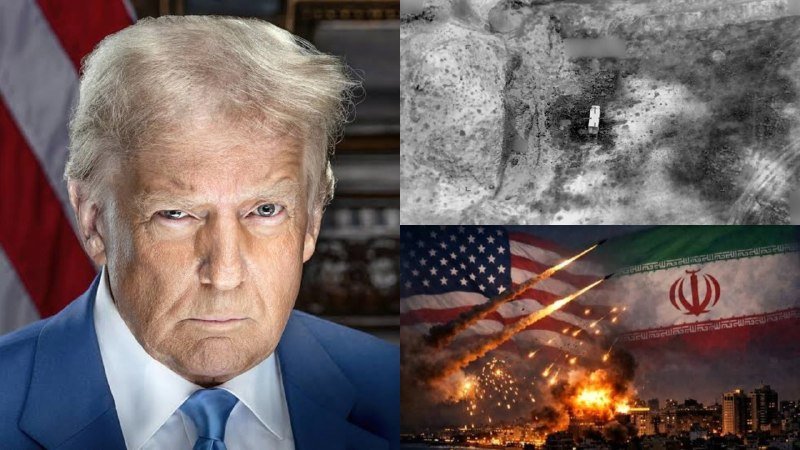
The White House announced on Tuesday evening that President Donald Trump had signed a memorandum of understanding aimed at ending the conflict with Iran, hours after Tehran confirmed its own head of state had put pen to paper. The dual signings, conducted electronically rather than in any televised ceremony, were reported first by Axios and amplified across financial terminals within minutes. By midnight UTC the news had cycled through prediction markets, broker chatrooms, and a press gaggle where Trump told reporters the document was not, in fact, final.
The gap between those two announcements is the story. A memorandum of understanding between two governments that have spent the past month trading missile strikes is, on paper, the kind of headline that repriced Gulf risk insurance in 2018, repriced it again in 2019, and repriced it once more in every escalation cycle since. The market reaction on Tuesday, however, was more cautious than euphoric. Crypto wobbled. Equities wobbled. The Cointelegraph market wrap described traders as "treading thin ice," caught between the president's own mixed messaging on the deal and a separate signal from Federal Reserve Chair Kevin Warsh that the FOMC was pivoting toward a new posture. Risk assets did not get the all-clear they were priced for at the open of Asian trading on Monday.
What's in the 14 points
The text, as released through Unusual Whales and corroborated by Axios's Barak Ravid, is a 14-point framework. It calls for an immediate ceasefire, safe commercial passage through the Strait of Hormuz, phased sanctions relief, and access to frozen Iranian assets. Those four pillars are the ones traders have spent the last decade modelling, and they map closely to the scaffolding of earlier negotiations that collapsed at the verification stage. The remaining ten points, summarised rather than published in full as of Tuesday night, reportedly address nuclear-capable missile limits, inspection regimes, and a regional security dialogue that would include Gulf states and, in some formulation, Israel.
What the document does not contain, at least in the excerpts circulating on Tuesday, is a binding enforcement mechanism. A memorandum of understanding is precisely what its name suggests: an agreed statement of intent, signed but not ratified, with no treaty-grade dispute resolution. Both governments retain the right to walk. Trump himself, in a brief exchange with reporters, said the agreement "is not final" and warned that "if I don't like it, we will go back to dropping bombs." Iranian President Masoud Pezeshkian's signature, confirmed by Polymarket's account of an official Iranian readout, is politically easier to defend in Tehran than a treaty would be. Parliaments on neither side have voted. The Joint Comprehensive Plan of Action collapsed on a thinner technicality than this.
The oil market's quiet recalibration
The geopolitical risk premium embedded in Brent crude through the spring had two components: a probability-weighted tail on Hormuz disruption, and an insurance premium for shipping through the Gulf more broadly. Tuesday's MOU punches at both, but not symmetrically. Safe commercial passage, if honoured, compresses the second component sharply. A ceasefire compresses the first only conditionally, because the deal's survival is itself uncertain. By the time Singapore desks opened on Wednesday morning, the front-month spread had tightened, but the curve had not blown out the way it did in 2019 when a single drone strike removed a few percentage points of effective supply for a quarter.
The harder question is whether the sanctions architecture moves in any durable way. Phased relief is the phrase in the document, and phase matters. Sanctions that begin to unwind in 30 days and complete in 180 are a different instrument from sanctions that begin in a quarter and complete on Iranian compliance milestones. The text circulating on Tuesday does not yet specify. Indian and Chinese refiners, who spent May quietly building crude inventories to insure against a Hormuz worst case, will not draw those barrels down until the phase schedule is published. Nor will European insurers reprice Gulf-of-Aden hull coverage on a statement of intent alone.
The dollar leg nobody is talking about
The more interesting repricing on Tuesday was not in crude. It was in the dollar. A genuine, enforceable Iran deal would, over a six-to-twelve-month horizon, weaken the structural argument for elevated dollar defence spending, reduce the urgency of certain Gulf arms transfers, and re-anchor European energy procurement toward Gulf LNG rather than Atlantic basin molecules. The lift to European industrial input costs, already a sore point for manufacturers from Rotterdam to Lyon, becomes marginally easier to absorb. Conversely, the US Treasury's issuance premium narrows, because the geopolitical risk discount that foreign holders had been quietly demanding over the past eighteen months stops compounding.
This is the channel through which the deal, if it survives, pulls premium out of oil and into risk assets in the broader sense: not because oil is cheaper, though some of it will be, but because the dollar funding regime that the war had been reinforcing gets one fewer reason to remain in its defensive crouch. Crypto's behaviour on Tuesday is a microcosm. Bitcoin did not rally on the headline. It chopped. That is the signature of an asset that is being used as a hedge against the deal failing, not against it succeeding.
The credibility discount
There is a reason traders are not giving the MOU the benefit of the doubt. Trump told reporters at roughly 22:30 UTC that the world would "find out pretty soon" whether the signing actually happens, an hour and a half after Polymarket had already confirmed it. The same press gaggle produced a memorable exchange: a reporter cited the line "Iran never won a war, but never lost a negotiation," and when Trump asked who said it, the reporter answered, "Donald Trump." Whether the line is original to Trump or borrowed from Henry Kissinger's earlier formulation is beside the point. The point is that the deal's own lead negotiator on the American side appears to be negotiating with himself in real time, in front of cameras.
That posture will cost the agreement in its first verification cycle. Iranian state media has, predictably, framed Pezeshkian's signature as a sovereign achievement. Israeli coverage has been guarded. Gulf state commentary has been conspicuously quiet, which in the Gulf usually means quiet endorsement behind the scenes and open hedging in public. The first real test will not be a missile test or an IAEA inspection. It will be a sanctions waiver. If the Treasury issues a binding general license within ten days, the market will treat the document as live. If the waiver is delayed, the MOU drifts into the same drawer that holds the 2015 framework's interim understandings, and the geopolitical premium that briefly lifted out of oil on Tuesday night will settle back in.
What to watch by 1 July
Three dates will determine whether Tuesday's headline is a regime change or a relief bounce. The first is the publication of the full text in a verifiable, non-leaked format. The second is the first OFAC general license touching Iranian energy exports. The third is the first IAEA inspection access granted under the new framework, which Iranian state broadcasters have so far not confirmed on the record. If two of those three land before the end of the month, the front of the Brent curve will compress further and the geopolitical risk discount in US Treasuries will narrow by a measurable basis-point margin. If fewer than two land, the market is right to have chopped rather than rallied on Tuesday, and the premium that briefly came out of oil will find its way back in through shipping insurance and a softer dollar bid.
The memorandum is signed. The war, for the moment, is not over.