Trump announces US-Iran peace deal, but the details are doing all the work
A framework deal between Washington and Tehran was announced on the US president's 80th birthday, but specifics on enrichment, sanctions relief and the fate of Lebanon remain undisclosed.
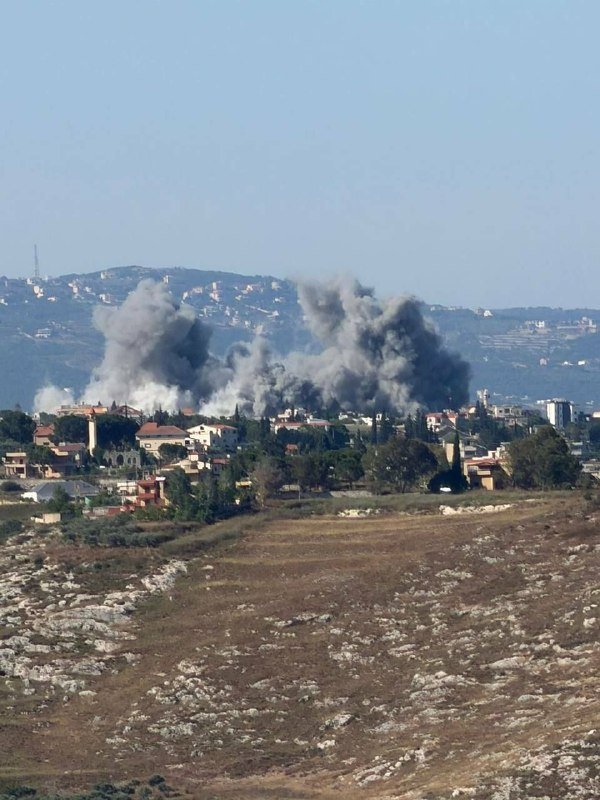
A peace deal between the United States and Iran was announced on 14 June 2026, the third such arrangement the current US president claims to have brokered with Tehran, and the most consequential of the three. The announcement, made on the US president's 80th birthday, ended a sustained round of uncertainty over a war that had reshaped Gulf shipping, the Lebanese political order, and Pakistan's mediation track. The framework's specifics, however, are doing all the work — and the most consequential of those specifics are not yet on the page.
The core claim, relayed first by the president on 14 June 2026 UTC and quickly carried by wire services, is that Washington and Tehran have reached a peace deal ending the current war. Reuters's live blog on the announcement, citing the president's remarks, framed it as the end of a conflict that had paused and restarted twice under the current administration. The British Broadcasting Corporation, in a piece published the same day, called the announcement a "welcome birthday gift" while flagging that "its success or failure may hinge on the details."
The third arrangement, and a familiar sales pitch
The US president's own framing was characteristically transactional. "As far as regime change, I never cared about regime change," he told reporters, per a Telegram summary of his remarks. "This is the third group we've dealt with, and this is the most rational group yet." The line does two things at once. It pre-empts a Washington policy debate that has run since 2002 — whether the United States should pursue an Iranian government willing to negotiate rather than one willing only to capitulate — by declaring that debate settled. And it recasts a contested diplomatic process as a comparison shopping exercise, with each successive Iranian negotiating team rated against the last.
The pattern is structurally familiar. Two prior US-Iran deals — the 2015 Joint Comprehensive Plan of Action negotiated under President Obama, and the 2020 Abraham Accords-era "maximum pressure" posture that produced no formal agreement — both collapsed on questions of sequencing: which concessions come first, whether sanctions relief is granted in tranches or upfront, and what inspection regime the International Atomic Energy Agency is permitted to operate. Nothing in the president's 14 June remarks resolves those questions on the public record.
Pakistan as broker, Lebanon as the variable
The geography of the announcement matters. The BBC's same-day reporting noted that Pakistan, which hosted shuttle diplomacy between US and Iranian envoys in the weeks before the deal, was briefed that the framework "includes Lebanon." That phrasing is doing significant work. Lebanon has been the most visible second front of the broader confrontation, and several recent ceasefires in the south of the country have failed to take hold. Pakistan's elevation from regional observer to public guarantor carries its own logic: Islamabad has long sought a strategic role commensurate with its nuclear status, and a US-Iran settlement it helped midwife would be the first such arrangement with a Pakistani co-signature.
Lebanon's inclusion is also where the deal is most exposed. A framework that obliges Tehran to restrain Hezbollah in exchange for sanctions relief places the burden of compliance on actors who are not parties to the deal and have not publicly accepted its terms. The British Broadcasting Corporation's analysis on 14 June was pointed: recent ceasefires there have not held, and a paper commitment in Washington does not, on its own, change the order of battle along the Litani.
What the wire consensus is, and what it isn't
Reuters's live coverage treats the deal as a fact in the sense that the parties have publicly announced it. The BBC treats it as an event whose consequences depend on the text, which has not been released. That gap — between announcement and instrument — is the most important variable in the story, and it is not closed by either outlet's reporting on the day.
The Iranian side's response is the missing element in the available wire reporting. Coverage as of 14 June 2026 UTC is dominated by the US president's remarks and by Western wire synthesis. Iran's official response, the state of its nuclear programme in the period immediately before the announcement, and the position of the International Atomic Energy Agency on inspection access are not in the source set and cannot be summarised here with any reliability. Readers should weight the deal's substance accordingly.
The structural frame, in plain language
What is being announced is not the end of a war in the sense that, say, the 1991 Gulf War ended with a clear capitulation and a clear armistice. It is the formalisation of a pause — the conversion of an active shooting war into a managed dispute underwritten by third-party guarantors. The parties to the war are not exhausted in the way that exhaustion produced the armistices of 1918 or 1953. They are, on the US side, looking at a domestic political calendar that rewards a deal, and on the Iranian side, looking at an economy that has been under sanctions pressure for the better part of a decade.
The structural risk is that a managed dispute, if its inspection regime is thin, becomes a deferred conflict. The 2015 deal solved the sequencing question by accepting a slow Iranian nuclear rollout in exchange for slow sanctions relief; it lasted three years on the American side before being abandoned. The current arrangement's terms, as publicly described, do not yet show that the sequencing question has been re-answered, only that the parties have agreed to keep negotiating it.
Stakes, and what to watch next
The deal's commercial effects will arrive faster than its strategic ones. Oil markets, which priced in a war premium through the spring, will test whether the announcement is enough to sustain a lower price band; shipping insurance rates for the Strait of Hormuz, which climbed during the active phase of the conflict, will be the cleanest read on whether traders believe the deal will hold. The Lebanese ceasefire track, which Pakistan claims is included, will be the cleanest read on whether the parties can deliver on the framework's hardest commitment.
The honest summary is this. The United States and Iran have announced a peace deal on 14 June 2026, with Pakistan as a named mediator and Lebanon as a named component. The text of the deal, the Iranian government's confirmation, and the inspection regime that would make any of it verifiable, are not in the public reporting as of the time of writing. The deal is a fact of announcement; whether it is a fact of substance will be settled by the documents the parties have not yet published.
— Monexus framed this as a sequencing story, not a victory-lap story. The wire consensus, dominated by US presidential remarks, treats the announcement itself as the news; this publication's read is that the announcement is a procedural marker, and the text is the news, and the text has not been seen.
Wire provenance
This editorial synthesis draws on the following public wire/social posts:
- http://reut.rs/4uwhrJL
- https://t.me/AMK_Mapping
- https://t.me/BBCWorldoffl
- https://t.me/BBCWorldoffl
Follow the event.
These dated source records provide context. They do not retrospectively verify this archive article.
Separate what the nuclear watchdog reported from what it could not determine after the June 2025 strikes.