Trump's Iran Pivot Hands Beijing and Moscow a Quiet Diplomatic Win
A New York Times telephone interview on 15 June 2026 reframes the US-Iran understanding as a trilateral achievement, with Washington now publicly thanking Beijing and Moscow for their role — and pointedly warning that Israel should be grateful too.
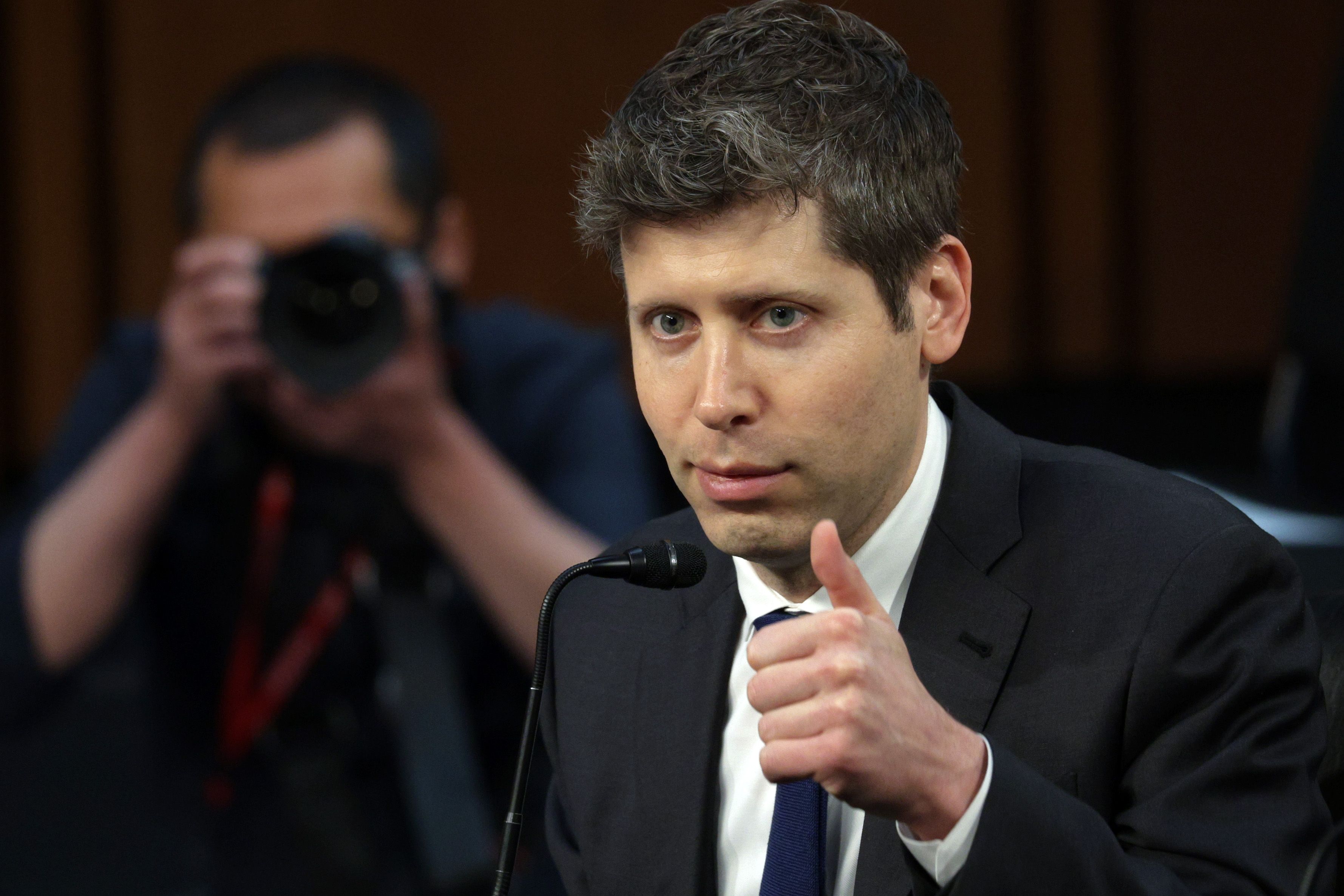
In a telephone conversation with the New York Times published on 15 June 2026, US President Donald Trump publicly praised Chinese President Xi Jinping and Russian President Vladimir Putin for their role in producing what he characterised as an "understanding" with Iran — a notable reversal of Washington's usual posture toward both governments, and a striking moment in the public framing of the Iran file. Reporting on the interview, carried by Iran's English-language Tasnim News and the Farsi-language Tasnim channel within minutes of one another at 01:43 and 01:45 UTC on 15 June 2026, gave the remarks prominence across the Iranian state-aligned media ecosystem, with Hezbollah's Al-Alam network amplifying the same account at 03:10 UTC the same morning.
The shift matters less for the substance of any new arrangement — Trump's language was deliberately soft, the word "understanding" doing diplomatic work that "deal" and "agreement" would not — than for what it signals about the coalition politics of the Iran file. For two decades, US negotiations with Tehran have been narrated in Washington as a contest between American leverage and Iranian resistance, with Beijing and Moscow cast as either irrelevant bystanders or, in harder-line telling, enablers of Iranian obstruction. The 15 June framing inverts that template: the principal US negotiator is on the telephone thanking his two most powerful geopolitical rivals for their cooperation, and the Israeli prime minister, by name, is being told to count his blessings.
What changed is not yet entirely visible. The sources available on the morning of 15 June do not specify the terms of any trilateral understanding, the location or date of any meeting that produced it, or whether Iran's Supreme National Security Council has publicly endorsed the framework. What is visible, and what this article will examine, is the diplomatic choreography: a US president making the case that the China–Russia–Iran triangle has become an instrument of de-escalation rather than a vector of escalation, and an Israeli government that has built much of its recent public posture on the opposite assumption now placed in the awkward position of being publicly rebuked by its chief patron.
A telephone interview, three audiences
The mechanics of the interview are themselves a story. The New York Times does not normally enjoy first-refusal on the president's interpretation of a major foreign-policy development, and the choice to make this the venue — rather than the Oval Office, Air Force One, or the White House press room — suggests a calculation about who, exactly, is meant to be persuaded. Three audiences are plausible.
The first is Tehran. Iran's leadership, having spent years treating the United States as an unreliable negotiating partner whose promises are contingent on the next election cycle, is being given a message wrapped in the imprimatur of two governments with which it has formal strategic-cooperation treaties. Praising Xi and Putin in their presence, in language intended to reach Iranian newspapers, is a way of telling the Islamic Republic that the next phase of any understanding will not be a bilateral improvisation but will sit inside a three-power architecture that Iran can read as insurance against a US walkout.
The second audience is Beijing and Moscow. Both governments have, in their public posture on Iran, been carefully ambiguous. China is Iran's largest oil customer and has signed a long-term strategic-partnership agreement with Tehran. Russia operates the Bushehr nuclear power plant and has signed, but not ratified, upgrades to its bilateral security relationship. Neither government has wanted to be seen as Washington's junior partner in a Middle Eastern negotiation; both have, in different ways, used the Iran file to argue that US-led security architectures are obsolete. The 15 June remarks give both a public credit line they can take home — and, not incidentally, place the United States in the position of publicly validating their role.
The third audience, named in the interview, is Israeli Prime Minister Benjamin Netanyahu. According to the Tasnim Farsi summary of the same conversation, Trump said of Netanyahu: "It is very difficult to deal with Netanyahu, and he should be grateful to us." The remark, in its bluntness, breaks a long-standing convention in US–Israel public diplomacy. American presidents have, in extremis, allowed frustration with Israeli governments to leak through unofficially, but explicit on-the-record admonishment is unusual. The implication — that Israel would have been on a worse trajectory without US intervention — is also a structural argument: that the United States has been the only thing preventing a regional slide that would have been costly to Israeli interests, and that credit for restraint is owed.
Reading the Iranian-language coverage
The two Iranian outlets that carried the story within minutes of one another on the morning of 15 June 2026 — Tasnim News in English at 01:45 UTC and Tasnim in Farsi at 01:43 UTC — gave slightly different emphasis. The English version led on Trump's praise of Xi and Putin; the Farsi version led on the Netanyahu line. That is itself a tell. Iranian state-aligned media, when reporting on a US-Israeli relationship in tension, conventionally foregrounds the friction. The decision to lead on Netanyahu "should be grateful" rather than on the China–Russia credit line suggests that Tehran's read of the interview is that the most actionable, most leverage-producing line is the one Washington has handed it on Israel.
Al-Alam, the Iranian state-aligned satellite network widely understood to maintain a working relationship with Hezbollah, picked up the English wire at 03:10 UTC and recirculated it in a frame that emphasised the trilateral character of the understanding. None of the three Iranian sources reviewed here specifies the technical content of any understanding — there is no enumeration of enrichment caps, no figure for stockpile size, no description of IAEA access arrangements. The repeated vocabulary is "understanding," a deliberately elastic word that can later be expanded or narrowed by the party that needs it to be one or the other.
The absence of technical detail is not, on this evidence, a failure of reporting. It is more likely a feature of the announcement. The 15 June interview functions as a directional signal — toward Tehran, toward Beijing, toward Moscow, toward Jerusalem — without binding anyone to specifics that have not yet been agreed. The harder text, if there is one, is presumably being negotiated out of public view, or is being held for an announcement that will carry the weight of an official communiqué rather than a presidential telephone interview.
What the inversion tells us about coalition politics
The traditional US framing of the Iran file has rested on a separation of two relationships: with Israel, on the one hand, and with the China–Russia bloc on the other. Under that framing, the United States' Middle Eastern position depends on keeping its alliance with Israel as a distinctive feature of its regional architecture, and on keeping Iran in a category that is neither aligned with Beijing nor aligned with Moscow, but rather uniquely sanctioned and isolated. The 15 June interview makes the second of those conditions harder to maintain. Iran is no longer being narrated as a pariah to be contained; it is being narrated as a partner in an understanding that required the joint effort of the three most powerful governments on the planet to produce.
For Israel, the structural problem is sharper. The Israeli security establishment's long-running argument for unilateral latitude on the Iran nuclear file has been premised on the assumption that the United States, whatever its public posture, would in extremis defer to Israeli judgments about the urgency of military action. Trump has, in the 15 June interview, publicly refused that deference. The "should be grateful" formulation is not a threat — Trump has not, on the available evidence, conditioned any US action on Israeli gratitude — but it does move the line of what is publicly sayable between the two governments. The next time an Israeli minister floats a strike timeline in public, the reply is now on the record: the United States has just told Israel, in a conversation the Iranian press has amplified, that the diplomatic track has produced results and that those results have a cost-benefit profile that Israel should be celebrating rather than attempting to overturn.
The corollary, also visible on 15 June, is the elevation of Beijing and Moscow to a category of explicit US acknowledgement. That is not the same as alignment; the United States and China remain in active trade and technology friction, and US–Russia relations continue to operate inside the constraints set by the war in Ukraine. But on the narrow question of the Iran file, the three governments have, in the language of the 15 June interview, agreed to the same project. For Beijing, that is a foreign-policy dividend: the Chinese government's long-standing argument that its diplomatic style produces outcomes has just been endorsed, on the record, by Washington. For Moscow, it is a partial exit from international isolation — the United States, in front of a global audience, has called Russia's contribution constructive. Both dividends can be deployed in other forums, in other conversations, with other counterparts.
The structural frame, in plain language
What we are watching, on the morning of 15 June 2026, is a recalibration of who gets credit for stability in the Middle East. For most of the post-1979 period, the United States has held a near-monopoly on the language of regional de-escalation, and the China–Russia relationship with Iran has been read, in Western capitals, primarily as a counter-architecture: a parallel structure designed to dilute US leverage. The 15 June interview flips the framing. The Chinese and Russian roles are now being narrated by the US president himself as part of the same architecture of de-escalation, not as an alternative to it.
The longer-term significance depends on whether the trilateral credit is rewarded with trilateral burden-sharing. If Beijing and Moscow are now publicly attached to the Iran file, they will face pressure — from Washington, from Gulf states, from Israel — to use their leverage to enforce any understanding against a hardliner faction in Tehran, or against an IAEA access dispute, or against a sanctions-evasion network. Conversely, the United States has accepted, in front of a global audience, that it cannot deliver the Iran file on its own. That admission is itself a structural change. It does not mean the United States has lost the Middle East. It does mean the Middle East can no longer be run as a one-key system.
What remains uncertain
The sources available on the morning of 15 June 2026 do not specify, and the article therefore cannot responsibly state, several things that an attentive reader will want to know. The technical content of the "understanding" — enrichment limits, centrifuge counts, IAEA inspection modalities, the fate of stored stockpiles — has not been disclosed in the materials reviewed here. It is not known whether Iran's Supreme National Security Council has issued a public statement endorsing the framework, nor whether the text of the New York Times interview has been independently released in full by the newspaper rather than reconstructed from Iranian state-aligned summaries. The reaction of the Israeli government, beyond Trump's characterisation of Netanyahu's posture, has not been recorded in the available reporting; the Iranian outlets that carried the story have an editorial interest in foregrounding Israeli discomfiture, and a fuller picture will require Western-wire confirmation in the hours ahead. Finally, the durability of the credit Trump has extended to Xi and Putin is itself a moving target: the same president has, in the recent past, publicly reversed himself on both governments within weeks of praising them, and the diplomatic value of the 15 June interview should be discounted accordingly. What is on the record is on the record. What it will look like in October is a different question.
This publication has been deliberate in foregrounding the Iranian state-aligned sources that first reported the 15 June telephone interview, on the principle that where two governments are speaking about each other, the third party's framing of the conversation is itself part of the news. Western wire confirmation of the precise text and context of Trump's remarks to the New York Times is pending.
Wire provenance
This editorial synthesis draws on the following public wire/social posts:
- https://t.me/alalamfa/
- https://t.me/tasnimnews_en/
- https://t.me/JahanTasnim/
- https://t.me/alalamfa/
- https://t.me/tasnimnews_en/
- https://t.me/JahanTasnim/
- https://t.me/alalamfa/
- https://t.me/tasnimnews_en/
Follow the event.
These dated source records provide context. They do not retrospectively verify this archive article.
Separate what the nuclear watchdog reported from what it could not determine after the June 2025 strikes.