Trump's Lebanon gambit exposes the limits of a US-Iran deal that left Israel in the dark
The White House wants a Lebanon file. Tehran says it is part of the deal. Netanyahu says Israel is not bound. The gap between those three positions is the story.
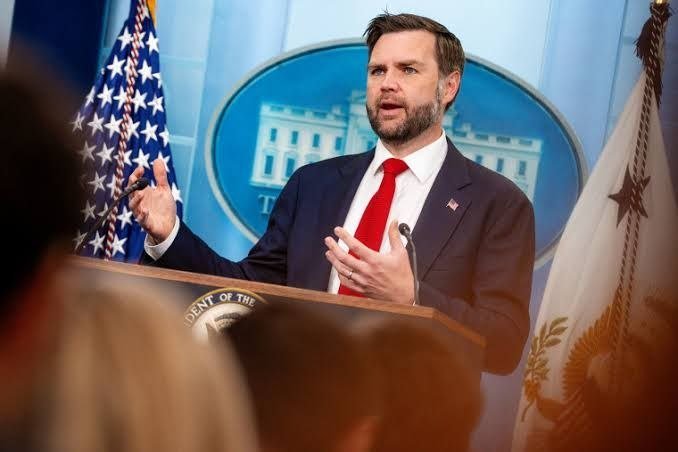
There are now three positions on Lebanon on the public record, and they do not line up. On 15 June 2026, US President Donald Trump told reporters he hoped Washington could "also resolve the situation in Lebanon, because it's something that never ends" (16:20 UTC, via Telegram channel of Israeli correspondent Amit Segal). The Iranian foreign ministry, in comments reported by Al Jazeera breaking news the same afternoon, framed ending the war in Lebanon as an "inseparable" part of the US–Iran agreement now taking shape. And on the Israeli side, prime minister Benjamin Netanyahu has informed Trump that Israel is "not bound" by any Lebanon clause, according to a 05:11 UTC post by Unusual Whales citing Israeli media. The geometry of those three statements is the news.
The dispute is not about whether Lebanon should stabilise. All three principals say it should. It is about whether the United States, having negotiated a framework with Tehran, can deliver Israel along with it — and whether the Iranian side will accept a deal in which Washington claims credit for a Lebanon track it cannot actually enforce. Trump's public framing treats Lebanon as a solvable, secondary file. The Iranian framing treats it as the price of admission. The Israeli framing treats it as an Israeli matter in which the US has no vote.
What the principals are actually saying
The Iranian position is the most legalistic. Al Jazeera's 15:32 UTC wire cited foreign ministry spokesperson statements to the effect that ending the war in Lebanon is "inseparable" from the broader US–Iran agreement. The phrasing matters: it is the language of conditionality, signalling that Tehran expects the Lebanon track to be operationalised in the same instrument, not as a follow-on confidence-building measure. Al Alam Arabic, in a 16:15 UTC urgent post, carried Trump's own line back to a wider Arabic-speaking audience: "We want to see how we can settle the conflict in Lebanon and we must talk to 'Israel' about this." The quotation marks around Israel are Al Alam's editorial choice, but the substance is a US president publicly acknowledging that Israel is a separate conversation.
The Israeli position, as filtered through Unusual Whales citing Israeli media, is blunt. Netanyahu reportedly informed Trump that Israel is "not bound by the Lebanon clause in the agreement." That is a direct repudiation of the conditionality Tehran is claiming. It also narrows Washington's room: if Israel is not bound, the US can either accept a deal whose central plank on Lebanon is unenforceable, or reopen the negotiation with Jerusalem — which the same Israeli media reporting suggests Netanyahu has already pre-empted.
The third position is the most candid, and it is the one most likely to age poorly. Per a 00:31 UTC post on X by Polymarket, Trump described Netanyahu as a "very difficult guy" after Israel was reportedly left out of the US–Iran negotiations. A US president publicly naming a democratic ally as a difficult partner is a leak, not a strategy. It tells the audience the negotiation is bilateral in form and triangular in friction.
The market read and the structural gap
The prediction market Polymarket, in a 15:06 UTC post, put the implied probability of an Israeli withdrawal from Lebanon by the end of the month at 5%. That is not a forecast; it is a referendum on the credibility of the entire Lebanon track. A 5% number says traders believe the conditionality Tehran is publicly claiming will not bind, that Israel will not move on the timeline the deal implicitly assumes, and that Trump does not have the leverage to compress that gap. It also says traders do not yet see a plausible de-escalation pathway that would force the issue before month-end.
A senior US official, per a 16:04 UTC post by Clash Report, has clarified that Israel's withdrawal from Lebanon is "not a condition" of the US–Iran agreement. Read against Iran's "inseparable" language, the clarification is the news. It is Washington publicly walking back the conditionality Tehran insists is the point. If both sides stick to their public framing, the agreement either ships with an unenforceable Lebanon clause or it does not ship at all.
What this is, structurally
The pattern on display is familiar: a great-power framework negotiated between Washington and Tehran that treats regional actors as variables to be solved, not as principals at the table. The Israeli side is signalling, in language that leaves no plausible deniability, that it reserves the right to operate independently of the deal's terms. The Iranian side is signalling that a deal without an operative Lebanon component is not a deal. The US side is signalling, with the Polymarket-implied 5% and the senior-official clarification, that it knows the gap is there and is buying time with rhetoric.
The honest read is that the US–Iran framework is real on the nuclear file and aspirational everywhere else. Lebanon is the test of whether the framework has a regional architecture or is a one-track instrument wearing regional clothing. On present evidence, it is the latter. Markets see it, Tehran is publicly testing it, and Jerusalem is publicly declining to be bound by it. The next forty-eight hours will tell which side blinks first, and whether the public sparring is the negotiation or the failure mode.
Desk note: Monexus is treating Iranian and Israeli official-line sources as primary on their own positions, and Polymarket as a market-implied probability rather than a forecast. Where the thread cites Israeli media via a US social account, we have flagged the channel of transmission and kept the claim attributed to Israeli media reporting rather than to the secondary account.
Wire provenance
This editorial synthesis draws on the following public wire/social posts:
- https://t.me/amitsegal/2064256636248535041
- https://t.me/alalamarabic
- https://t.me/ClashReport
Follow the event.
These dated source records provide context. They do not retrospectively verify this archive article.
Separate what the nuclear watchdog reported from what it could not determine after the June 2025 strikes.