Report: Trump quietly authorised Qatari cash transfer to Iran for Strait of Hormuz calm
Israel Hayom says Washington cleared Doha to send Tehran funds in exchange for free navigation through the Strait of Hormuz — a single-Israeli-source report that, if confirmed, would reframe the regional energy-corridor economy.
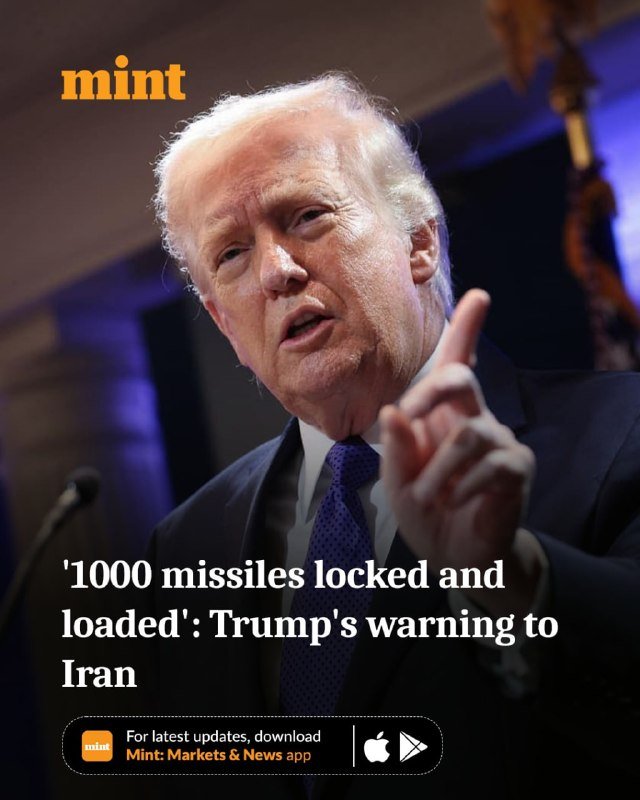
At 20:22 UTC on 15 June 2026, the open-source monitor OSINT Live circulated a single-sourced report that, if it holds, recasts the political economy of one of the world's most important shipping lanes. Citing Israel's Hebrew-language daily Israel Hayom, the post claimed that the United States had secretly authorised Qatar to transfer funds to Iran in return for guarantees of free navigation through the Strait of Hormuz and a mutual commitment to avoid hostilities. The claim was repeated, with minor wording variation, across at least five Telegram channels in the following hour: Megatron Ron, @wfwitness, AMK Mapping, Middle East Spectator and GeoPWatch, all attributing the underlying reporting to Israel Hayom and its diplomatic sources.
What makes the story consequential is not the news that Doha and Tehran talk — the two have an established back-channel — but the alleged role of the White House as enabler, and the price tag reportedly attached: "billions of dollars," in the phrasing of OSINT Live's summary, paid in exchange for a maritime de-escalation rather than a nuclear concession. If confirmed, that distinction would mark a fundamental departure from the sanctions-and-isolation architecture that has defined US policy towards the Islamic Republic since 2018.
The report, in detail
The Israel Hayom story, as relayed by the Telegram channels, frames the arrangement in three steps. First, the US administration of President Donald Trump granted Doha quiet authorisation to move funds into Iran. Second, those funds were tied — explicitly — to Iranian guarantees of freedom of navigation in the Strait of Hormuz, the 21-mile-wide chokepoint between Iran and Oman through which a substantial share of globally traded oil and a meaningful share of liquefied natural gas transits each day. Third, the package included an Iranian undertaking to avoid hostilities against US assets and Gulf partners during the arrangement's life.
The sourcing is unusually narrow. Israel Hayom is a pro-Netanyahu, Hebrew-language tabloid owned by the late Sheldon Adelson's estate and closely read inside the Israeli defence and diplomatic establishment; its exclusives are taken seriously in Jerusalem even when Western wires do not immediately pick them up. None of the five Telegram channels that recirculated the claim added independent reporting. As of the timestamps in the thread, no Reuters, Associated Press, AFP, BBC or Al Jazeera English dispatch had corroborated the underlying reporting, and no Qatari, Iranian, US or Israeli official had publicly confirmed or denied it on the record. The single-source nature of the report is itself the story's most important caveat.
Why the Strait of Hormuz is the operative variable
A US-brokered fund transfer in service of a nuclear deal would be a familiar, if contested, instrument: carve-outs to facilitate humanitarian trade have been a recurring feature of sanctions architecture, and the Obama-era Joint Comprehensive Plan of Action and its 2018 US withdrawal set the template for what such arrangements look like. The novelty in the Israel Hayom framing is that the currency of exchange is not nuclear compliance but maritime calm — and that the payment vehicle is a Gulf monarchy rather than a direct US transfer.
The Strait of Hormuz is, in raw numbers, the single most consequential energy chokepoint on the map. Even partial disruption moves the Brent benchmark within hours, and the insurance and freight premia attached to Gulf shipments rise and fall on Iranian behaviour in the waterway. Tehran does not need to close the strait to weaponise it; periodic seizures of tankers, the detention of crews, and the use of fast-attack craft by the Islamic Revolutionary Guard Corps Navy have, on several documented occasions, been enough to spike shipping insurance and lift spot prices. A quiet deal in which Tehran accepts visibility and predictability in return for hard currency is therefore a deal whose first beneficiary is the global oil market and the second is the Iranian state — in that order.
For Washington, the political logic is straightforward. Energy-price stability into a US election cycle, reduced risk of a kinetic incident that drags in US Central Command, and a managed channel to Tehran that does not require a formal diplomatic reopening — all are wins that can be sold domestically as toughness if they remain unacknowledged. For Doha, the deal consolidates a role Qatar has spent a decade cultivating: indispensable mediator, the only Gulf capital that can credibly speak to Tehran, Washington and the Israeli security cabinet in the same week.
The Israeli angle, and what is conspicuously absent
The choice of Israel Hayom as the lead outlet is not incidental. Jerusalem's security establishment has, for two decades, been the loudest international voice arguing that any US accommodation with Tehran erodes Israeli deterrence. A story planted in the Adelson-aligned tabloid signals displeasure: it puts the White House on notice that its Gulf back-channels are being read in real time, and it tests whether the arrangement can survive daylight. The fact that five Telegram channels — including several that track Israeli and Iranian military movements closely — picked the report up within thirty minutes suggests the original Hayom story was either briefed out to multiple audiences or contained enough specificity to read as a leak rather than a trial balloon.
The conspicuous absences are as telling as the sourcing. No US Treasury Office of Foreign Assets Control licence for a Qatari transfer has been published. No Iranian Central Bank statement acknowledging receipt has appeared. No Qatari Ministry of Foreign Affairs readout has confirmed the role. The State Department, the White House National Security Council, and the office of the Qatari prime minister have not, on the record, addressed the claim. In diplomatic reporting, absence of denial can be read many ways; it is not, by itself, confirmation.
Stakes, and what remains uncertain
If the Israel Hayom account is broadly accurate, the immediate winners are the Iranian state — which secures a sanctions-immune cash flow without offering nuclear concessions — and the Qatari leadership, which deepens its position as the Gulf's indispensable fixer. The US president secures an election-cycle commodity: cheaper gasoline and a quieter Persian Gulf headline file. The losers, on this reading, are the sanctions architecture built around Iranian oil exports since 2018, the credibility of any future US demand that Tehran choose between cash and uranium enrichment, and the Israeli government's preferred posture of maximum pressure.
The structural frame is harder. What the report suggests, taken at face value, is that the US has begun to treat the Strait of Hormuz the way it has long treated the Taiwan Strait and the Bab el-Mandeb: a piece of transit infrastructure whose stability is worth paying for in cash and quiet, rather than a stage on which to wage a longer ideological contest. That is a transactional reading of great-power management, in which the operative currency is risk reduction rather than regime behaviour.
What remains genuinely uncertain is whether the reported arrangement exists at all, whether it covers the dollar figures that Israel Hayom's diplomatic sources are alleged to have cited, and whether the "billions" figure is a precise number or a diplomatic round-up. The Hayom account is single-sourced, the recycling channels did not add new reporting, and no Western wire has yet stood up the underlying claim. A reader weighing the story on the available evidence should treat it as a serious, well-placed Israeli leak whose central proposition — a Washington-Doha-Tehran maritime arrangement underwritten by Gulf cash — is plausible enough to be worth tracking, but not yet corroborated enough to be stated as fact.
Desk note: Monexus has led on a single Hebrew-language outlet and a cluster of Telegram channels, in line with our policy of naming upstream sources rather than the aggregators that recirculated them. The piece flags the absence of Western-wire and on-the-record official confirmation explicitly, and treats Iranian and Qatari positions as load-bearing for any future confirmation rather than as counter-narrative colour.
Wire provenance
This editorial synthesis draws on the following public wire/social posts:
- https://t.me/osintlive/
- https://t.me/megatron_ron/
- https://t.me/wfwitness/
- https://t.me/AMK_Mapping/
- https://t.me/Middle_East_Spectator/
- https://t.me/GeoPWatch/
Follow the event.
These dated source records provide context. They do not retrospectively verify this archive article.
Separate what the nuclear watchdog reported from what it could not determine after the June 2025 strikes.