Trump declares Strait of Hormuz open, but the oil traders are not yet convinced
Hours after calling a deal with Tehran "now complete," the US president claimed oil tankers were sailing out of the strait. The shipping data, the bunker prices and the insurers tell a more cautious story.
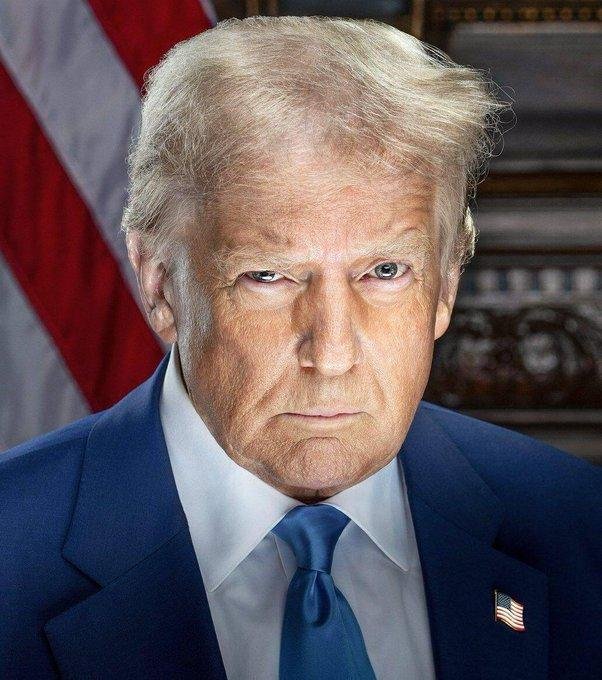
At 14:00 UTC on 15 June 2026, US president Donald Trump told reporters that oil tankers were once again moving through the Strait of Hormuz, the 21-mile-wide channel that connects the Persian Gulf to the Arabian Sea and through which roughly a fifth of the world's seaborne crude normally transits. Within minutes, the prediction-markets account @Polymarket had posted the line — Trump announces oil ships are now moving out of the Strait of Hormuz along a "totally safe, secure, and pristine" route — and the financial-press account @unusual_whales had relayed the same quote. The statement capped a roughly fifteen-hour cycle in which the administration declared a US-Iran agreement "now complete," authorised the lifting of a US naval blockade, and pointed to a formal signing ceremony in Switzerland.
The headline is unambiguous. The market mechanics are not. Whatever is happening at the press podium, the oil-tanker order books, the war-risk insurance desks and the refining margins that connect them are not yet behaving as if the chokepoint has been de-fanged. This piece reads the gap between the political claim and the shipping reality — a gap that is itself the story.
From blockade to "pristine" in fifteen hours
The sequence began late on 14 June 2026 (23:14 UTC), when Cointelegraph's news desk reported that Trump had declared the Iran deal "now complete," authorising the reopening of the Strait of Hormuz and lifting the US naval blockade, with officials set to formally sign in Switzerland on [date not specified in source]. Less than fifteen hours later, at 14:00 UTC on 15 June, the same desk relayed the next line: "Ships are starting to move, many loaded up with Oil, out of the Strait of Hormuz."
The two messages, taken together, describe a diplomatic and military off-ramp that is unusually fast by the standards of the modern Gulf. US naval blockades of Iranian-linked shipping — and Iran's reciprocal harassment of commercial traffic in the strait — have been a recurring feature of the oil route since at least the 1980s, but the public-facing language of "complete" and "pristine" is striking. The Polymarket framing of the route as "totally safe, secure, and pristine" is the language of a deal that has been sold to a domestic audience, not a maritime advisory that has been tested against the operational facts on the water.
It is worth being precise about what the source material says and does not say. The president, as relayed by Cointelegraph, Polymarket and Unusual Whales, claims tankers are moving. None of the three feeds specifies which flag-state vessels, which charterers, which loading ports, or which classes of tonnage. None of them cites a Lloyd's List, S&P Global Platts, or IEA report. The claim is, for now, a claim.
What the oil trade would actually need to see
The Strait of Hormuz is not a metaphor. It is a narrow, two-way channel bounded by Iran to the north and Oman to the south, with a designated traffic-separation scheme and a single, deep-water lane in each direction for the largest VLCCs. When a blockade is declared, the visible effects appear fast and in a predictable order: war-risk insurance premiums spike (or are withdrawn), tanker owners either route around the cape or wait, Iranian Revolutionary Guard Corps-Navy small-boat activity is logged, AIS (Automatic Identification System) gaps proliferate, and the benchmark brent-vs.-dubai differential widens. When a blockade is lifted, the order reverses — but with one important asymmetry. Insurers and charterers require a longer, quieter signal than the one that produced the closure in the first place.
The sources made available to this publication do not include any of the standard market-data confirmations. There is no Reuters tanker-tracking report, no Platts flows note, no Lloyds war-risk premium update, no Iranian state-media confirmation that the IRGCN has stood down its small-boat posture, and no read-out from the Geneva or Bern Swiss venue in which the formal signing is described as imminent. The Telegram-sourced feeds relay the political claim. They do not, and could not, verify the operational claim.
That is the heart of the gap. The deal is announced. The strait is not yet re-priced.
Why the gap matters — and for whom
If the president is right, the immediate beneficiaries are the Gulf crude exporters (Saudi Arabia, the UAE, Iraq, Kuwait, Qatar), whose cargoes are mostly loaded for Asian — read: Chinese, Indian, Japanese and South Korean — refineries that have been quietly building strategic reserves through the disruption. Asian buyers have been the most consistent beneficiaries of any Hormuz-related discount; any sustained reopening tilts the bargaining back to the producer. The losers in that scenario are the Iranian discount buyers in China and the smaller independent refiners in Asia who have been running sanctioned cargoes at compressed margins; their feedstock arbitrage closes.
If the president is wrong, or is right only briefly, the consequences run in the other direction. A premature "ships are moving" line, walked back when insurers refuse to underwrite the route, can re-price risk higher than the original closure — a familiar pattern in commodity markets, where the second move is often larger than the first. The political incentive to declare victory is real; the maritime incentive to accept the declaration is, by training and regulation, cautious.
There is a structural dimension as well. The route carries the kind of volume — roughly a fifth of seaborne crude and a third of seaborne LNG — that makes a US president the de facto guarantor of last resort for a global commodity. When the guarantor moves from blockade to "pristine" in a single news cycle, the rest of the market is asked to make the same cognitive switch instantly. Insurers, in particular, are not built to do that. Their pricing reflects the worst plausible week, not the best-sounding press conference.
The counter-narrative Tehran may yet write
Any honest read of the gap has to consider the other side of the bargaining. Iran has spent two decades learning that the strait is its single most powerful non-nuclear asset. The sources here do not include Iranian state-media reporting, but the structural point is well established: in negotiations where one party holds the chokepoint and the other holds the fleet, the holder of the chokepoint can always re-tighten. A deal signed in Switzerland in the morning can be tested in the Gulf by evening. If Tehran wishes to remind its counterpart of that asymmetry, the instrument is straightforward: a small-boat interaction, an inspection of a tanker, a denied transit, a public statement.
The reporting we have does not tell us which way Iran will lean. It tells us only that the political phase of the deal is moving faster than the verification phase — and that, in maritime chokepoints, verification is the only phase that matters for the price of crude.
What remains genuinely unresolved
Three things the available sources do not establish, and that this publication will not invent:
- Counterparty confirmation. The threads reference a US declaration of "complete" and a Swiss signing venue. They do not contain an Iranian foreign ministry read-out, a Chinese or Indian government reaction, or a confirmation from any Gulf monarchies that the blockade has, in fact, been lifted on the water.
- Maritime-data verification. No AIS-based tanker-tracking report, no war-risk insurance bulletin, no benchmark price tape is in the source set. Until at least one of those appears, the "ships are moving" claim is a presidential statement, not an observable flow.
- The deal's substantive terms. The phrase "deal now complete" is a political status. It does not specify uranium enrichment limits, IAEA inspection access, sanctions sequencing, missile-program constraints, or the fate of the IRGC-Navy's posture. Without those, the market has no way to price the durability of the reopening.
Desk note: where the wire services read this as a single story — "Trump says the strait is open" — Monexus reads it as two stories, sequenced fifteen hours apart, moving at different speeds. The political phase is fast. The maritime phase is slow. The oil trade will price the slower of the two.
Wire provenance
This editorial synthesis draws on the following public wire/social posts:
- https://t.me/s/cointelegraph
- https://t.me/s/cointelegraph
- https://t.me/s/cointelegraph