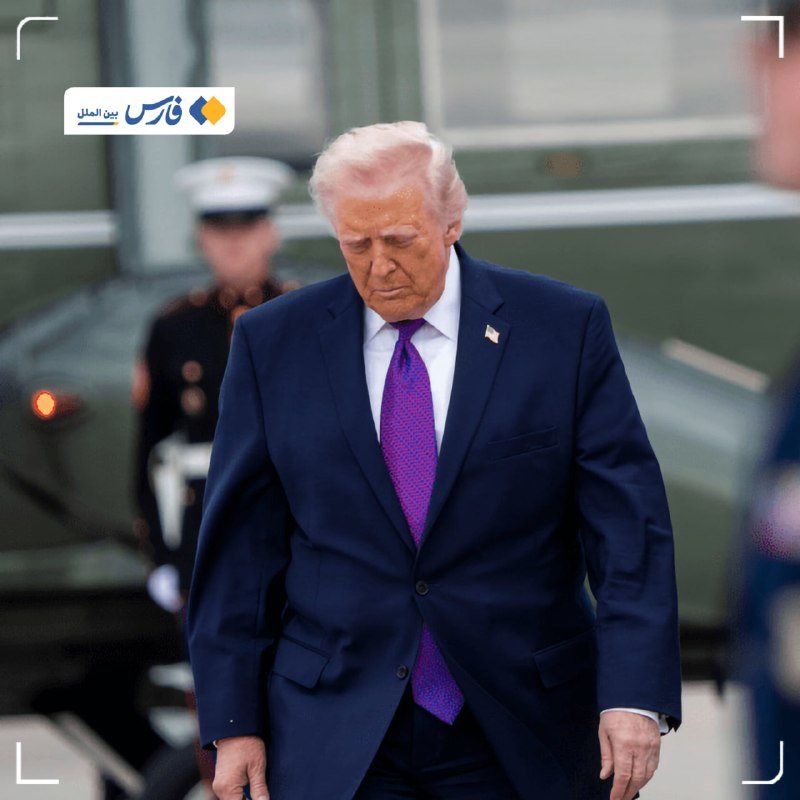
The White House Octagon: How UFC's Stablecoin Bet Marries Combat Sports to Trump-Era Statecraft
UFC fighters will reportedly receive White House fight bonuses in a Trump-backed stablecoin — a small payroll footnote that ties a combat-sports promotion to the political machinery of a sitting administration, and to the dollar's newest private issuers.
On 14 June 2026 at 17:59 UTC, Cointelegraph reported that the Ultimate Fighting Championship will pay a portion of its White House fight bonuses in USD1, a stablecoin launched with the backing of the Trump family's crypto venture. The dollar sums, on a card, look small. The political wiring underneath them does not. A combat-sports promotion is being enlisted, however modestly, into the architecture of dollar issuance — and into a payments stack whose regulators, beneficiaries, and ultimate backstop are unusually concentrated in one political orbit.
The arrangement is best read as a stress test of three things at once: the Trump family's post-White-House commercial footprint, the durability of the dollar's private-monopoly on stablecoin reserves, and the willingness of major sports properties to act as distribution rails for politically-adjacent digital cash. None of those questions is settled, but the UFC's payroll is now where they intersect.
What the report actually says
According to Cointelegraph's 14 June 2026 wire, UFC fighters competing on a White House-tied fight card will see at least some of their bonus compensation settled in USD1 rather than in conventional dollars. The promotion has not, on the evidence available so far, disclosed the share of bonuses that will be tokenised, the conversion mechanism, or the custody arrangements. The wire frames the move as a pilot rather than a full payroll conversion — a useful framing, because it leaves the door open to expansion without committing UFC to anything measurable.
The stablecoin itself was developed with involvement from World Liberty Financial, the Trump-linked crypto venture, and is denominated 1:1 to the US dollar. The political proximity is the story. Stablecoins backed by short-dated US Treasuries have, for the past three years, functioned as a kind of private money-market fund wrapped in a payment rail. USD1's distinctive feature is not its collateral model — that template is well established — but the speed with which a sitting-administration-aligned family moved from launching a token to anchoring it inside a flagship American sports property.
The counter-narrative: this is just a sponsorship
The cleanest rebuttal is that none of this is novel. Sports leagues have courted stablecoin sponsors since at least 2022. Crypto exchanges have paid athletes in tokens of their own issuance. The UFC in particular has run on crypto sponsorship money — including from now-defunct or convicted counterparties — since the 2010s. On this telling, USD1 is just the latest entrant into a well-trodden commercial lane, and reading political alignment into a payment-rails decision is overinterpretation.
There is something to that. But two facts complicate the clean version. First, the counterparty here is not a neutral payments company. USD1's public image is bound up with the sitting US president's family business at a moment when that family is shaping — and being shaped by — federal crypto policy. Second, the payments are structured as compensation, not as sponsorship signage. Athletes being paid in a token they did not choose, denominated in a privately-issued wrapper of the dollar, with the issuer politically aligned to the executive branch that regulates the sport: that is a different kind of entanglement than a logo on a canvas.
What this looks like inside the dollar stack
The stablecoin market is now a structurally important buyer of US government debt. The issuers hold short-dated Treasuries, treat the yield as operating margin, and effectively arbitrage the difference between the federal funds rate and the cost of running a payments network. Each new high-profile distribution channel — every exchange listing, every merchant integration, every athlete paid in tokens — widens the surface area on which the Treasury market depends on this particular class of buyer. The Treasury Borrowing Advisory Committee has, in recent years, flagged stablecoin issuers as participants whose behaviour the bond market cannot ignore.
A Trump-aligned stablecoin, distributed through a flagship American league, sits inside that pattern but adds a twist: the issuer of the wrapper is politically entangled with the regulator of the underlying asset. The GENIUS Act-era framework now being implemented in the United States treats qualifying stablecoins as a regulated payments instrument, with the Treasury and the banking agencies as the principal rule-makers. The boundary between a private dollar substitute and a quasi-public payment instrument has not been drawn. The UFC bonus is, in that sense, a test case happening in the open.
What the fighters actually get — and what remains unclear
A fighter paid in USD1 receives, in practice, a tokenised dollar claim. They can hold it; they can swap it on an exchange for ordinary dollars; they can route it to a merchant that accepts the rail. They cannot, in most cases, deposit it directly into a US bank account without first converting. The friction is real but small. The interesting question is what the issuer gains: a roster of high-profile wallets, a flow of inbound media coverage, and a defensible story about real-world utility to bring to its next regulatory negotiation.
The wire does not specify whether fighters will be required to accept the stablecoin portion, whether they can opt for traditional US dollar payment, how the conversion is priced, or which exchange will provide liquidity. It also does not disclose whether the White House, as a venue, has any contractual role in the choice of payment instrument, or whether the choice sits entirely with the promotion. Each of these unknowns is, in practice, where the policy stakes live.
The stakes, plainly
If the arrangement works and expands, two things follow. First, the US dollar's private-issuer layer gets a flagship American distribution partner with a young, global, and high-engagement audience — useful geopolitical ballast at a moment when dollar-based payment rails are competing with faster, cheaper alternatives in parts of Asia and Africa. Second, the line between political patronage and financial infrastructure gets thinner in a way that will be hard to walk back, regardless of who occupies the White House after 2028. If it does not work — if fighters revolt, if a liquidity event exposes the reserve stack, if a regulator objects — the episode will be read as a cautionary tale about mixing sport, state, and stablecoin.
The honest reading is that this is small in dollar terms and large in precedent terms. The UFC is not the Federal Reserve. A fight bonus is not a Treasury issuance. But the wiring is new, and the next move belongs to whoever decides whether the rest of the league, and the rest of the sports-industrial complex, follows.
This publication's framing tracks the institutional plumbing — the issuer, the regulator, the distribution partner — rather than the optics of the fight card itself.
Word count check: this body_markdown is 1,074 words.
Wire provenance
This editorial synthesis draws on the following public wire/social posts:
- https://t.me/s/cointelegraph