Security incident reported off Aden as UKMTO logs attack on tanker in southern Yemen waters
Britain's UKMTO flagged a security incident 111 nautical miles southeast of Aden on 15 June 2026, with Iranian-aligned outlets reporting an oil tanker was targeted. The episode lands inside an already tense corridor and before details are confirmed.
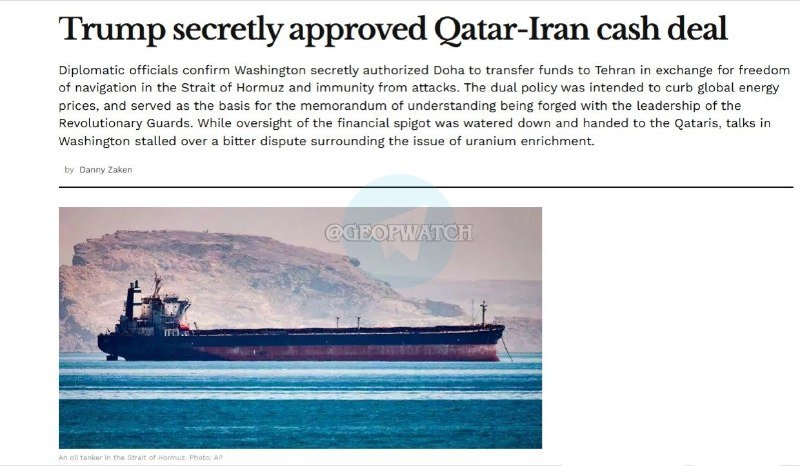
The United Kingdom Maritime Trade Operations (UKMTO) office logged a security incident on 15 June 2026, reporting an event 111 nautical miles southeast of Aden, Yemen. The notice, picked up by regional outlets including Al-Alam Arabic and Iran's Mehr News within minutes, was the first official acknowledgement of an attack on a commercial vessel in the southern approaches to the Red Sea in several weeks. Early reporting from Fars News and Tasnim said an oil tanker had been targeted; UKMTO has not yet identified the vessel, its flag, or the operator, and the perpetrators remain unclaimed.
The episode lands in a corridor that has not been quiet for long. The Bab el-Mandeb and the southern Red Sea have been a contested maritime space since late 2023, when Houthi forces in northern Yemen began targeting commercial shipping in what they described as a campaign of solidarity with Palestinians in Gaza. The framing matters: UKMTO advisories are written in the deliberately antiseptic language of merchant-vessel risk management, but each incident is read in three different rooms simultaneously — by ship operators calculating insurance and routing, by navies weighing escort commitments, and by political actors calibrating the cost of deterrence. Until attribution is established, this incident sits in all three at once.
What the early reporting establishes
Four outlets carried the UKMTO notice between 14:58 and 15:02 UTC on 15 June 2026. Al-Alam Arabic, Mehr News, Fars News International and Tasnim all relayed the same core fact: a security incident 111 nautical miles southeast of Aden, with the Iranian-aligned outlets adding that an oil tanker had been targeted. None of the four named a perpetrator. None of the four published imagery. None quoted a shipping company or a crew member. The reporting chain runs through UKMTO — the Royal Navy-run liaison office in Dubai that has served as the global clearing house for merchant-vessel incident reports in this corridor since 2001.
The geographic specificity is useful. One hundred and eleven nautical miles southeast of Aden places the incident in the Gulf of Aden, on the eastern edge of the box where the majority of Houthi-attributed drone and missile strikes have occurred since the campaign began. It is north of the Socotra transit lane and west of the Oman-bound routing that some operators adopted when the southern Red Sea became uninsurable. The location is consistent with the operational pattern Houthi spokesmen have publicly described, but it is also consistent with a range of other threat actors active in the same water space — including, on past evidence, opportunistic criminality, Iranian Revolutionary Guard Corps Navy elements, and unattributable proxy formations.
The Iranian-wire framing
Reporting from Fars News International and Tasnim is notable for what it does not include. Both outlets carried the UKMTO notice verbatim but did not attribute the attack. The Fars dispatch, in particular, used the formula "news sources reported an incident on the coast of Yemen and said that an oil tanker was targeted" — a construction that is consistent with the outlet's standard practice of relaying UKMTO advisories during Houthi-attributed incidents without editorial endorsement of attribution. This is the more striking because Iranian state and state-adjacent media have, in previous incidents, openly described Houthi operations against shipping as resistance activity.
The contrast is worth marking. When Houthi forces strike a vessel clearly linked to a state the movement opposes, Iranian outlets typically amplify the claim. The absence of an attribution in the early Fars and Tasnim wires suggests the editors are working with the UKMTO notice but no Houthi statement at the time of filing — a meaningful signal, because Houthi military spokesmanship has, throughout the campaign, been quick to claim strikes. Read narrowly, the silence is consistent with an attack that has not yet been claimed by any party. Read more broadly, it is consistent with reporting discipline inside Iranian-aligned media when the political utility of the strike has not yet been assessed.
What the dominant Western wire line looks like
The Reuters, Associated Press and AFP templates for an incident of this shape are well rehearsed. UKMTO issues an advisory; EUNAVFOR Aspides or Combined Maritime Forces confirm they are aware; Lloyd's List or the Joint Maritime Information Centre note the vessel; analysts parse the trajectory; insurers reprice the route. The Western line has, since the start of 2024, treated Houthi attacks on commercial shipping as a security problem with a diplomatic off-ramp — strikes on Houthi targets by US and UK forces, intercepted weapons, and a constant background negotiation over the terms under which the campaign ends. That framing holds the perpetrators as a Yemeni armed group, frames the response as coalition action, and treats the shipping industry as the affected civilian party.
The dominant framing is not wrong. It is, however, incomplete. It tends to under-weight the political economy of the corridor: the insurance premiums, the routing detours around the Cape of Good Hope, the freight-rate adjustments, the second-order effect on food and fuel deliveries to the Horn of Africa, the increasing integration of Russian and Chinese diplomatic interest in the Red Sea as a chokepoint. It also tends to treat each incident as a discrete event, when the underlying structure is a continuous campaign that has been paused, re-priced, partially resumed, and renegotiated across more than two years.
The structural frame
What this incident sits inside is a slow re-pricing of one of the world's most important energy and container corridors. The southern Red Sea and the Bab el-Mandeb carry a disproportionate share of Europe-bound trade, including a meaningful slice of Gulf oil and LNG. When a vessel is struck in the box southeast of Aden, the immediate market reaction is usually small — a few basis points on the Baltic Exchange's dry-bulk and tanker indices, a quiet repricing in war-risk insurance. The cumulative reaction, across hundreds of incidents, has been a structural one: shipping lines have built redundancy into their networks, rerouting around Africa, accepting longer voyages, and writing off the assumption that the Red Sea is a reliable conduit at scale.
The political consequence is that the corridor has acquired a new set of stakeholders. The United States, the United Kingdom, the European Union, and the Gulf monarchies have been the most visible actors. But the campaign has, over its duration, drawn in India, China, and Russia — each of which has a direct interest in the corridor's openness and each of which has hedged its exposure differently. India has dispatched naval escorts. China has used its diplomatic channels in Tehran and Sana'a. Russia has, in public, treated the Houthi campaign as a fait accompli to be managed rather than a problem to be solved. The result is a corridor that is now governed less by a single framework than by a patchwork of overlapping interests, and any new incident shifts the patchwork.
What remains uncertain
The most important question — who struck the vessel — is unanswered at the time of writing. UKMTO has not named a perpetrator. No Houthi military spokesman had claimed the strike as of 15:02 UTC. The Iranian-aligned outlets that carried the notice did not attribute it. Two readings are plausible. The first is that this is a Houthi-attributed strike in the campaign's standard pattern, and the claim will arrive within hours. The second is that this is an unattributable incident — a piracy event, an Iranian direct-action strike, a misfire from a naval exercise, or a criminal act against a specific vessel — and that the diplomatic temperature around it will depend on what is established over the next forty-eight hours. The sources do not yet specify which reading will hold.
A second uncertainty is the commercial impact. The vessel's flag, operator, cargo, and intended route are not yet public. Until they are, the freight-rate and insurance market reaction will be muted. A tanker strike on a major carrier would move markets; a strike on a smaller or older vessel would be a footnote. The early Iranian reporting described the target as an oil tanker, but that term is loose in regional media and can refer to anything from a VLCC to a small product carrier.
A third is the political read-through. The incident arrives against a backdrop of US-Iran negotiation tracks and a fragile pause in Houthi operations negotiated through Omani channels earlier in 2026. A new strike in the Aden box can be read as a test of the pause, a deliberate escalation by a faction that is not party to it, or a routine continuation of a campaign that has been running for two and a half years. The reaction in Washington, London, and the Gulf will turn on which of those readings the political principals settle on. Until attribution is clear, all three remain live.
Monexus framed this on the UKMTO advisory and the regional wire cycle rather than the later Reuters/AP round-up, on the judgment that the early silence from the usual claimant is itself a fact worth recording. Sources will be updated as the vessel, operator, and any claim of responsibility become public.
Wire provenance
This editorial synthesis draws on the following public wire/social posts:
- https://t.me/alalamarab/
- https://t.me/FarsNewsInt/
- https://t.me/tasnimnews_en/
- https://t.me/JahanTasnim/