A ceasefire in the headlines, a war still on the ground: what the US–Iran announcement actually changes in Lebanon
A US–Iran ceasefire was announced overnight. In Beirut and the south, the public is unconvinced, and the channels aligned with the armed groups are still talking about continuation.
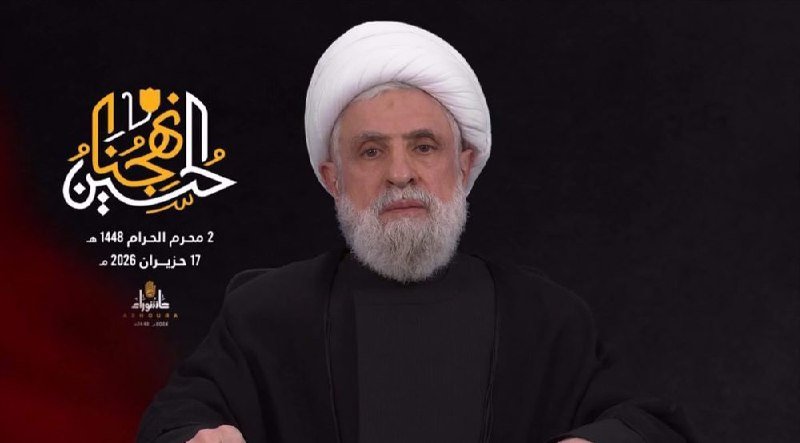
A ceasefire announcement brokered between the United States and Iran arrived in the small hours of 15 June 2026, and within minutes the same phones in Beirut that lit up with cautious relief were filling again with a different kind of message. Al Jazeera English's overnight broadcast led with the Lebanese reaction, and the headline was not triumph: Lebanese remain sceptical despite US–Iran ceasefire announcement. The relief is real. The trust is not.
This publication finds that the gap between a deal signed in a capital and the reality enforced on a border is now the most important fact in the conversation — and the one the wire cycle is least equipped to explain.
What was actually announced
The deal, reported across regional and international outlets in the hours after midnight UTC, is a US–Iran understanding intended to wind down the escalatory exchanges that have run through Lebanon, the occupied Palestinian territories, and the Gulf shipping lanes in recent weeks. The framing out of Washington and Tehran is mutual de-escalation. The framing on the ground in southern Lebanon, where Israeli forces and Iran-aligned armed formations remain in direct contact, is that nothing has changed operationally.
According to the Arabic-language channel Al-Alam, cited in posts circulating on Telegram between 01:01 and 03:04 UTC on 15 June, the message from the armed formations' own media infrastructure is unambiguous: "At the present time we remain in Lebanon and continue to fight. We respond if they shoot at us and attack those who threaten us." A second post on the same channel, timestamped 03:04 UTC, frames the diplomatic outcome differently again: "The direct connection between the two fronts in Lebanon and Iran must be recognized." The implication is that Tehran's diplomatic track and the armed formations' military track are not in tension — they are two arms of the same posture, and a ceasefire in one does not automatically retire the other.
Why the Lebanese public is unconvinced
Scepticism in Beirut, Tyre, and Sidon is not ideological. It is empirical. The last several rounds of US-brokered de-escalation produced photographs, statements, and quiet telegrams — and then produced the next round of strikes. The Lebanese reader is not asking whether the United States and Iran have signed something. They are asking whether the armed formations on their soil consider themselves bound by it, and whether the air force that has been flying over their villages considers itself bound by it.
Al Jazeera's overnight reporting is explicit on the point: the announcement "raised hopes," but the operative word in the Lebanese street is despite. Coverage of a deal that names no specific exchange of prisoners, no specific withdrawal timeline, no specific verification mechanism, and no specific guarantor for the southern Lebanese villages that have absorbed the bulk of the damage does not give a war-weary population much to anchor on.
The counter-frame from the armed formations' media
Two threads in the Al-Alam feed, both timestamped within two and a half hours of each other, capture the counter-narrative cleanly. The first, at 01:01 UTC, reads in the channel's own framing: "Trump emerged a loser." The second, at 01:04 UTC, presents the military posture as unchanged. The third, at 03:04 UTC, asserts linkage between the Lebanese and Iranian fronts as a strategic achievement, not a vulnerability to be managed down in a deal.
The sequence matters. It is not a communiqué from a defeated party. It is the public position of an armed formation that wants its domestic audience — Lebanese, Iranian, Iraqi, Yemeni — to read the deal as evidence that armed pressure extracted concessions, and that the next round of pressure, if it comes, will be from a position of strength. That is the framing Western outlets tend to report past in pursuit of the headline that a ceasefire has been agreed.
What is structurally different this time
Three things are worth saying in plain terms, without resorting to academic scaffolding.
First, the deal is bilateral between Washington and Tehran, but the fighting is multilateral. The armed formations on the Lebanese–Israeli frontier, the Houthis in the Red Sea, and the various Iraqi militia cells that have weighed in over the past months are not signatories. Past experience — from the 2023–24 Gaza exchanges to the post-2024 Houthi maritime campaign — suggests that bilateral understandings age poorly when the operational actors on the ground retain escalation leverage.
Second, the deal's verification problem is a function of geography. Iran's own territory is observable. The Lebanese frontier is not. The armed formations' command structure is opaque to Western intelligence by design, and the relevant rocket and drone inventories are dispersed across civilian terrain in southern Lebanon and the Beqaa. A ceasefire whose compliance cannot be independently verified is, in the most generous reading, a pause.
Third, the political economy of escalation still points in the wrong direction. A ceasefire in a situation where armed formations retain prestige incentives to demonstrate that they are not bound by it, and where the opposing air force retains operational incentives to keep striking in response to any incident, has a short half-life. The Lebanese are right to be sceptical on the empirical record.
Stakes, and what remains uncertain
The dominant Western framing — deal announced, escalation de-escalated, markets exhale — captures a partial truth. The counter-framing out of the armed formations' media apparatus — that this is a tactical pause, that the front linkage is a strategic asset, and that the principal antagonist emerged weakened — captures a different partial truth. Both can be held in the same hand.
What remains genuinely uncertain, and what the available reporting does not resolve, is the operational behaviour of the armed formations on the ground over the next 72 to 96 hours. If the southern Lebanese front quiets, the deal will look like a deal. If the next incident produces the next round of cross-border fire, the deal will look like the headline it currently is: a statement of intent by two capitals, with the people underneath it still waiting to see what changes in their village.
The Lebanese are not asking the world to take a side. They are asking, reasonably, that the next round of reporting read past the press conference in Washington and the statement in Tehran, and report what the sky over the south is actually doing.
— How Monexus framed this: the wire cycle led with the announcement; Monexus led with the Lebanese reaction and the armed formations' own messaging, treating the deal as an input to a continuing situation rather than the headline that closes it.
Wire provenance
This editorial synthesis draws on the following public wire/social posts:
- https://t.me/alalamarabic
- https://en.wikipedia.org/wiki/2026_United_States%E2%80%93Iran_ceasefire
Follow the event.
These dated source records provide context. They do not retrospectively verify this archive article.
Separate what the nuclear watchdog reported from what it could not determine after the June 2025 strikes.