A deal to reopen Hormuz, and the war that made it
Washington and Tehran say they have a deal to reopen the Strait of Hormuz. Oil slid, risk assets rallied, and a French president fired a warning shot at any Iranian move to charge tolls.
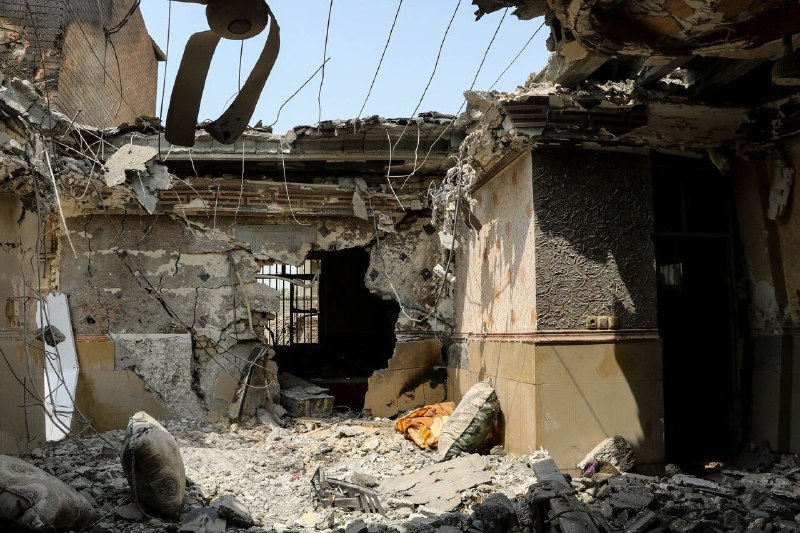
On 15 June 2026, the United States and Iran announced a deal to reopen the Strait of Hormuz — the narrow waterway through which a large share of the world's seaborne oil reaches market — and to open a negotiating track on Tehran's nuclear programme. Hours later, French President Emmanuel Macron publicly warned Tehran against any attempt to impose transit tolls on shipping using the chokepoint, an intervention that underscored how quickly the diplomatic choreography around the agreement has begun to fray. Bitcoin climbed back above $65,500, US stock futures rose, and crude oil sold off, a market reaction that read the announcement as a real risk-off reversal rather than a tactical pause.
The deal, as described in initial wire reporting, is the first concrete de-escalation since fighting broke out earlier in the year. It is also a reminder of how much of the modern global economy still runs through a twenty-one-mile-wide funnel of water between Iran and Oman. When that funnel is contested, insurance rates, freight rates, and inflation expectations all move together; when it reopens, they unwind just as quickly. The pattern has repeated often enough to count as a structural fact about energy markets, not a one-off.
What was actually agreed
According to a 15 June 2026 dispatch carried by LiveMint via wire, Washington and Tehran have agreed to a deal that reopens the Strait of Hormuz and "sets the stage for talks on Tehran's nuclear program and halting" a war that "killed thousands of people and roiled the global" economy. The reporting is consistent on the headline items: passage through the strait resumes, nuclear talks become a defined track rather than a side channel, and active combat is brought to a halt. Beyond those three pillars, the public details are thin. The deal's text, its verification regime, the sequencing of sanctions relief, and the treatment of Iran's stockpile of enriched uranium have not been disclosed in the early wire copy, and each of those questions will determine whether the agreement functions or fractures on first contact.
Two structural points deserve attention. First, a deal that reopens Hormuz without resolving the nuclear file is, at best, a temporary arrangement: the underlying reason both sides have, at different moments, been willing to threaten the strait is the unresolved status of Iran's programme, and that status has not changed. Second, a deal that opens the strait while leaving Iran's missile and proxy architecture in place is, at best, a partial settlement: the regional pattern that dragged the two countries into war in the first place extends well beyond the nuclear file, and a return to the status quo ante in Lebanon, Iraq, and the Gulf carries its own costs.
Macron's warning, and the toll question
Macron's intervention on 15 June 2026 — reported by Middle East Eye's live blog — is the first substantive complication of the post-deal phase. The French president warned Iran against "imposing Hormuz tolls," a position that aligns Paris with the long-standing American and Gulf position that the strait is an international waterway and that passage through it cannot lawfully be conditioned on payment. The warning is significant for two reasons. It signals that European capitals intend to read the deal as a return to the pre-war legal regime, not as an opening for Tehran to monetise its geography. And it pre-empts a specific Iranian negotiating posture that has surfaced periodically in Tehran commentary for years: that Iran, as the coastal state on the northern shore, has a legitimate claim to levy charges on traffic that passes through its waters.
The toll question is not theoretical. Any Iranian move in that direction would, in practice, recreate the wartime disruption by other means — a slow, bureaucratic strangulation rather than a kinetic one. It would also split the deal's coalition almost immediately, because the same Gulf monarchies whose cooperation the United States needs to enforce any sanctions architecture would be the first to refuse to pay. Macron's public framing of the issue, the day the deal was announced, is best read as an attempt to close that lane before traffic through it grows.
The market read: oil down, Bitcoin up
The market reaction was immediate and clean. According to CoinDesk's 15 June 2026 coverage, Bitcoin hit a two-week high above $65,500 "as the US-Iran deal sends oil sliding," with the outlet framing the move as a withdrawal of the geopolitical premium from crude and a re-rating into risk assets. A separate CoinDesk dispatch, also on 15 June 2026, captured the same arc: "Bitcoin shoots higher on Iran peace deal, with Strait of Hormuz set to open," alongside "the price of crude oil is tumbling, and U.S. stock futures are moving higher."
The pattern is familiar from prior Hormuz scares: when the strait is contested, oil rises, equities wobble, and Bitcoin — which behaves, in practice, as a high-beta macro asset in moments of policy uncertainty — tends to follow equities down. When the strait reopens, the trade reverses. What is unusual this time is the speed. Within hours of the announcement, the geopolitical premium that had been priced into front-month crude was visibly unwinding, and the rotation into risk was broad enough to show up in both crypto and US equity futures simultaneously. That is the read of a market that believes the deal, at least for now, not the read of a market that is hedging against it collapsing within the week.
A structural caveat is in order. A deal to reopen the strait is not the same as a deal that holds. Oil traders have been burned before by agreements that survived their announcement by days, and the option market's tail pricing in the days ahead of the deal was, by several accounts, already elevated. The Bitcoin move is real, but it is a move on the probability of a stable passage, not on the existence of one. The first test of the deal will not be the press conference in Washington or Tehran; it will be the first vessel that transits the strait under the new arrangement and is inspected, or not, by the Iranian Revolutionary Guard Corps Navy.
The war behind the deal
The deal exists because of a war. LiveMint's reporting describes the conflict as having "killed thousands of people and roiled the global" economy, language that is consistent with the casualty and disruption figures that surfaced in earlier wire reporting during the fighting. The Strait of Hormuz had become, for the duration of the war, the most expensive piece of real estate in the world: roughly a fifth of seaborne oil and a third of seaborne LNG passed through it, and any sustained closure translated within days into higher gasoline prices, higher shipping insurance, and tighter monetary conditions in import-dependent economies from India to Japan.
That structural exposure is the reason a deal that does not resolve the nuclear file, does not touch Iran's missile programme, and does not address the proxy network can still be presented as a meaningful outcome. It is meaningful because the alternative — a sustained closure — was no longer tolerable for the Gulf monarchies, for China, for Europe, or, in the end, for the United States. The deal is, in that sense, a ceasefire purchased at the price of leaving the underlying disputes in place, on terms that will need to be renegotiated before the next time the strait is contested.
What remains uncertain
Three things are genuinely unknown. First, the text of the deal: the wire copy describes a framework, not a document, and the difference matters when verification questions arise. Second, the sequencing: it is not clear from the early reporting whether sanctions relief, oil-export licensing, and the resumption of nuclear-site inspections are simultaneous, staggered, or conditional on Iranian compliance with steps that have not yet been publicly named. Third, the regional spillover: the war that preceded the deal did not take place only in the Gulf. A return to pre-war conditions in Lebanon, Iraq, and the wider Levant is itself a destabilising event, and the deal's silence on those fronts is a choice, not an oversight.
What is known is enough. The strait is set to reopen. The nuclear file is back on the table. The macroeconomic premium that the war imposed on oil, and through oil on almost everything else, is being withdrawn. For the next several weeks, that withdrawal will be the dominant story in commodity and risk markets. After that, the harder work of building something that lasts — or of recognising that nothing has been built at all — begins.
This publication read the deal through two lenses: as a diplomatic event with a clear market signature, and as a structural test of how much of the global economy can be allowed to depend on a single chokepoint run by a single state. Both readings are present in the piece above; neither is offered as the last word.
Follow the event.
These dated source records provide context. They do not retrospectively verify this archive article.
Separate what the nuclear watchdog reported from what it could not determine after the June 2025 strikes.