A Pakistan-brokered US–Iran truce reopens the Strait of Hormuz — and the world’s most volatile chokepoint is briefly, conditionally, open for business
A surprise memorandum mediated in Islamabad has paused a war that killed thousands and paralysed one-fifth of the world’s oil traffic. The harder talks on Tehran’s nuclear programme now begin.
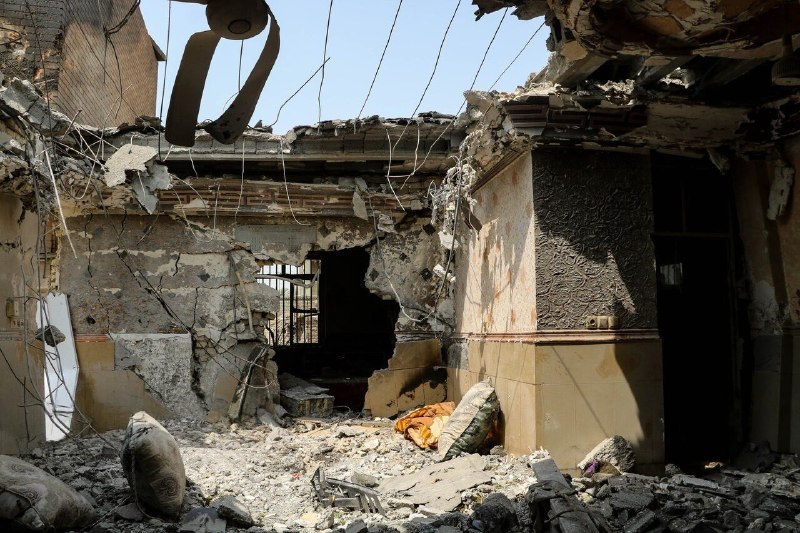
The handshake, announced in the early hours of 15 June 2026, was less a handshake than a Pakistani-issued bulletin: a memorandum of understanding committing the United States and Iran to what the deal’s text called an “immediate and permanent” end to military operations, with the Strait of Hormuz reopened and a pathway cleared to talks on Tehran’s nuclear programme. The announcement, carried first by France 24 and confirmed by mediator Pakistan on Sunday, ended a war that had killed thousands and choked the narrow waterway through which roughly a fifth of globally traded oil normally transits. Crypto markets, always the first speculative instrument to react to Middle Eastern ceasefires, priced in the news within minutes.
The implication is more interesting than the communiqué suggests. This was not a peace deal negotiated in Geneva, Vienna, Doha or Muscat — the venues that have hosted the long, fitful US–Iran nuclear file. It was brokered in Islamabad, by a Pakistani government that until recently was being treated by Washington as a state in chronic default, and the mechanism — a memorandum, not a treaty — left the harder questions of nuclear constraints, missile programmes, regional proxy networks and sanctions architecture for a follow-on round that does not yet have a venue. What was settled was the bleeding. What remains unsettled is the underlying contest.
The announcement, parsed
France 24 reported at 01:19 UTC on 15 June 2026 that both Washington and Tehran had confirmed signing a memorandum committing them to an immediate and permanent end to military operations, with Pakistan named as mediator. A subsequent Live Mint dispatch at 01:54 UTC, citing the same Pakistani channel, added the second operative clause: the Strait of Hormuz is to be reopened, a precondition to the nuclear-track negotiations that both governments had publicly said must accompany any ceasefire. The framing — “setting the stage for talks on Tehran’s nuclear program and halting a war that killed thousands” — was the first on-the-record confirmation that the conflict had moved from active hostilities into a diplomatic phase, however tentative.
The sequencing matters. Pakistan’s role is not incidental: Islamabad has spent two years rebuilding ties with Tehran, including a 2024 cross-border strike campaign against Baloch separatists on Iranian soil that both governments spun as a jointly-successful counter-terror operation, even as the episode raised uncomfortable questions about Pakistani air operations over Persian Baluchestan. That prior operational cooperation gave Pakistani military and intelligence channels existing lines to both governments. A second detail sharpens the picture: President Donald Trump told reporters the deal would be signed on Sunday, a claim that, at the time it was made, contradicted Tehran’s public position. The contradiction did not survive the day. The Cointelegraph dispatch from 06:07 UTC the previous day, quoting crypto analyst Michaël van de Poppe on the way a Hormuz reopening would likely “send liquidity back to risk-on assets such as cryptocurrencies,” was already reading the direction of travel the markets would price once the announcement landed.
Why the Strait, and why now
The Strait of Hormuz is the single most consequential pinch-point in global energy geography. At its narrowest, the shipping lane is roughly 33 kilometres across, with two-mile-wide channels for inbound and outbound tanker traffic separated by a two-mile buffer. Through those channels flows the bulk of Gulf-state crude bound for Asian markets — Chinese, Indian, Japanese and South Korean refineries, principally — alongside LNG shipments to Europe and the wider Pacific. Any sustained closure does not merely raise the price of oil; it prices the risk of recession into everything else. The Bloomberg Commodity Index, freight forward bookings on VLCCs, and the gasoline crack spread on the US Gulf coast all move on the rumours that begin at the Kharg Island loading terminals and end at the Lloyd’s List intelligence desk.
The war that just paused had, by Live Mint’s summary, killed thousands and “roiled the global” — a phrase that gestures at the scale of disruption even where the precise contours remain unreported. The memo’s specific value is that it converts an open-ended kinetic event back into a track-one diplomatic process. That is a genuine shift. It is not, however, the same thing as peace: a memorandum of understanding is a political document signalling intent, not a legally binding treaty, and either party can withdraw on notice. The Iranian and American incentives for staying inside the document are not identical, which is the source of the next set of risks.
What both sides bought, and what they deferred
The Iranian position, as the memo implicitly acknowledges, was that a war it was losing on the ground could be ended before its nuclear infrastructure was physically destroyed. Tehran conceded nothing in the memorandum about enrichment levels, IAEA access, or the missile programme — issues that, by the design of the document, are deferred to the next round. For Iran, that is the entire point. A pause that preserves facilities, senior scientific personnel, and the institutional capacity of the Atomic Energy Organisation of Iran is a pause that costs less than the alternative. The domestic Iranian framing — visible in the country’s state-aligned media, which has covered the announcement as a victory of “strategic patience” — leans on this read. The argument is that time, not bargaining chips, is what Tehran had to preserve, and the memorandum preserved it.
The American position is more layered. A White House that, days earlier, was being criticised for an inconclusive air campaign now has an executable document with a third-party guarantor in a country that operates the only overland route out of Iran for gas pipeline exports to South Asia. The Trump administration’s preferred story is that maximum pressure, militarised, produced the deal. The harder read is that the war was already becoming expensive in ways that did not show up in cable-news graphics: insurance premiums for Gulf shipping, the political cost to Gulf Arab partners whose infrastructure was within range, and the secondary sanctions on Chinese refiners that were eroding Beijing’s willingness to keep diplomatically underwriting Tehran. A negotiated exit, framed as victory, is the cheapest available off-ramp.
The Pakistani position is the one most often missed in Western coverage. Islamabad has spent the past two years positioning itself as the indispensable mediator between the Gulf and South Asia — a role with no obvious successor since Qatar and Oman were damaged by their closeness to the earlier rounds of the nuclear file. The memorandum gives Pakistan a measurable diplomatic win at a moment when its economy is in structural distress, its relationship with the IMF is the subject of recurring public argument, and its standing in the Organisation of Islamic Cooperation depends on exactly this kind of brokered outcome. The cost, for Pakistan, is that it has now put its credibility behind a US–Iran understanding whose terms it did not write.
The structural frame: a chokepoint re-priced, not a region pacified
The Strait’s reopening is a market event first and a geopolitical event second. Once the announcement was confirmed, the speculative pricing began: van de Poppe’s observation, made before the signing, that a peace deal would “send liquidity back to risk-on assets” was visible in the minutes after the memorandum hit the wires, with crypto majors and Gulf-exposed equities rallying as oil futures sold off. That price action is, in a sense, the cleanest verdict the markets can deliver on a ceasefire: the cost of war was priced in, and the cost of peace is being priced out.
But the larger pattern deserves naming without academic scaffolding. The architecture of US–Iran confrontation for the past two decades has rested on a specific set of supports: an Israeli intelligence and operational veto on US policy, a Saudi–Emirati financial and basing backbone, a European compliance consensus on sanctions enforcement, and an Indian energy-purchase relationship that quietly sustained Iranian exports even under secondary restrictions. Each of those supports is weaker today than it was at the start of the war. Israel’s political bandwidth is consumed by Gaza and the northern front. Saudi Arabia is mid-transition under a crown prince whose domestic agenda — Vision 2030, NEOM, the Public Investment Fund’s external asset build-out — is intolerant of prolonged regional disruption. Europe’s enforcement appetite has narrowed. India, the swing buyer, has spent the war diversifying its crude slate and signing long-term Russian and Brazilian contracts. The memorandum is not, in other words, the cause of any of these shifts. It is the diplomatic form taken by a regional balance that has already moved.
The counter-frame is worth taking seriously. The war may have killed thousands and roiled markets, but it also degraded Iranian proxy networks, exposed the limits of Russian air-defence sales to Tehran, and demonstrated that US airpower, even under contested rules of engagement, can impose costs on Iranian military infrastructure at acceptable political cost. From that vantage, the memorandum is not a victory of Iranian patience but a pause inside a longer campaign of pressure. The Israeli establishment position, where it has been articulated, is precisely this: the deal is acceptable only if the nuclear track produces concrete constraints inside a defined window, and Israel retains the operational latitude to act unilaterally if those constraints are not forthcoming.
What to watch next
The next forty-five days will be decisive. The mechanism is known: a memorandum now, a venue and a date for the nuclear round within weeks, the IAEA put back into Iranian facilities on a defined schedule, and a sanctions architecture that the US can ratchet without re-opening the war. The failure modes are equally known. The first is a hardening of positions on enrichment: Iran insists on retaining a domestic enrichment capability on sovereignty grounds; the US, and particularly the Republican congressional base, demands verifiable zero. The second is a missile-track disagreement: nothing in the memorandum touches Iran’s ballistic-missile programme, and the absence is already being read in Riyadh and Tel Aviv as a structural gap. The third is the question of guarantees: a Pakistani-brokered deal is only as durable as Pakistani leverage, and that leverage is bounded.
For the energy market, the practical effect is the most consequential. Tanker rates were already falling into the close of the war as insurance underwriters priced in the announcement; with the Strait formally reopened, the freight differential between Gulf-loaded and Atlantic-loaded crudes narrows, and the secondary sanctions that have kept Chinese teapot refiners cautious will be relaxed or quietly de-prioritised. The geopolitical subtext is that the Chinese refining sector, which has spent the war building a sanctions-resistant infrastructure around Iranian and Venezuelan barrels, may now find the official US line drifting toward normalisation just as the unofficial one was drifting toward accommodation. That, more than any communique paragraph, is what the post-war energy map will look like.
The honest reading is that the memorandum is both real and provisional. It is real in the sense that a kinetic phase has ended, that the Strait will reopen, and that the nuclear file is back inside a diplomatic envelope after months of being treated as a military problem. It is provisional in that nothing has been settled that one side or the other could not reopen at the cost of a public walk-out. The markets are correct to price it as a ceasefire and not as a settlement. The harder question, which the next round will answer, is whether the parties actually want a settlement or merely a respite.
— Monexus framed this as a market-reordering ceasefire rather than a peace deal, in line with the memo’s text and the live re-pricing in energy and risk assets. The diplomatic-deal register of the Western wires is accurate to the announcement but tends to underplay how much has been deferred.
Wire provenance
This editorial synthesis draws on the following public wire/social posts:
- https://t.me/france24_en
- https://t.me/LiveMint
- https://en.wikipedia.org/wiki/Strait_of_Hormuz
- https://en.wikipedia.org/wiki/Atomic_Energy_Organization_of_Iran
- https://en.wikipedia.org/wiki/2024_Pakistan–Iran_strikes
- https://en.wikipedia.org/wiki/International_Atomic_Energy_Agency
Follow the event.
These dated source records provide context. They do not retrospectively verify this archive article.
Separate what the nuclear watchdog reported from what it could not determine after the June 2025 strikes.