Diplomatic welcome mat: allied capitals greet reported US–Iran memorandum
Within an hour of the reported US–Iran memorandum of understanding, the German chancellor, the Turkish foreign minister and the Australian government issued welcomes — a coordinated diplomatic reception for a deal whose substance remains undisclosed.
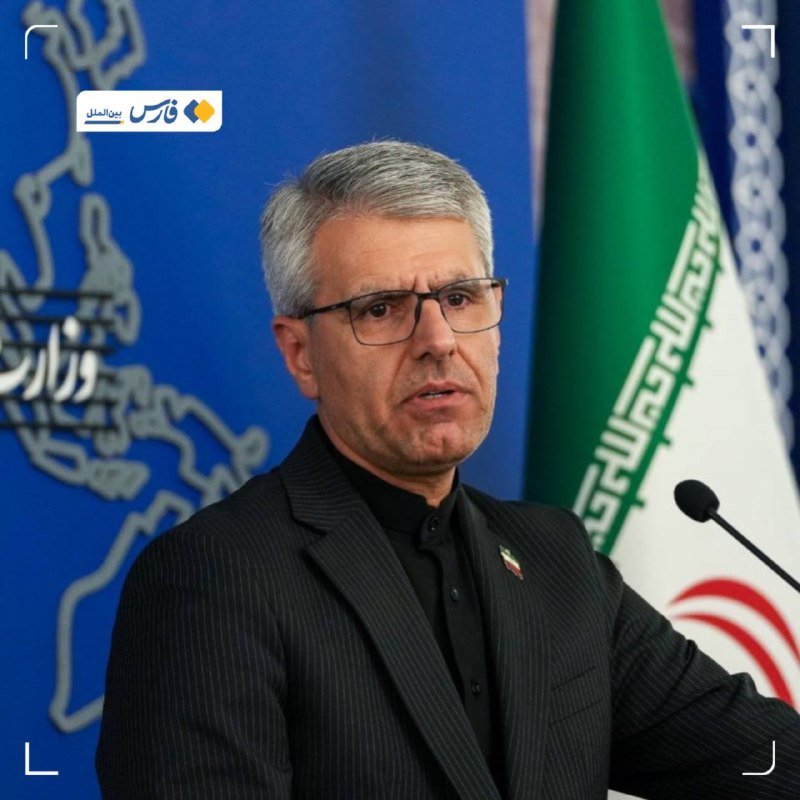
By 01:00 UTC on 15 June 2026, three governments on three continents had broken from the silence that usually greets the first 24 hours of a Middle East accord. German Chancellor Friedrich Merz, Turkish Foreign Minister Hakan Fidan and the Australian Prime Minister's office — acting jointly with Foreign Minister Penny Wong — each issued statements welcoming an agreement between the United States and Iran that had been reported only hours earlier. The simultaneity of the welcomes, more than their language, is the story.
The reporting, carried by Iranian outlets Tasnim and Al-Alam Arabic and relayed through their official Telegram channels, describes a memorandum of understanding between Washington and Tehran rather than a fully ratified accord. None of the welcoming governments disclosed terms; none of them claimed authorship. What they offered, almost in unison, was legitimacy: a buffer of allied endorsement for a deal whose details the wider world had not yet seen.
The welcomes, in their own order
The Australian statement was the earliest to reach wire services, with Tasnim's English-language channel carrying the joint readout at 00:07 UTC. The Prime Minister and Foreign Minister framed the agreement as one their government "accepts" and "welcomes" — language carefully chosen to signal endorsement without overstating Canberra's role. Within seventeen minutes, at 00:24 UTC, Al-Alam Arabic carried the Turkish Foreign Minister's response: a welcome that characterised the memorandum as "a step towards lasting peace in the region." At 00:53 UTC, Tasnim relayed the German Chancellor's line, describing the deal as "an important diplomatic achievement."
The geographic spread is the noteworthy part. Ankara, Berlin and Canberra represent three different strategic postures toward Tehran: a NATO neighbour managing refugee flows and a Kurdish frontier, the European Union's largest economy with a vocal diaspora constituency, and a mid-power Indo-Pacific ally whose exposure to the Gulf is primarily maritime and economic. That all three reached for the word "welcome" in the same hour suggests a degree of coordinated messaging, even if the three governments have not, on the public record, coordinated.
A memorandum, not a treaty
The terminology matters and is being used with care. Tasnim and Al-Alam Arabic, both Iranian state-adjacent outlets, refer to a "memorandum of understanding" — a non-binding instrument that signals intent and identifies areas of future negotiation but does not impose legal obligations. Treaties bind governments; memoranda gesture. The choice of instrument is itself a signal: the parties wanted the political benefits of an announcement without the ratification costs of a full agreement.
The wire reports available at the time of writing do not disclose the subject matter of the memorandum. Past US–Iran memoranda have covered nuclear constraints, prisoner exchanges, unfreezing of assets in third-country banks, and the de-escalation of proxy confrontations. Any of those — or a combination — could plausibly be the substance here. The welcoming statements are deliberately silent on the content question, which is consistent with a deal whose specifics remain subject to verification.
What the framing does
Endorsements from allied capitals do particular work at this stage of a negotiation. They raise the political cost of walking back the deal for any party that might later wish to; they telegraph to domestic audiences — particularly in Washington and in Iran's factional politics — that the international environment will reward compliance and punish collapse; and they pre-position friendly governments to defend the agreement when it comes under criticism from those who were not consulted.
This is the plain pattern of how diplomatic scaffolding gets built around an emerging accord: a small group of capitals moves first, offering endorsement without exposing themselves to the most contested specifics. Berlin, Ankara and Canberra are safe endorsers in this configuration. None is a primary party; none carries the domestic-political exposure that, say, Paris or Riyadh would face in offering public welcome. Their early alignment is, in effect, the diplomatic equivalent of a soft launch — a way to test the public response before larger powers commit to a public position.
What remains unseen
The conspicuous absence from the available reporting is any official confirmation from Washington or Tehran of the memorandum's text, scope or signing date. The Iranian state-adjacent outlets that carried the welcomes are the only named sources in the present thread; no Western wire has yet corroborated the underlying agreement, and the welcoming governments' statements do not, on the face of the reporting, add independent confirmation. It is also unclear whether the three endorsing governments were briefed in advance or are reacting to public reporting in real time — a meaningful distinction for assessing the depth of the diplomatic alignment.
What can be said with confidence is narrower than the headlines suggest. Three governments, on three continents, have publicly welcomed a reported US–Iran memorandum. The agreement's substance, its legal weight, and the response of the parties who are not its signatories — including Israel, the Gulf monarchies, and the United States Congress — are not yet in the public record. The diplomatic welcome mat is laid; what is being welcomed remains to be specified.
Desk note: Monexus is framing this as a coordinated reception event rather than a substantive policy story until the memorandum's text is independently confirmed. Iranian state-adjacent outlets are cited as transmission channels for allied-government statements, not as authority on the underlying deal.
Wire provenance
This editorial synthesis draws on the following public wire/social posts:
- https://t.me/tasnimplus/432107
- https://t.me/alalamarabic/902441
- https://t.me/alalamarabic/902438
- https://t.me/JahanTasnim/218904